.svg)


.svg)
Class action settlement workflows demand seamless integration across multiple vendor categories—from digital disbursement platforms to fraud detection systems and case management software. Modern settlement administration requires data to flow between these systems efficiently, especially when distributions range from thousands to millions of claimants. AI-powered settlement platforms now offer the integration capabilities that claims administrators need to meet tight deadlines while maintaining compliance and claimant satisfaction.
Key Takeaways
- Digital payout programs can achieve ~98% payment delivery success (often vendor-reported), while check programs routinely see meaningful non-cash rates (research finds ~12%–25% of settlement checks go uncashed on average).
- Paper checks are expensive once you include labor, printing, and postage—often cited in the ~$4–$20 per check range—while digital fees are typically lower and avoid re-issue/return mail overhead.
- 30% of settlement checks never reach recipients, costing $150 each to track
- AI-based claim validation can materially reduce fraudulent submissions by flagging suspicious claims earlier in the workflow; vendors often describe very high detection/flagging effectiveness in specific deployments (ask for case-specific methodology and results).
- Modern platforms handle 1,000 to 100,000+ claimants without architectural changes
- Full integration setup takes 3-7 days for basic configurations, 2-4 weeks for complex workflows
Why Do Class Action Settlements Need Integrated Vendor Solutions?
Traditional settlement workflows rely on disconnected systems that create operational bottlenecks, compliance gaps, and poor claimant experiences. The need for integration stems from the complexity of managing multiple specialized platforms simultaneously.
- Multiple vendor categories require coordination: Digital disbursement platforms, settlement administration systems, fraud detection tools, case management software, and accounting systems must work together seamlessly.
- Manual data transfer creates errors: Without API connections, staff manually export and import claimant data between systems, introducing mistakes and delays.
- Compliance requirements span multiple systems: KYC verification, OFAC screening, and tax reporting must occur across platforms without gaps in documentation.
- Court deadlines demand speed: Reduced processing times from weeks to days only happens when systems communicate automatically.
- Claimant satisfaction depends on visibility: Real-time status updates require data flowing from payment processors back to case management portals.
What Challenges Do Traditional Settlement Workflows Present?
Legacy settlement administration suffers from fundamental inefficiencies that integrated solutions address directly. Claims administrators face mounting pressure to modernize operations.
- Paper check costs accumulate rapidly: Each check incurs an estimated $7-20 in processing costs for printing, postage, and handling.
- Uncashed check tracking drains resources: Tracking each undelivered check costs $150 in overhead for administrative work.
- Address verification fails frequently: Outdated mailing information causes significant return rates for paper-based distributions.
- Fraud detection happens too late: Manual review processes catch fraudulent claims only after resources have been expended.
How Do AI-Driven Platforms Expedite Settlement Payouts?
AI-powered disbursement platforms automate the manual processes that slow traditional settlement administration. These systems process payments through multiple rails while maintaining compliance automatically.
- Faster time-to-funds: Digital payouts can deliver funds in 24–48 hours (sometimes faster, depending on rail and verification), while check printing + mailing often takes weeks end-to-end.
- Multi-rail payment delivery: ACH transfers, prepaid cards, digital wallets, and wire transfers reach claimants through their preferred method.
- Automated compliance verification: Built-in KYC, OFAC screening, and W-9 collection eliminate manual verification steps.
- Real-time fraud detection: AI algorithms identify suspicious claims before payment process, reducing fraud by 71%.
- Audit trail generation: Every transaction creates comprehensive documentation for court reporting requirements.
How Does AI Streamline Fund Distribution?
The automation capabilities of modern platforms transform how settlement funds reach claimants. Fraud prevention becomes proactive rather than reactive.
- Batch processing handles volume: Platforms process 10,000+ records per upload without manual intervention.
- Webhook notifications provide updates: Real-time status changes flow automatically to case management systems.
- Smart reminders improve completion: Automated email and SMS follow-ups help claimants finish the payout process.
- Formula calculations execute automatically: Complex allocation formulas and pro-rata distributions process without manual computation.
How Do Vendor Solutions Ensure Compliance and Fund Segregation?
Compliance automation represents one of the most significant advantages of integrated vendor solutions. Manual verification processes cannot match the speed and accuracy of automated systems.
- Complete fund segregation: Dedicated accounts for every settlement preserve QSF ownership and simplify reporting.
- OFAC screening automation: Real-time sanctions list verification prevents prohibited payments without manual review.
- KYC verification integration: Identity verification happens automatically during the claim submission process.
- W-9 collection and 1099 generation: Tax compliance documentation processes automatically at scale.
- Comprehensive audit logs: Every data access and modification generates traceable documentation.
What Built-in Compliance Features Reduce Risk?
Modern platforms address compliance requirements through technology rather than manual processes. The regulatory landscape demands comprehensive documentation.
- SOC 2 Type II certification: Industry-standard security controls protect sensitive claimant data.
- PCI DSS Level 1 compliance: Payment card processing meets the highest security standards.
- FDIC insurance coverage: Banking services provided by member banks protect settlement funds.
- NACHA operating rules adherence: ACH transactions comply with network requirements automatically.
- State escheatment management: Unclaimed fund reporting processes without manual tracking.
What Payment Options Maximize Claimant Redemption Rates?
Flexible payment methods directly impact how many claimants successfully receive their settlement funds. The significant improvement in redemption rates from digital options demonstrates the importance of choice.
- ACH direct deposit: Funds transfer directly to claimant bank accounts within 1-2 business days.
- Prepaid debit cards: Claimants without bank accounts receive physical or virtual cards for immediate access.
- Digital wallet transfers: PayPal, Venmo, and similar platforms provide familiar payment experiences.
- Gift card options: Retailer-specific cards offer flexibility for claimants preferring specific redemption methods.
- International payments: Some platforms support cross-border payouts; country/currency coverage varies by vendor, rail, and compliance constraints—verify your target jurisdictions up front.
How Do Smart Reminders Improve Take-Up Rates?
Proactive communication strategies significantly impact redemption rates. Multi-channel outreach ensures claimants complete the payment process.
- SMS notifications: Text messages reach claimants immediately with secure payment links.
- Email reminders: Automated sequences follow up with claimants who haven't completed registration.
- Mobile-optimized portals: Claimants receive secure links requiring no account creation to complete payments.
- Payment method flexibility: Recipients choose their preferred option at the time of redemption.
- Status tracking access: Self-service portals let claimants monitor payment progress independently.
How Do Real-Time Dashboards Transform Claims Administration?
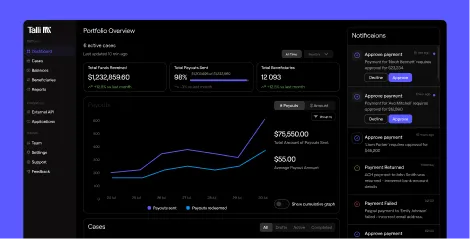
Visibility into payment status, completion rates, and fund flows enables administrators to manage settlements proactively. Real-time dashboards replace manual tracking with automated monitoring.
- Payment status tracking: Every disbursement shows current status from initiation through claimant receipt.
- Completion rate monitoring: Administrators see aggregate metrics on successful payments versus pending or failed.
- Fund flow visibility: Settlement fund balances and outflows display in real time.
- CRM synchronization: Automated payout data sync to existing case management systems.
- Court reporting generation: Required documentation compiles automatically from transaction records.
What CRM Integration Capabilities Matter Most?
Connecting disbursement platforms with existing case management systems eliminates duplicate data entry and ensures consistency across platforms.
- Bidirectional data sync: Claimant information flows to disbursement platforms while payment status returns to case files.
- Webhook-based updates: Real-time notifications trigger workflow actions in connected systems.
- Custom field mapping: Platform configurations match existing data structures without reformatting.
- Batch upload support: CSV imports accommodate large claimant rosters from any source system.
- API documentation quality: Well-documented REST endpoints enable custom integrations with developer support.
How Do API Integrations Connect Settlement Systems?
API connectivity forms the technical foundation for integrated settlement workflows. Modern platforms provide REST endpoints that enable custom connections between disparate systems.
- Secure API authentication: Look for OAuth 2.0 or equivalent secure patterns (scoped API keys/JWT, IP allowlists, secret rotation) plus strong logging and role-based permissions.
- Sandbox testing environments: Development environments allow workflow validation before production deployment.
- Rate limiting considerations: Bulk operations require appropriate batching to avoid API throttling.
- Webhook configuration: Endpoints receive real-time notifications for payment events and status changes.
- Error handling protocols: Retry logic addresses temporary failures without manual intervention.
What Integration Methods Work Best for Legal Workflows?
Settlement administration requires specific integration approaches that account for compliance requirements and court oversight.
- Custom middleware development: Most settlement platforms require direct API integration rather than consumer automation tools.
- Data validation rules: Pre-upload verification ensures required fields meet platform specifications.
- Audit trail preservation: Integration logs document all data transfers for compliance purposes.
- Parallel processing capabilities: Systems handle concurrent operations without conflict or data loss.
- Rollback procedures: Failed imports can reverse without corrupting existing records.
What Role Do Vendor Exchange Platforms Play in Settlements?
The ecosystem of vendors supporting class action settlements includes specialized platforms for each stage of the distribution process. Understanding how these systems interact enables effective vendor selection.
- Digital disbursement specialists: Platforms like Talli focus specifically on legal payout compliance and fund segregation.
- Settlement administration providers: Comprehensive services handle claims from intake through final distribution.
- Fraud detection systems: AI-powered analysis identifies fraudulent claims before payment processing.
- Case management software: Legal practice platforms manage matter workflows and client communications.
- Accounting system connectors: Financial software integration ensures accurate fund tracking and reconciliation.
How Should Administrators Assess Vendor Security?
Evaluating vendor security capabilities protects settlement funds and claimant data from compromise.
- Bank-grade encryption: Data protection both in transit and at rest meets financial industry standards.
- Multi-factor authentication: User access requires multiple verification factors beyond passwords.
- Tier IV+ data centers: Physical infrastructure meets the highest availability and security requirements.
- Continuous monitoring: Fraud detection systems analyze transactions around the clock.
- Penetration testing: Regular security assessments identify vulnerabilities before exploitation.
What Does the Future Hold for Claims Management Integration?
Settlement administration continues evolving toward greater automation, faster processing, and enhanced security. The platforms capable of handling tomorrow's requirements already demonstrate their capabilities at scale.
- Scalable architecture: Modern systems handle 1,000 to 100,000+ recipients without performance degradation.
- International expansion: Global payment coverage across 190+ countries addresses cross-border settlement needs.
- Fraud prevention advancement: 80 million+ fraudulent claims submitted in 2023 drive continued AI development.
- Compliance automation expansion: New regulations require platforms to adapt verification processes continuously.
- Claimant experience prioritization: Self-service capabilities reduce administrator workload while improving satisfaction.
Why Is Talli the Preferred Choice for Settlement Integration?
Talli's AI-driven payment platform addresses the specific integration requirements of class action settlements and mass claims distribution. The platform delivers capabilities that purpose-built legal technology requires.
- Complete fund segregation: Dedicated accounts for every settlement preserve QSF ownership and simplify court reporting.
- Compliance automation: KYC, OFAC, W-9 collection, fraud mitigation, and audit logs built into every workflow.
- Flexible payout options: Claimants choose ACH, prepaid cards, digital wallets, or gift cards based on preference.
- Real-time dashboard visibility: Administrators track every payment status and monitor completion rates instantly.
- Rapid deployment: Setup completes in days rather than weeks, with full integration support available.
Banking services provided by Patriot Bank, N.A., Member FDIC.
Frequently Asked Questions
What technical skills are required to implement settlement vendor integrations?
Basic configurations require intermediate business user skills with IT support for API connections. CSV uploads and dashboard management work without developer involvement, while custom API integrations benefit from dedicated technical resources. Most platforms provide sandbox environments for testing before production deployment.
How do settlement platforms handle claimants in different countries?
Leading disbursement platforms support payments across 190+ countries with 150+ currencies. International settlements require additional compliance considerations including local banking regulations, currency conversion, and jurisdiction-specific identity verification requirements.
What happens when payment deliveries fail?
Modern platforms automatically retry failed payments, notify administrators, and provide alternative delivery options. Multi-channel approaches (email, SMS, mail) ensure claimants receive notification of issues. Self-service portals allow recipients to update contact information without administrator intervention.
How long does migration from paper checks to digital disbursement take?
Migration timelines range from 3-7 days for basic setup to 2-4 weeks for full integration with existing case management and accounting systems. Sandbox testing adds 1 week to validate workflows before production deployment.
Can settlement platforms generate court-required reporting automatically?
Yes, comprehensive audit trails and transaction records compile automatically into post-distribution accounting reports. Real-time dashboards provide the data courts require for settlement oversight, and export functions format documentation for filing requirements.