.svg)


.svg)
Settlement administration software has become essential for law firms and claims administrators managing class action, mass tort, and bankruptcy cases. With top class action settlements reaching into the billions of dollars and billions in unclaimed settlement funds annually, choosing the right platform directly impacts operational efficiency, compliance outcomes, and claimant satisfaction. Modern AI-driven payment platforms now offer capabilities that transform what used to take weeks into processes completed in minutes.
Key Takeaways
- Enterprise platforms can support multi-jurisdiction settlements at a wide range of sizes and complexity (subject to banking, tax, and regulatory constraints).
- AI-powered workflows enable attorneys to quintuple caseloads through automation
- Leading platforms achieve 76% client engagement compared to industry averages
- Response times drop to 2.2 hours versus the 48-hour industry standard
- Cloud-native solutions should maintain stable performance as volume scales from thousands to tens of thousands of records.
- Bankruptcy-focused software can materially reduce filing time versus manual preparation by automating forms, validations, and court-ready outputs.
- Modern platforms offer 175+ third-party integrations for seamless ecosystem connectivity
How Has Settlement Administration Software Evolved?
The settlement administration landscape has shifted dramatically from manual, paper-based processes to cloud-native platforms with built-in compliance automation. Claims processing, legal payouts, and mass tort coordination now rely on technology that addresses both administrator needs and claimant expectations.
- From manual to automated workflows Traditional spreadsheet tracking gave way to intelligent importing that flags deficient claims upfront
- Cloud-first architecture Platforms now operate from any browser, any device, enabling remote teams to manage settlements without infrastructure constraints
- Real-time visibility Dashboard analytics replaced periodic batch reports with live fund flow monitoring
- Security standardization SOC 2 Type II certification and bank-level encryption became baseline requirements
- Integration ecosystems Modern platforms connect with existing CRM, document management, and accounting systems rather than operating in isolation
What Key Features Should Claims Management Software Include?
Selecting settlement administration software requires evaluating features that directly impact disbursement accuracy, compliance maintenance, and operational efficiency. The right platform should address fund distribution mechanics while preventing fraud and maintaining audit trails.
What Makes Fund Distribution and Fraud Prevention Essential?
Effective settlement software automates distribution calculations while implementing safeguards against fraudulent claims. Leading platforms offer automated distribution wizards that calculate percentages to creditors without manual intervention.
- Disbursement automation Systems should auto-generate settlement statements and damage totals to accelerate settlements and drive higher revenues
- Claims validation Intelligent processes flag invalid claims before processing begins, eliminating wasted time on deficient submissions
- Multi-payment options Support for ACH, prepaid cards, digital wallets, and gift cards ensures claimants receive funds through preferred channels
- Address verification Automated reconciliation of bank accounts reduces human error and failed payment rates
Why Are Compliance and Verification Tools Non-Negotiable?
Compliance requirements in settlement administration span KYC verification, OFAC screening, W-9 collection, and comprehensive audit logging. Platforms must embed these capabilities rather than treating them as add-ons.
- Sanctions screening Real-time OFAC verification ensures payments comply with federal requirements
- Tax reporting Automated 1099 generation and specialty tax reporting including complex wage claims
- Audit trails Complete documentation of every transaction for regulatory examination
- Identity verification Digital KYC processes that exceed manual verification accuracy rates
Which Settlement Administration Platforms Lead the Market in 2026?
The settlement administration market segments into enterprise platforms, law firm practice management tools, and specialized bankruptcy solutions. Each category serves distinct use cases with varying feature sets and price points.
What Do Enterprise Settlement Administrators Offer?
Enterprise platforms handle the largest, most complex settlements with proprietary disbursement infrastructure and dedicated support teams.
Epiq Global stands as a global leader managing some of history's largest settlements. Their 98,000-square-foot facility houses Tier IV+ data centers with 24/7 monitoring for maximum security. Services span legal noticing, claims processing, disbursement, and treasury management.
Verita Global TFS provides comprehensive distribution software at no cost to fiduciaries. The platform generates UST-compliant Monthly Operating Reports and supports foreign disbursements with international currency expertise.
How Do Mass Tort Practice Management Platforms Compare?
Law firms managing multiple plaintiffs need specialized workflows for intake, document generation, and client communication at scale.
Filevine is widely used by law firms for matter and mass-tort workflow management. Their AI-enhanced intake tool summarizes large information quantities in seconds, while DocGen enables mass customization of compliant HITECHs, HIPAAs, and short-form complaints. Case studies show one attorney quintupled her caseload using the platform.
CloudLex builds solutions exclusively for personal injury, designed to manage thousands of records without performance degradation. Microsoft 365 integration enables letter, agreement, and motion generation with encrypted document sharing.
SmartAdvocate offers the deepest integration ecosystem with 175+ third-party connections for adjacent legal tools. The platform provides choice between cloud and server-based hosting for firms with specific deployment requirements.
Which Platforms Specialize in Bankruptcy Settlement Administration?
Bankruptcy cases require petition preparation, UST compliance, and specialized claims tracking that general platforms often lack.
Jubilee Pro brings over 30 years of bankruptcy practice management experience at approximately $71 per month. The platform supports Chapters 7, 11, 12, and 13 filings with court noticing and LawPay integration for IOLTA-compliant payments. User testimonials report completing filings in half the time compared to other solutions.
NextChapter offers comprehensive features for bankruptcy software at around $999 annually. The platform works from any browser on any device with a clean, intuitive interface.
How Does AI Transform Legal Payout Efficiency?
AI capabilities in settlement administration extend beyond basic automation to intelligent processing that reduces manual intervention while improving accuracy. AI-automated distribution represents a fundamental shift from traditional processing methods.
- Intake summarization AI tools process large volumes of client information in seconds rather than hours
- Document generation Automated creation of compliant legal documents with mass customization capabilities
- Multilingual support 140+ language translation with sentiment analysis for client communications
- Predictive analytics Best practice-based analytics identify bottlenecks before they impact timelines
- Claims validation Intelligent flagging of deficient or potentially fraudulent claims at intake
Firms report substantial time savings through AI implementation. Leading platforms have documented hundreds of hours saved in just months while achieving more than double the industry average for client satisfaction.
Why Is Compliance and Fund Segregation Critical in Legal Settlements?
QSF management requires complete fund segregation with dedicated accounts for every settlement. Platforms must preserve ownership structure while simplifying reporting and ensuring legal compliance throughout the disbursement lifecycle.
How Do Platforms Handle QSF Ownership and Dedicated Accounts?
Fund segregation prevents commingling while maintaining clear audit trails for regulatory review and court reporting.
- Dedicated settlement accounts Each case maintains separate fund pools with isolated transaction histories
- Ownership preservation QSF structures remain intact through the distribution process
- Automated reconciliation Systems match bank accounts to settlement records automatically to reduce error rates
- Real-time fund flow visibility Administrators track every dollar from deposit through claimant receipt
What Regulatory Demands Require Automated Compliance?
Manual compliance processes introduce risk that automation eliminates. Modern platforms embed regulatory requirements into standard workflows.
Leading ELM solutions combine e-billing, claims management, and reporting specifically for mass tort litigation. Exclusive Batch Processing Technology enables both macro and micro-level review across thousands of claims.
How Can You Enhance the Claimant Experience With Flexible Payouts?
Claimant satisfaction directly correlates with redemption rates and overall settlement success. Platforms that offer payment choice and proactive communication see substantially higher completion percentages.
What Payment Methods Do Claimants Actually Want?
Modern claimants expect options beyond paper checks. Digital wallets, prepaid cards, and direct deposit meet diverse banking situations.
- Digital wallet integration Instant transfers to preferred payment apps
- Prepaid card issuance Physical or virtual cards for immediate fund access
- Direct deposit Traditional ACH transfers for claimants with established banking relationships
- Gift card options Retail alternatives for specific settlement types
Talli's platform addresses these needs with the Easy Prepaid Mastercard issued by Patriot Bank, N.A., Member FDIC, pursuant to a license from Mastercard International. Gift Cards are issued by InComm and distributed by Talli, providing additional redemption flexibility.
How Do Smart Follow-Ups Improve Redemption Rates?
Automated reminders across multiple channels ensure claimants complete the payout process. Claimant experience improves dramatically with proactive outreach.
Leading platforms deliver high client engagement in just months through highly rated mobile apps with encrypted notifications. Response times average hours compared to the industry standard of days.
Why Do Real-Time Dashboards Matter for Settlement Administrators?
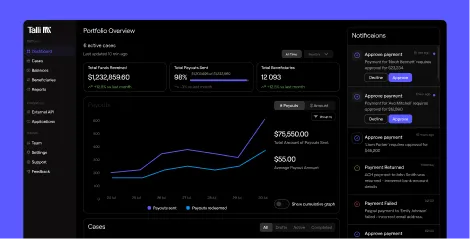
Visibility into payout status, completion rates, and fund flows enables proactive management rather than reactive problem-solving. Real-time dashboards have fundamentally changed how claims administrators operate.
- Campaign creation Launch payout distributions and track every status in a single interface
- Completion rate monitoring Identify lagging segments before they impact deadlines
- Stakeholder reporting Generate court-ready reports without manual data compilation
- CRM synchronization Sync real-time payout data to existing client management systems
Modern platforms enable firms to maintain close oversight through real-time updates that scale across high volumes. Leading solutions provide prebuilt analytics based on best practices for settlement optimization.
Is Aderant a Viable Option for Legal Payouts in 2026?
Aderant provides enterprise practice management and financial solutions for law firms, but their focus differs from dedicated settlement administration platforms. Firms evaluating Aderant should consider whether their primary need is firm-wide financial management or specialized disbursement capabilities.
For organizations requiring dedicated settlement administration with compliance automation, disbursement management, and claimant communication tools, purpose-built platforms offer more targeted functionality. Aderant may complement these solutions for firms needing comprehensive practice management alongside settlement capabilities.
How Can You Future-Proof Your Settlement Process?
Selecting settlement administration software requires evaluating both current needs and emerging capabilities. Platforms built for the claims industry offer advantages over general practice management tools adapted for settlement use.
- Scalability Solutions should handle growth from thousands to hundreds of thousands of recipients without performance degradation
- Integration readiness API access enables connection with existing systems and future tools
- Compliance evolution Platforms must adapt to changing regulatory requirements without major overhauls
- Claimant expectations Mobile-first interfaces and digital payment options reflect how claimants prefer to interact
Talli automates and safeguards every claims payout so teams can meet tight deadlines without losing control over compliance or claimant experience. With complete fund segregation, KYC, OFAC, and W-9 collection baked in, the platform addresses both current requirements and future regulatory evolution. Banking services provided by Patriot Bank, N.A., Member FDIC.
Frequently Asked Questions
How do settlement administration platforms handle international disbursements?
Enterprise platforms support foreign disbursements with international currency payment expertise. This includes specialized tax reporting for complex wage claims and compliance with jurisdiction-specific requirements.
What security certifications should settlement software maintain?
Leading platforms maintain SOC 2 Type II certification with bank-level 256-bit SSL/TLS encryption. Tier IV+ data centers provide additional protection for sensitive financial and personal data.
Can settlement software integrate with existing case management systems?
Modern platforms prioritize integration capabilities. Leading solutions connect with major CMS platforms including Litify, Filevine, Clio, CASEpeer, and MerusCase. Some platforms offer over 175 third-party integrations for comprehensive ecosystem connectivity.
What pricing models do settlement administration platforms use?
Pricing varies significantly by platform type. Bankruptcy-focused tools charge approximately $71 monthly, while others offer annual pricing around $999 per year. Enterprise platforms typically require custom quotes based on settlement volume and service requirements.
How do platforms ensure claimants without bank accounts receive payments?
Modern disbursement solutions offer multiple redemption options including prepaid cards, digital wallets, and gift cards specifically designed for unbanked populations. Talli provides the Easy Prepaid Mastercard and InComm gift cards as alternatives to traditional bank transfers.