.svg)


.svg)
Protecting settlement funds through FDIC-compliant Qualified Settlement Fund structures requires strategic account titling, proper beneficiary documentation, and pass-through insurance mechanisms that can extend coverage to $250,000 per claimant—not just $250,000 total. Modern QSF payment platforms combine automated compliance workflows with dedicated banking relationships to safeguard every dollar while reducing distribution timelines from months to weeks. For settlement administrators managing multi-million dollar funds, understanding these FDIC requirements separates protected claimant assets from catastrophic exposure.
Key Takeaways
- FDIC pass-through insurance provides up to $250,000 coverage per beneficiary, multiplying total protection based on claimant count
- Complete fund segregation with dedicated accounts preserves QSF ownership and simplifies court reporting requirements
- Court approval must occur BEFORE funding to qualify under IRC Section 468B—retroactive designation invalidates tax treatment
- Digital-first distribution achieves significantly higher redemption rates compared to traditional check-based approaches
- Traditional QSF setup typically takes several days to two weeks while modern platforms can complete onboarding in 1 day
- Administrator fees typically range from $2,500-$15,000 setup plus 0.25%-1.5% of assets under management annually
Understanding the Role of FDIC in QSF Payouts
The Federal Deposit Insurance Corporation provides the safety net protecting settlement funds from bank failures—but only when QSF structures meet specific requirements. Standard FDIC coverage limits deposits to $250,000 per depositor, per bank. However, QSFs can access pass-through insurance that treats each claimant as a separate depositor, dramatically expanding protection.
Pass-through eligibility depends on three critical factors:
- Account titling indicating fiduciary or custodial capacity
- Beneficiary identification records maintained by the administrator
- Determinable individual interests in the deposited funds
Without proper structure, a $50 million settlement fund receives only $250,000 in total FDIC protection. With pass-through insurance properly configured, that same fund could receive protection for each beneficiary up to $250,000—potentially covering the entire fund when claimant counts are high.
The timing of documentation matters. FDIC regulations don't require beneficiary records to exist at the moment of bank failure, but administrators must provide them within reasonable time thereafter. Modern platforms maintain these records automatically through claimant data management systems.
Establishing Complete Fund Segregation for QSF Compliance
Commingling settlement funds with operating accounts or other settlements immediately jeopardizes both QSF tax status and FDIC protection. Legal payout compliance demands dedicated account architecture for each settlement.
The Importance of Dedicated Accounts
Settlement fund segregation serves multiple compliance purposes:
- QSF ownership preservation ensuring proper tax treatment under IRC Section 468B
- Simplified court reporting with clear fund flows per settlement
- FDIC pass-through eligibility through identifiable beneficiary interests
- Audit trail integrity for regulatory examinations
- Fiduciary duty fulfillment to claimants and courts
Administrators serving as a temporary holding tank for settlement proceeds must maintain strict separation. Red flags emerge when providers suggest pooled accounts across multiple settlements—this approach creates significant compliance exposure.
Legal Requirements for Fund Separation
Treasury regulations require QSFs to be established pursuant to governmental authority approval with continuing court jurisdiction. The court order must come BEFORE receiving settlement funds. Attempting retroactive QSF designation doesn't qualify for tax benefits and may compromise secure fund segregation requirements.
For settlements exceeding single-bank FDIC limits, administrators can spread deposits across multiple institutions through reciprocal deposit networks. This approach multiplies FDIC protection while maintaining operational simplicity through a single banking relationship.
Leveraging Technology for Secure and Compliant Payouts
Modern QSF platforms automate compliance workflows that traditionally required extensive manual oversight. This technology shift reduces both costs and error rates while accelerating distribution timelines.
Automating Compliance Checks
Effective platforms integrate multiple compliance functions into unified workflows:
- Real-time OFAC screening against Treasury sanctions lists before every distribution
- Automated KYC verification reducing onboarding from days to hours
- W-9 collection systems ensuring tax reporting accuracy
- Fraud detection algorithms identifying suspicious patterns
- Audit log generation creating defensible compliance records
Traditional administrators may process compliance manually over weeks or even months, while AI-driven platforms complete the same verification in 48 hours for settlements with tens of thousands of claimants. This efficiency gain directly impacts distribution timelines and claims team efficiency.
Enhancing Security Against Fraud
Settlement fraud has exploded across the legal industry, making robust security non-negotiable. Technology-driven platforms combat fraud through:
- Multi-factor authentication for administrator access
- Encryption standards (AES-256 at rest, TLS 1.2+ in transit)
- Anomaly detection flagging unusual distribution patterns
- Identity verification workflows preventing impersonation claims
- Role-based permissions limiting fund disbursement authority
Platforms lacking explicit fraud mitigation strategies create unacceptable risk for settlement administrators bearing fiduciary responsibility.
KYC and OFAC Screening: Essential Steps for QSF Due Diligence
Identity verification and sanctions screening represent mandatory compliance requirements—not optional features. Failure to screen claimants against OFAC lists before distribution triggers severe Treasury Department penalties.
Streamlining Claimant Verification
Know Your Customer (KYC) processes verify claimant identities before fund release:
- Document verification confirming identity against government-issued IDs
- Address validation ensuring delivery accuracy for physical payments
- SSN/TIN verification for Form 1099 tax reporting requirements
- Bank account ownership confirmation for ACH transfers
- Death registry checks preventing payments to deceased claimants
Platforms with embedded KYC workflows process verification during claimant onboarding, eliminating delays at distribution time. Poor claimant data quality affects many settlements, making automated data cleansing critical.
Mitigating Risks of Non-Compliance
OFAC screening failures carry consequences far beyond financial penalties:
- DOJ investigations for sanctions violations
- Reputational damage affecting future business relationships
- Personal liability for responsible administrators
- Settlement delays while compliance issues resolve
- Court sanctions for fiduciary failures
Modern platforms integrate OFAC compliance directly into payout workflows, screening every claimant automatically before any funds release. This embedded approach eliminates the gap between verification and distribution that creates compliance exposure.
Partnering with FDIC-Insured Banking Services for Payment Processing
Your banking partner selection directly determines FDIC protection availability. Not all banks understand QSF requirements or offer appropriate account structures for settlement administration.
Selecting Reliable Banking Partners
Evaluate potential banking relationships against settlement-specific criteria:
- QSF experience with proper account titling conventions
- Pass-through insurance knowledge and documentation support
- Multi-currency capabilities for international claimants
- Integration options with settlement administration platforms
- Regulatory examination history demonstrating compliance culture
Banks specializing in settlement administration—including regional commercial banks with dedicated litigation groups—offer significant advantages over general consumer banking relationships. Some platforms maintain pre-established banking partnerships eliminating the need for separate bank negotiations.
Benefits of FDIC-Insured Products
FDIC-insured payment products extend protection through the distribution process:
- Prepaid cards issued by member banks provide claimant protection until redemption
- Digital wallet transfers through FDIC-insured rails maintain coverage during transmission
- ACH payments process through regulated banking networks
- Money market accounts holding settlement funds earn interest while maintaining insurance
Banking services provided by FDIC member institutions ensure regulatory oversight throughout the settlement lifecycle. The Easy Prepaid Mastercard issued by Patriot Bank, N.A., Member FDIC, exemplifies how payment products can maintain insurance protection.
Achieving Transparency and Audit Trails in QSF Disbursements
Courts, plaintiffs' counsel, and regulatory authorities demand comprehensive visibility into settlement fund management. Manual tracking systems create gaps that modern real-time dashboards eliminate.
Real-time Monitoring of Payout Progress
Effective settlement administration requires continuous visibility:
- Distribution status tracking showing pending, completed, and failed payments
- Completion rate monitoring identifying redemption problems early
- Fund flow documentation proving proper segregation
- Claimant engagement metrics measuring communication effectiveness
- Deadline countdown displays ensuring court compliance
Administrators providing transparent reporting fulfill fiduciary obligations while building stakeholder confidence. Real-time data access eliminates the reporting lag that creates uncertainty during active distributions.
Simplifying Reconciliation and Reporting
Settlement reconciliation processes benefit from automation:
- Three-way matching between bank balances, beneficiary records, and court-approved allocations
- Exception flagging identifying discrepancies before they compound
- CRM integration synchronizing payout data with case management systems
- Form 1099 generation automating year-end tax reporting
- Form 1120-SF preparation handling QSF-specific tax filings
Monthly reconciliation catches errors before distributions, preventing costly corrections. Platforms offering built-in reporting reduce month-end closing from days to hours while maintaining audit-ready documentation.
Enhancing Claimant Experience While Maintaining Compliance
Compliance requirements shouldn't degrade claimant experience. The best settlement administration balances regulatory adherence with convenient payment options that maximize redemption rates.
Providing Convenient Payment Choices
Flexible payment options increase completion rates:
- ACH direct deposit for claimants with bank accounts
- Digital wallets including Venmo, PayPal, and Cash App
- Prepaid cards requiring no bank account
- Physical checks as fallback for traditional preferences
- Gift cards for retail-focused distributions
Claimants receiving a secure link via SMS or email can select their preferred payment method without creating accounts. This convenience directly impacts redemption—flexible payout options help more claimants complete the process.
Streamlining Claimant Engagement
Smart communication strategies improve completion:
- Multi-channel outreach via email, SMS, and mail
- Optimized send timing based on engagement data
- Reminder sequences for incomplete redemptions
- Support accessibility for claimant questions
- Progress notifications keeping claimants informed
Higher take-up rates result from persistent, helpful communication. What used to take weeks now takes minutes when claimants can complete redemption from their phones without complex account creation.
Scalability and Speed: Meeting Tight Deadlines for Any Volume of Payouts
Settlement deadlines don't accommodate administrative limitations. Whether distributing to 1,000 or 100,000 recipients, platforms must deliver consistent performance without compromising compliance.
Automating Large-Scale Disbursements
High-volume payout capabilities require:
- Batch processing handling thousands of simultaneous transactions
- Parallel compliance screening avoiding sequential bottlenecks
- Scalable infrastructure maintaining performance under load
- Error handling protocols managing failed transactions automatically
- Progress monitoring tracking completion across large claimant pools
Traditional administrators struggle with settlements exceeding 100,000 claimants due to manual process dependencies. Purpose-built platforms eliminate these scaling constraints through automation.
Expediting Time-Sensitive Payments
Distribution timeline compression delivers measurable value:
- Reduced administration costs through shorter engagement periods
- Improved claimant satisfaction from faster fund receipt
- Decreased unclaimed funds before addresses go stale
- Earlier case closure freeing firm resources
- Court compliance meeting ordered distribution deadlines
Setup time varies dramatically by platform type. Traditional bank administrators typically require several days to two weeks for account establishment, while modern platforms complete onboarding in as little as one day. Total time to first distribution can drop from 8 weeks to 4 weeks with the right technology partner.
Why Talli Streamlines FDIC-Compliant QSF Payouts
Settlement administrators seeking FDIC-compliant distribution infrastructure find comprehensive solutions through Talli's AI-driven payment platform. Unlike generic payment processors, Talli was built specifically for the claims industry with embedded compliance and dedicated account architecture.
Talli addresses core QSF compliance requirements through:
- Complete fund segregation with dedicated accounts for every settlement, preserving QSF ownership and simplifying court reporting
- Embedded KYC, OFAC, and W-9 collection automating verification workflows that traditional administrators handle manually
- Banking services through Patriot Bank, N.A., Member FDIC ensuring FDIC protection throughout the distribution process
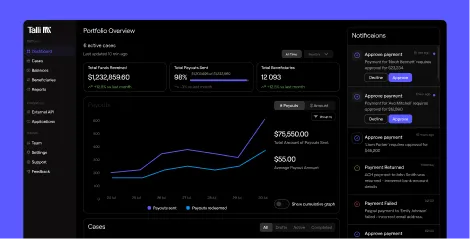
- Real-time dashboards providing total control and visibility over payout status, completion rates, and fund flows
- Multi-channel distribution including ACH, digital wallets, prepaid Mastercard, and gift cards issued by InComm
- Smart reminders across email, SMS, and other channels helping claimants complete redemption faster
The platform's fraud mitigation and audit log capabilities create defensible compliance records while reducing manual oversight burden. For settlements requiring scale, Talli powers payouts from 1,000 to 100,000+ recipients without performance degradation.
Settlement administrators can launch, fund, and track payouts faster than ever—without losing control over compliance or claimant experience. The combination of speed, compliance automation, and flexible payment options addresses the core challenges facing modern QSF administration.
Frequently Asked Questions
What is a QSF and how does FDIC insurance apply to it?
A Qualified Settlement Fund (QSF) is a court-approved trust structure under IRC Section 468B that holds settlement funds while distributions are processed. FDIC insurance applies through pass-through coverage, treating each claimant as a separate depositor eligible for up to $250,000 protection. This means a QSF with 10,000 claimants could receive $2.5 billion in total FDIC coverage if properly structured with appropriate account titling and beneficiary documentation.
How does fund segregation prevent commingling and improve compliance?
Complete fund segregation maintains dedicated accounts for each settlement, preventing funds from mixing with operating accounts or other settlements. This preserves QSF ownership for tax purposes, simplifies court-required reporting, maintains clear audit trails, and ensures FDIC pass-through eligibility by keeping beneficiary interests identifiable. Commingled funds immediately jeopardize both tax treatment and deposit insurance protection.
What are the essential compliance checks for disbursing QSF funds?
Essential compliance checks include OFAC sanctions screening against Treasury Department lists, KYC identity verification confirming claimant identity, W-9 collection for tax reporting, fraud detection screening for suspicious patterns, and beneficiary ownership documentation for FDIC pass-through eligibility. Modern platforms integrate these checks directly into payout workflows, processing verification automatically before any funds release. Traditional manual processing of these requirements can take weeks or months, while automated platforms complete verification in 48 hours.
Are prepaid cards issued by FDIC-insured banks also FDIC compliant?
Prepaid cards issued by FDIC-member banks maintain FDIC protection for the funds until the cardholder spends them. The Easy Prepaid Mastercard issued by Patriot Bank, N.A., Member FDIC, pursuant to a license from Mastercard International, provides this protection. However, once funds leave the issuing bank's custody through purchases or withdrawals, FDIC coverage ends. Prepaid cards offer a compliant distribution method that extends protection through the payment chain while providing claimants flexibility without requiring bank accounts.
How long does QSF setup typically take with different administrator types?
Setup timelines vary significantly by administrator type. Traditional bank trust departments typically require several days to two weeks for account establishment and compliance configuration. Specialized QSF administrators generally complete setup in 2-7 days. Modern AI-driven platforms can complete onboarding in as little as one day. However, court approval for QSF establishment—which must occur before funding—typically adds 2-4 weeks regardless of administrator speed. Total time to first distribution can range from 4-8 weeks depending on court calendar and platform selection.