.svg)


.svg)
The Ticketmaster data breach allegedly involved data tied to as many as 560 million records being offered for sale, though the confirmed number of affected users has not been publicly finalized, making it one of the largest cybersecurity incidents in entertainment industry history. Following class action lawsuits filed in 2024, any future settlement (if reached) would require claimants to navigate eligibility verification, documentation requirements, and payment method selection. For claims administrators managing data breach settlements at this scale, the distribution process demands sophisticated technology infrastructure capable of handling millions of individual payouts while maintaining regulatory compliance.
Key Takeaways
- The Ticketmaster breach affected an estimated 560 million users, with litigation currently in preliminary stages
- Digital payment methods typically achieve over 95% redemption rates compared to 70-80% for paper checks in large settlements
- Modern settlement platforms can process over 100 million claims with industry-leading uptime
- Automated workflows reduce case closing time by an estimated 30-45 days compared to manual processing
- Claims administrators must implement KYC, OFAC screening, and fraud mitigation to meet regulatory requirements
- Bulk filer fraud remains a common challenge requiring anti-fraud detection and documentation requirements
- Real-time dashboards provide complete visibility into payout status, completion rates, and fund flows
Understanding the Ticketmaster Data Breach Settlement of 2026
The potential Ticketmaster settlement represents a significant moment for data breach litigation and settlement administration. Understanding the breach origins, affected parties, and anticipated timeline helps claimants and administrators prepare for successful participation.
What is the Ticketmaster Data Breach?
The 2024 Ticketmaster data breach compromised personal information across the company's user database. According to class action filings, the incident exposed names, email addresses, phone numbers, purchase history, and in some reports partial payment card data for hundreds of millions of customers worldwide.
The breach triggered immediate class action litigation seeking compensation for affected users. Similar large-scale data breach settlements have established compensation structures ranging from flat payments for basic claims to substantial awards for documented identity theft or fraudulent charges.
Who May Be Affected?
Eligibility would typically extend to individuals whose information is confirmed to be included in the affected dataset. This typically includes:
- Users who purchased tickets through Ticketmaster platforms
- Account holders with stored payment information
- Customers who received data breach notification letters
- Individuals who experienced identity theft or fraud linked to the breach
The massive scale presents unique challenges for settlement administration. Traditional paper-based systems cannot efficiently process claims at this volume, requiring digital infrastructure capable of handling millions of simultaneous submissions.
Anticipated Timeline for Settlement
Settlement timelines in similar cases typically span 6-12 months from court approval to final distribution. Critical deadlines would likely include:
- Claim submission deadline: Usually 60-120 days from settlement notice
- Objection period: 30-60 days for class members to object or opt out
- Final approval hearing: Court reviews settlement fairness and administration plan
- Distribution period: 30-60 days post-claim deadline for payment processing
Determining Potential Claim Eligibility
Establishing eligibility requires understanding the typical criteria, gathering required documentation, and following verification procedures that settlement administrators use to validate claims.
Standard Eligibility Criteria
Settlement structures in comparable cases establish tiered eligibility based on harm severity:
- Basic tier: Flat payment for all affected users (typically $25-$100 in similar settlements)
- Enhanced tier: Compensation for documented time spent addressing breach impacts
- Maximum tier: Substantial compensation for identity theft, fraudulent charges, or significant financial losses
Claimants must demonstrate they fall within the defined class period and can verify their connection to Ticketmaster during the breach timeframe. Understanding legal payout compliance helps ensure claims meet validation standards.
Documentation Typically Required
Documentation requirements vary by claim tier. Basic claims may require only identity verification, while enhanced claims typically need:
- Proof of Ticketmaster account ownership or purchase history
- Bank or credit card statements showing fraudulent activity
- Credit monitoring reports documenting identity theft
- Records of time spent addressing breach-related issues
- Police reports or FTC identity theft affidavits
Expected Verification Process
Verification typically follows a structured process:
- Check for official settlement notification via email or mail
- Visit the official settlement website to confirm class membership
- Review the settlement agreement for specific eligibility criteria
- Gather supporting documentation before claim submission deadline
- Submit claim through the designated online portal
Filing Claims: What to Expect
The claims process requires careful attention to submission requirements, potential challenges, and strategies for maximizing claim success rates.
Standard Claim Submission Process
According to settlement administration best practices, the submission process follows a standard sequence:
- Access the claim portal: Use the official settlement website link from notification materials
- Complete identity verification: Provide required personal information matching breach records
- Select claim tier: Choose appropriate compensation category based on documented harm
- Upload documentation: Submit supporting evidence for enhanced claims
- Review and submit: Verify all information before final submission
- Save confirmation: Retain submission receipt for future reference
Common Filing Challenges
Settlement administrators report several recurring challenges:
- Missing documentation: Incomplete claims require deficiency clearance, delaying processing
- Incorrect personal information: Mismatched data triggers manual review requirements
- Missed deadlines: Late submissions are typically rejected regardless of validity
- Technical issues: Portal access problems during high-traffic periods
Claims teams using automated workflows can handle high-volume submissions while maintaining accuracy and compliance.
Maximizing Claim Success
Success strategies include:
- Submit claims early to avoid deadline congestion
- Double-check all personal information before submission
- Retain copies of all uploaded documentation
- Monitor email for deficiency notices requiring response
- Track claim status through the settlement portal
Payment Options and Distribution Methods
Payment method selection significantly impacts both claimant experience and redemption rates. Modern settlement payment options offer flexibility that traditional paper checks cannot match.
Typical Payout Methods
Settlement distributions typically offer multiple payment channels:
- Direct deposit (ACH): Electronic transfer to claimant bank accounts
- Digital wallets: Instant access through mobile payment platforms
- Prepaid cards: Physical or digital cards for immediate spending
- Paper checks: Traditional mail delivery (lower redemption rates)
Talli's platform offers flexible payout options including digital wallet integration and Easy Prepaid Mastercards, ensuring claimants can select the method that works best for their situation. Banking services are provided by Patriot Bank, N.A., Member FDIC.
Digital Payment Advantages
Industry data suggests digital payment methods typically achieve over 95% redemption rates compared to 70-80% for paper checks in large-scale settlements.
Additional advantages include:
- Instant fund availability upon distribution
- No bank account required for prepaid card options
- Reduced risk of lost or stolen payments
- Lower administrative costs for settlement funds
Optimizing Payment Receipt
To ensure successful payment receipt:
- Select digital payment options when available
- Verify contact information is current for SMS/email notifications
- Respond promptly to payment confirmation requests
- Report any payment issues immediately to the settlement administrator
Understanding claims redemption rates helps both claimants and administrators set appropriate expectations.
Security and Compliance in Fund Distribution
Large-scale settlements require rigorous security protocols and regulatory compliance. Settlements of this scope demand enterprise-grade fraud prevention and data protection measures.
Personal Information Protection
Settlement platforms maintain comprehensive security infrastructure:
- AES-256 encryption: Industry-standard protection for data in transit and at rest
- Role-based access controls: Limiting data access to authorized personnel only
- Multi-factor authentication: Additional verification layers for sensitive operations
- SOC 2 Type II certification: Third-party audited security controls
Talli's platform incorporates complete fund segregation for every settlement, preserving QSF ownership and ensuring legal compliance throughout the disbursement lifecycle.
Regulatory Compliance Standards
Compliance requirements include:
- KYC verification: Identity confirmation for all payment recipients
- OFAC screening: Checking recipients against sanctions lists
- W-9 collection: Tax documentation for reportable payments
- IOLTA compliance: Proper handling of client trust funds
- Audit trails: Complete documentation for court reporting
Understanding OFAC compliance requirements is essential for claims administrators managing large distributions.
Fraud Prevention Measures
Bulk filer fraud presents significant challenges for large settlements. Effective countermeasures include:
- Implementing anti-fraud detection algorithms
- Requiring supporting documentation for high-volume filers
- Setting caps on claims per individual claimant
- Manual review flagging for suspicious submission patterns
Claims teams can address settlement fraud through technology-driven detection and prevention systems.
Real-Time Tracking and Transparency
Visibility into settlement status benefits both claimants waiting for payments and administrators managing distribution logistics. Modern platforms provide real-time dashboards that transform settlement oversight.
Real-Time Monitoring Benefits
Real-time tracking delivers measurable operational improvements:
- Immediate identification of failed payments requiring correction
- Accurate reporting for court-mandated status updates
- Proactive intervention when redemption rates decline
- Complete transparency for all stakeholders
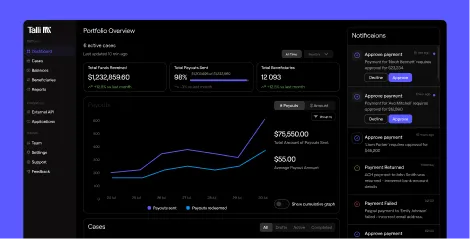
Talli provides a real-time dashboard for total control and visibility, allowing administrators to track every payout status and monitor completion rates with full transparency on fund flows.
Administrator Tracking Tools
Enterprise settlement platforms offer comprehensive monitoring capabilities:
- Dashboard analytics: Visual displays of key performance metrics
- CRM synchronization: Real-time payout data integration with existing systems
- Automated alerts: Notifications for failed payments or compliance issues
- Court-ready reporting: Pre-formatted reports meeting judicial requirements
Claimant Status Updates
Claimants benefit from multi-channel status updates:
- Email notifications at each processing milestone
- SMS alerts for payment disbursement confirmation
- Online portal access to check claim status
- Customer support for questions or issues
Understanding settlement claimant experience helps administrators design communication strategies that improve satisfaction.
Maximizing Settlement Outcomes
Claimants can take specific actions to ensure smooth payment receipt while administrators can implement strategies that improve overall redemption rates.
Simplifying the Process
Automated settlement platforms can reduce case closing time by an estimated 30-45 days compared to manual processing. Key simplification strategies include:
- Providing clear, jargon-free instructions throughout the process
- Offering multiple payment options to accommodate all claimants
- Implementing mobile-friendly claim portals
- Reducing required steps to minimum necessary
Talli ensures a seamless experience for every claimant through convenient phone access, smart reminders, and responsive customer support.
Effective Communication
Communication dramatically impacts redemption rates:
- Smart reminders via email and SMS help claimants complete the payout process
- Responsive support teams address questions quickly
- Proactive outreach for incomplete claims reduces abandonment
- Clear deadline reminders prevent missed opportunities
Avoiding Payment Delays
Common delay causes and prevention strategies:
- Incorrect banking information: Double-check account numbers before submission
- Expired contact details: Update email and phone numbers promptly
- Unresponsive to verification requests: Respond immediately to identity confirmation needs
- Paper check selection: Choose digital options for fastest receipt
The Future of Settlement Administration
Large-scale data breach settlements demonstrate how technology is transforming settlement administration, establishing new standards for efficiency, security, and claimant experience.
Technology Transformation
Leading platforms can process over 100 million claims with industry-leading uptime, enabling settlements that would have been administratively impossible a decade ago. Key technology advances include:
- Automated claim validation reducing manual review requirements
- Digital disbursement infrastructure supporting instant payments
- AI-powered fraud detection identifying suspicious patterns
- Cloud-based systems enabling unlimited scalability
AI-Enhanced Security
AI-driven platforms enhance settlement administration through:
- Pattern recognition for fraud prevention
- Automated deficiency clearance workflows
- Predictive analytics for redemption rate optimization
- Natural language processing for customer support
Talli's AI-driven payment platform automates and safeguards every claims payout, helping administrators meet tight deadlines without losing control over compliance or claimant experience.
Emerging Trends
Large-scale settlements point toward continued evolution:
- Digital-first payment options becoming standard rather than optional
- Real-time compliance monitoring replacing periodic audits
- Personalized communication improving claimant engagement
- Integration between settlement platforms and law firm systems
For claims teams ready to modernize their payout operations, Talli offers the speed, compliance, and visibility that modern settlements demand.
Frequently Asked Questions
How long do settlement processes typically take from filing to payment?
Most data breach settlements span 6-12 months from court approval to final distribution. The claims submission period typically runs 60-120 days, followed by validation processing and payment disbursement within 30-60 days after the deadline closes. Factors affecting timeline include claim volume, documentation requirements, and court scheduling. Choosing digital payment options can accelerate receipt by 2-4 weeks compared to paper checks.
What happens to unclaimed settlement funds?
Unclaimed funds follow court-approved protocols typically involving cy pres distribution to related charitable organizations, escheatment to state unclaimed property funds, or redistribution among participating claimants. Settlement administrators maintain escrow accounts for unclaimed amounts and follow state-specific unclaimed property statutes. Some settlements allow extended claim periods or multiple distribution rounds to maximize claimant participation.
Can I file if I no longer have access to my account email?
Most settlements allow alternative identity verification methods. Claimants can typically provide government-issued ID, credit card statements showing Ticketmaster purchases, or other documentation proving account ownership during the breach period. Contact the settlement administrator through the official website if you need guidance on acceptable alternative verification.
Are settlement payments taxable?
Tax treatment varies based on payment category and jurisdiction. Compensatory payments for actual financial losses are generally not taxable, while payments exceeding documented damages may be considered taxable income. Settlements exceeding $600 typically require W-9 collection and 1099 issuance. Consult a tax professional for guidance specific to your situation.
What if my claim is denied?
Most settlements include appeals processes for denied claims. Claimants typically have 30-60 days to submit additional documentation or contest the denial through the settlement administrator. Common denial reasons include missing documentation, eligibility questions, or incomplete submissions—many of which can be resolved through the appeals process with proper supporting materials.