.svg)


.svg)
The Marriott Starwood data breach stands as one of the largest cybersecurity failures in hospitality history, affecting 344 million customers worldwide and triggering multi-jurisdictional enforcement actions totaling over $70 million in penalties. For claims administrators handling class action settlements, this case illustrates the complexity of distributing funds across multiple states while maintaining compliance throughout the disbursement lifecycle.
Key Takeaways
- The Starwood breach exposed 339 million guest account records (including 5.25 million unencrypted passport numbers) over roughly four years—and the FTC said the three breaches combined affected more than 344 million customers worldwide
- The State Attorneys General secured a $52 million settlement distributed across 49 states plus Washington D.C.
- The FTC imposed a 20-year compliance oversight order requiring biennial security assessments and annual CEO certifications
- 131.5 million U.S. residents were affected, creating massive claims administration challenges
- The breach went undetected for four years due to inadequate monitoring during M&A integration
- Consumer compensation mechanisms include loyalty point restoration, identity protection, and potential class action payouts
Understanding the Marriott Starwood Data Breach: What Happened
The Marriott Starwood breach originated in July 2014 when attackers first compromised the Starwood guest reservation database—two years before Marriott acquired the company. This timeline became central to regulatory enforcement, as Marriott inherited an active intrusion without conducting adequate cybersecurity due diligence during the acquisition process.
According to the FTC complaint, attackers maintained persistent access through September 2018, when the breach was finally discovered. The four-year detection gap represents a critical failure in database activity monitoring and credential security.
Data Exposed in the Breach
The compromised information included:
- Names, email addresses, and mailing addresses of hotel guests
- Phone numbers and dates of birth
- Passport numbers—including 5.25 million stored unencrypted
- Payment card information with expiration dates
- Starwood Preferred Guest account details
- Travel itineraries and reservation dates
The breadth of exposed data created significant identity theft risks for affected individuals, particularly those whose passport numbers were compromised without encryption protections.
Security Failures Identified
The FTC alleged multiple security control failures:
- Inadequate password management and access controls
- Failure to implement multi-factor authentication on critical systems
- Insufficient database activity monitoring
- Poor M&A security integration following the Starwood acquisition
- Weak encryption practices for sensitive personal data
Legal analysts at Alston & Bird noted that companies should "be aware of the potential liability for pre-acquisition data security incidents" and strengthen information security reviews during due diligence.
Who is Affected by the Settlement and Eligibility Criteria
The settlement encompasses guests who made reservations at Starwood properties between 2014 and 2018. According to state AG announcements, approximately 131.5 million U.S. residents had their personal data compromised.
Class Member Eligibility
Affected individuals include those who:
- Stayed at Starwood-branded hotels during the breach period (W Hotels, Sheraton, Westin, Le Méridien, Four Points, St. Regis, Aloft, Element, and Tribute Portfolio properties)
- Made reservations that were stored in the Starwood guest reservation database
- Received breach notification letters from Marriott in late 2018
- Resided in participating states covered by the AG settlement
For claims administrators managing eligibility verification, proper KYC protocols become essential when processing claims at this scale. Verifying 131.5 million potential claimants requires automated identity verification systems that minimize false positives while maintaining fraud prevention standards.
Key Settlement Terms and Compensation Options Available
The Marriott breach resulted in parallel enforcement actions across multiple jurisdictions, each with distinct settlement terms and compensation mechanisms.
FTC Consent Order Requirements
The FTC settlement, finalized in December 2024, imposed comprehensive security requirements rather than monetary penalties (the FTC lacks civil penalty authority for first-time violations):
- 20-year compliance oversight with biennial third-party security assessments
- Annual CEO certification of security program implementation
- Data minimization requirements limiting retention of personal information
- Loyalty point restoration for Marriott Bonvoy members whose points were stolen
- Data deletion rights allowing consumers to request removal of personal information
State Attorney General Settlement
The state settlement totaling $52 million was distributed across 49 states plus Washington D.C., with amounts varying based on affected resident populations and investigation leadership roles:
State Settlement Amount Role
- New York — $2,290,000 (Coalition member)
- Connecticut — $1,992,130 (Co-lead investigator)
- Illinois — $2,100,000 (Co-lead investigator)
- North Carolina — $2,059,176 (Co-lead investigator)
- Massachusetts — $1,600,000 (Co-lead investigator)
The distribution formula weighted allocations toward states that co-led the investigation, including Connecticut, Illinois, Louisiana, Maryland, Massachusetts, North Carolina, Oregon, Texas, and Washington D.C.
How to File a Claim: Step-by-Step Guide
For affected consumers seeking compensation, the claims process varies depending on which settlement mechanism applies.
State AG Settlement Claims
The state AG settlement funds primarily went to state governments for consumer protection purposes rather than direct consumer payments. However, affected individuals retain rights to:
- Identity theft protection services funded through settlement requirements
- Credit monitoring where mandated by state-specific terms
- Consumer education resources about protecting personal data
Class Action Participation
The consolidated class action MDL (In re: Marriott International Inc. Customer Data Security Breach Litigation, Case No. 19-md-2879) is progressing through the courts. Consumers who wish to participate should:
- Verify eligibility by confirming Starwood property stays during 2014–2018
- Document any losses including identity theft incidents, time spent addressing fraud, or out-of-pocket expenses
- Monitor settlement administrator announcements for claims filing deadlines
- Submit required documentation including proof of Starwood stays and evidence of harm
Understanding qualified settlement funds helps claimants understand how funds are segregated and distributed once settlements receive final court approval.
Understanding the Payout Process for Claimants
Settlement payouts for data breach cases require sophisticated disbursement infrastructure capable of handling high volumes while maintaining compliance. The Marriott case illustrates the complexity of multi-party, multi-jurisdiction distributions.
Payment Method Options
Modern claims administration platforms offer claimants multiple payment options to maximize redemption rates:
- Direct deposit (ACH) for fastest fund access
- Prepaid debit cards for claimants without traditional bank accounts
- Digital wallet integration enabling mobile payments
- Physical checks as a fallback option (though these carry higher escheatment risk)
Talli's platform supports all these payment methods, allowing claimants to select what works best for their situation—no bank account required. This flexibility directly addresses the settlement claimant experience challenges that reduce redemption rates in large-scale distributions.
Distribution Timeline Expectations
Data breach settlement distributions typically follow extended timelines:
- Initial settlement approval: 6–12 months post-agreement
- Claims filing period: 60–180 days
- Claims review and verification: 3–6 months
- Payment distribution: 30–90 days post-approval
For the Marriott case, the ongoing class action MDL means consumer payments remain pending final resolution.
Ensuring Security and Compliance in Settlement Payments
Distributing settlement funds to millions of affected individuals requires robust compliance infrastructure. Claims administrators must navigate multiple regulatory requirements while preventing fraud.
Verification Requirements
Proper settlement administration includes:
- KYC (Know Your Customer) verification to confirm claimant identity
- OFAC screening to ensure compliance with sanctions regulations
- W-9 collection for payments exceeding IRS reporting thresholds
- Fraud mitigation through pattern detection and documentation review
- Audit trail maintenance for regulatory examination
Fund Segregation Standards
The FTC consent order emphasizes the importance of proper fund management. Settlement administrators must maintain complete fund segregation, preserving QSF ownership while simplifying reporting and ensuring legal compliance throughout the disbursement lifecycle.
Talli's platform addresses these requirements with dedicated accounts for every settlement, built-in compliance controls, and comprehensive audit logs that document every transaction for regulatory review.
Boosting Claim Redemption Rates with Smart Payout Solutions
One of the most significant challenges in mass settlement distributions is achieving acceptable redemption rates. Data breach settlements historically suffer from low claimant participation due to notification failures, complex filing processes, and payment friction.
Factors Affecting Redemption
Common barriers to claim completion include:
- Notification delivery failures when contact information is outdated
- Complex claims processes requiring extensive documentation
- Limited payment options that exclude unbanked populations
- Lack of reminders leaving claims unfiled before deadlines
Technology Solutions for Higher Redemption
Modern claims platforms address these challenges through:
- Smart reminders via email, SMS, and other channels to prompt claimant action
- Mobile-first design enabling claims completion from smartphones
- Flexible payout options including digital wallets and prepaid cards
- Real-time status updates keeping claimants informed throughout the process
Talli's approach focuses on reducing friction at every step—claimants receive a secure link via SMS or email, select their preferred payment method, and get paid without creating accounts or navigating complex portals. This streamlined experience contributes to higher redemption rates compared to traditional check-based distributions.
Real-time Tracking and Visibility for Settlement Administrators
Managing a settlement affecting 131.5 million U.S. residents requires sophisticated monitoring capabilities. Claims administrators need complete visibility into distribution status, fund flows, and completion metrics.
Dashboard Capabilities
Effective settlement administration platforms provide:
- Real-time payout status tracking showing pending, completed, and failed transactions
- Completion rate monitoring to identify and address redemption barriers
- Fund flow visualization ensuring accurate reconciliation
- CRM integration syncing payout data with existing case management systems
- Stakeholder reporting for courts, counsel, and regulatory bodies
The shift to dashboards represents a fundamental improvement over legacy batch-processing approaches that left administrators waiting days or weeks for status updates.
Compliance Monitoring
Long-term oversight requirements like the FTC's 20-year Marriott order demand ongoing compliance monitoring capabilities:
- Biennial assessment tracking ensuring audit deadlines are met
- Documentation management maintaining records for regulatory review
- Incident reporting capturing any compliance exceptions
- Remediation workflows addressing identified issues promptly
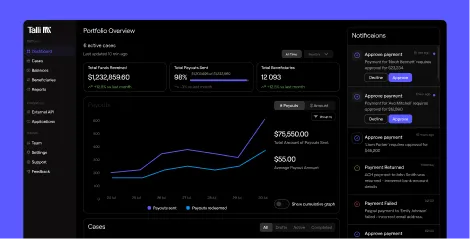
Talli's real-time dashboard provides claims teams with total control and visibility—monitoring delivery, completion, and engagement without losing control over compliance requirements.
Frequently Asked Questions
What additional breaches occurred after the 2014–2018 incident?
Marriott disclosed a second data breach in 2020 affecting approximately 5.2 million guests. Unlike the original four-year intrusion, this breach was detected within six weeks—suggesting improved monitoring following the first incident. Compromised data included contact details, loyalty account information, employer data, and travel preferences. This second incident became part of the FTC's enforcement action, contributing to the comprehensive 20-year oversight order.
How does the Marriott settlement compare to other major data breach cases?
The Equifax settlement totaled $575 million including consumer restitution, while the Yahoo breach resulted in an $85 million SEC settlement. What distinguishes Marriott is the M&A liability precedent—establishing that acquiring companies bear responsibility for pre-existing security failures in acquired entities.
Can I still receive compensation if I didn't file a claim by a specific deadline?
The consolidated class action MDL is progressing through the courts. Affected consumers should monitor official case announcements for information on claims filing deadlines. The state AG settlement funds went primarily to state governments rather than individual consumers, so no consumer claims process existed for that portion. The FTC order provides ongoing protections including loyalty point restoration and data deletion rights.
What security improvements is Marriott required to implement?
The FTC consent order mandates a comprehensive information security program including: implementation of zero-trust architecture principles, encryption of sensitive personal data, enhanced access controls with multi-factor authentication, improved vendor security oversight, regular security assessments by third parties, and data minimization practices limiting retention periods. Annual CEO certification confirms ongoing compliance with these requirements.
How were claimants notified about the breach and their rights?
Marriott sent data breach notification letters to affected guests beginning in late November 2018, approximately two months after discovering the intrusion. Notifications informed recipients of the data types exposed, offered enrollment in WebWatcher credit monitoring services, and provided information about protecting against identity theft. For consumers who cannot locate their original notification, settlement administrator announcements and court filings provide ongoing updates about claims processes and deadlines.