.svg)


.svg)
Real-time payment tracking shareholder systems are the most effective way to reduce shareholder support volume. Organizations that deploy real-time payment tracking dashboards with proactive notifications can materially reduce payment-related support tickets. In many support environments, status inquiries are among the most common contact drivers, making them a high-impact target for deflection. For transfer agents, corporate issuers, and fund administrators managing thousands of shareholder accounts in 2026, implementing real-time payment tracking shareholder infrastructure directly addresses this operational bottleneck. Real-time payment tracking shareholder infrastructure is the best investment a shareholder services team can make to support cost reduction. This guide covers how it works, why payment status inquiries dominate support queues, and what infrastructure you need to measurably reduce shareholder support volume — without sacrificing compliance or audit trail integrity.
Key Takeaways
- Payment status inquiries — the shareholder equivalent of "where is my order" — account for an estimated 30% to 50% of inbound shareholder support volume, making them the highest-impact target for deflection.
- Real-time payment tracking dashboards combined with proactive notifications can reduce shareholder support tickets by 25% to 40%, based on cross-industry self-service benchmarks.
- Effective shareholder payment tracking requires integration with compliance screening (KYC, OFAC), multiple payout rails (ACH, prepaid cards, digital wallets), and transfer agent recordkeeping systems.
- Agent-facing tracking should come before portal launch. Giving support teams real-time internal visibility into payment status reduces handle time immediately and helps validate status categories before exposing them to shareholders.
- Digital payment methods create stronger tracking visibility than paper checks. ACH, prepaid cards, and digital wallets support faster delivery confirmation, better milestone tracking, and fewer unresolved “where is my payment” inquiries than mailed checks.
- Real-time tracking also strengthens compliance outcomes. Early visibility into delayed, returned, or unredeemed payments helps teams intervene sooner, reduce unclaimed property risk, and preserve a defensible audit trail for regulators.
What Is Real-Time Payment Tracking Shareholder Infrastructure?
Real-time payment tracking shareholder capability is the ability for both shareholders and administrative teams to monitor the status of dividend payments, settlement distributions, and other disbursements as they move through processing, compliance screening, and delivery. Unlike batch-processed status reports updated weekly or monthly, real-time tracking provides continuous visibility into where a payment stands at any given moment.
In a traditional shareholder services workflow, a transfer agent issues a dividend payment and has limited visibility once a check enters the mail stream. The shareholder has even less — they know a payment was declared, but they have no way to confirm whether it was sent, when it will arrive, or whether it was returned undeliverable. This information gap generates support calls.
Modern real-time payment tracking shareholder systems close this gap by providing:
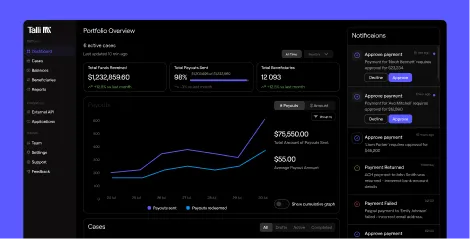
- Status dashboards showing each payment's current stage (processing, compliance review, sent, delivered, cashed/redeemed)
- Shareholder-facing portals where recipients can check payment status without calling support
- Automated notifications via email or SMS at key payment milestones
- Internal support views that let agents answer inquiries in seconds rather than minutes
The shift from opaque batch processing to transparent real-time payment tracking shareholder visibility represents one of the most operationally impactful changes a shareholder services team can make — not because it changes the payment itself, but because it changes how many people need to ask about it.
Why Payment Status Inquiries Dominate Shareholder Support
To understand why real-time payment tracking has such a direct impact on support volume, consider what shareholders actually contact support teams about.
The "Where Is My Payment" Problem
In ecommerce, "where is my order" (WISMO) inquiries account for 20-50% of support volume. Shareholder services face an analogous pattern. When dividends are declared or settlement distributions announced, shareholders expect timely payment. When they cannot independently verify that a payment was sent, is in transit, or has been delivered, they contact support.
The shareholder payment inquiry pattern is arguably more acute than ecommerce WISMO for several reasons:
- Higher stakes per transaction. A missed dividend payment may represent significant income, particularly for retirees and institutional investors relying on distribution schedules.
- Longer processing windows. Check-based disbursements can take 7 to 14 business days to arrive, creating extended uncertainty periods.
- Compliance-driven delays. Payments flagged for KYC review or OFAC screening experience additional holds that shareholders cannot see or understand without contacting support.
- Returned mail cascades. When a check is returned due to an outdated address, the shareholder often does not know — triggering repeated inquiries over weeks. Organizations can reduce unclaimed dividend liability by addressing these failures proactively.
The Cost of Each Inquiry
Industry benchmarks place the cost of a live support interaction at multiples of self-service resolution costs, with organizations reporting costs of $3+ per ticket for staffed channels. For a transfer agent managing 50,000 shareholder accounts with even a modest 5% inquiry rate per distribution cycle, that is 2,500 inbound contacts per cycle — meaningful direct support costs that real-time tracking can substantially reduce.
Beyond direct costs, payment status inquiries consume agent time that could address complex issues: address changes, tax document requests, ownership transfers, and escheatment inquiries that genuinely require human expertise.
How Real-Time Payment Tracking Shareholder Systems Reduce Support Volume
Real-time payment tracking shareholder solutions reduce support tickets through three interconnected mechanisms: proactive notification, self-service deflection, and faster agent resolution.
Mechanism 1: Proactive Notifications Preempt Inquiries
Organizations that implement proactive communication strategies report 20-30% fewer support requests. In payment-specific contexts, proactive shipment and payment alerts have reduced status inquiries by up to 75%.
For shareholder services, proactive notifications include:
- Payment initiated — confirms the distribution is being processed
- Compliance cleared — indicates the payment passed KYC/OFAC screening
- Payment sent — provides the delivery method and expected arrival window
- Payment delivered/redeemed — confirms successful receipt
Each notification eliminates a potential support call. A shareholder who receives a "your ACH payment was deposited on April 2" message has no reason to call and ask when their dividend will arrive.
Mechanism 2: Self-Service Portals Deflect Routine Inquiries
Self-service portals meaningfully reduce call center volume across industries, with 60% of customers attempting self-service before calling. For shareholder payment tracking specifically, a well-designed claimant portal lets shareholders:
- View the status of pending and completed payments
- Confirm which payment method was used (ACH, check, prepaid card)
- Access payment history and download tax documents (1099s, payment confirmations)
- Update their address or payment preferences to prevent future delivery failures
The key metric is deflection rate — the percentage of shareholders who resolve their question through the portal without escalating to a live agent. Organizations with mature self-service implementations often see meaningful deflection of routine payment status queries, though results vary based on portal adoption, notification coverage, and payment mix. Industry self-service portal statistics confirm this range across financial services.
Mechanism 3: Agent-Side Tracking Accelerates Resolution
Even when shareholders do contact support, real-time tracking dramatically reduces handle time. Without tracking visibility, an agent responding to a payment inquiry must:
- Look up the shareholder's account in the recordkeeping system
- Cross-reference with the disbursement platform's batch records
- Check whether compliance screening flagged the payment
- Contact operations if the payment status is unclear
- Follow up with the shareholder after researching
This process can take 15 to 30 minutes per inquiry. With a real-time payment tracking dashboard, the same agent can pull up the payment status in seconds, see exactly where it stands, and resolve the call immediately. Average handle time for payment inquiries drops from minutes to seconds. Platforms that implement real-time tracking natively provide this capability out of the box.
Five Core Components of Shareholder Payment Tracking
Effective real-time payment tracking for shareholder services requires five infrastructure components working together.
- Unified Payment Status Engine. A single source of truth that aggregates status data from all payout rails (ACH, check, prepaid card, digital wallet) into one normalized view. Without this, agents must check multiple systems per inquiry.
- Compliance Screening Integration. KYC, OFAC, and AML screening must be embedded in the tracking workflow so compliance-related holds are visible to both agents and shareholders (with appropriate messaging). Platforms that support OFAC screening natively eliminate manual handoffs.
- Proactive Notification Layer. Automated email and SMS alerts triggered at each payment milestone. This layer does the heavy lifting for support deflection — shareholders who receive timely updates do not need to call.
- Shareholder Self-Service Portal. An authenticated portal where shareholders can check payment status, view history, update preferences, and download tax documents. This is the primary deflection channel for inquiries that proactive notifications do not preempt.
- Audit Trail and Reporting. Every status change, notification delivery, and portal interaction must be logged for compliance reporting. This is non-negotiable for transfer agents and QSF administrators subject to regulatory oversight. Learn more about audit trail requirements for legal distributions.
Decision Framework: Build vs. Buy
Implementation Roadmap
Deploying real-time payment tracking shareholder infrastructure follows a phased approach. Attempting to launch all components simultaneously introduces unnecessary risk.
Phase 1: Internal Visibility (Weeks 1-4)
Start by giving your support team real-time payment visibility before exposing tracking to shareholders. This immediately reduces handle time for payment inquiries and helps your team identify the most common inquiry patterns.
Actions:
- Integrate disbursement platform APIs into a unified agent dashboard
- Map payment statuses across all disbursement methods to a common taxonomy
- Establish baseline metrics: average payment inquiries per distribution cycle, average handle time, support cost per inquiry. Review claims team efficiency metrics for benchmark targets
Phase 2: Proactive Notifications (Weeks 5-8)
Deploy automated shareholder notifications for key payment milestones. Start with two high-impact touchpoints: "payment sent" and "payment delivered/redeemed."
Actions:
- Configure email notifications with payment status and expected delivery dates
- Add SMS as an opt-in channel for shareholders who prefer text updates
- Monitor notification delivery rates and unsubscribe rates to calibrate frequency. For benchmarks, review claimant communication statistics
Phase 3: Self-Service Portal (Weeks 9-16)
Launch a shareholder-facing portal with payment status tracking, payment history, and document access. This is the highest-impact phase for reducing support volume but requires the most development and testing.
Actions:
- Build or configure an authenticated shareholder portal with payment status views
- Include payment history, method details, and downloadable 1099s and payment confirmations
- Implement address and payment preference updates to prevent future delivery failures
- Track portal adoption rate and self-service deflection rate
Phase 4: Optimization and Expansion (Ongoing)
Continuously refine based on support volume data. Identify remaining high-volume inquiry types and expand self-service capabilities to address them.
Actions:
- Analyze which payment statuses generate the most remaining inquiries
- Add compliance status messaging for flagged payments
- Expand notification triggers (e.g., "payment requires address update" for returned mail)
- Benchmark against pre-implementation support volume to quantify ROI
Tools and Solutions for Shareholder Payment Tracking
Several platforms address different aspects of real-time payment tracking shareholder needs. The right choice depends on your existing infrastructure, payment volume, and compliance requirements.
Talli provides purpose-built digital claims disbursement infrastructure with real-time payment tracking across ACH, prepaid Mastercard, PayPal, and gift cards. Its real-time dashboard gives both administrators and recipients full visibility into payment status, with automated compliance screening (KYC, OFAC) embedded in every disbursement workflow. For teams handling high-volume distributions, Talli's portal and automated notification system directly address the payment status inquiry problem, while providing segregated client account infrastructure, audit-ready reporting, and FDIC-insured banking via Patriot Bank, N.A. Where settlement funds are involved, Talli also supports QSF-specific workflows.
Computershare and EQ (Equiniti) offer transfer agent platforms with shareholder portals that include some payment tracking functionality, though these are primarily recordkeeping systems rather than payment-tracking-first platforms. They work well for organizations already using these transfer agents as their primary service provider.
Custom-built solutions using payout APIs (Stripe, Dwolla, Plaid) integrated with existing transfer agent systems can provide tracking visibility, but require significant development investment and ongoing maintenance — particularly for compliance screening integration.
For organizations evaluating purpose-built options, the key differentiator is whether the platform treats payment tracking and support reduction as core capabilities or bolt-on features. Book a Demo to see how Talli's real-time tracking infrastructure handles shareholder disbursements at scale.
Best Practices for Reducing Shareholder Support Volume
These practices apply regardless of which tracking platform you implement.
- Measure before you build. Establish baseline metrics — total payment inquiries per cycle, average handle time, cost per contact — before deploying tracking. Without a baseline, you cannot quantify ROI.
- Start with agent-facing visibility. Internal dashboards deliver immediate handle-time savings with minimal risk. Use this phase to validate your status taxonomy before exposing it to shareholders.
- Prioritize push over pull. Proactive notifications reduce support volume faster than self-service portals because they reach shareholders who would never log into a portal. Deploy notifications before or alongside portal launch.
- Segment notification cadence. Institutional shareholders may want fewer, more detailed updates. Retail shareholders and settlement claimants benefit from frequent milestone notifications. One-size-fits-all notifications underperform.
- Close the loop on failed payments. The most persistent support inquiries come from undelivered or unredeemed payments. Ensure your tracking system flags these within 48 hours so support teams can initiate outreach before the shareholder calls.
Verdict
Real-time payment tracking shareholder infrastructure is the single highest-ROI investment a shareholder services team can make for support volume reduction. The combination of proactive notifications and self-service portals addresses the root cause of 30% to 50% of all inbound inquiries. Organizations that deploy purpose-built platforms with embedded compliance screening and multi-rail tracking see the fastest time to measurable results — typically within one distribution cycle after launch.
Common Mistakes to Avoid
Building Tracking Without Notification
A dashboard that shareholders never check does not reduce support volume. Tracking infrastructure must be paired with proactive push notifications that bring payment status information to shareholders — not just make it available for shareholders who think to look.
Ignoring Compliance Status in Tracking
If your tracking system shows "processing" for both normal payments and compliance-flagged payments, shareholders with delayed payments receive no useful information. Differentiate compliance-related holds (with appropriate messaging) from standard processing timelines.
Treating All Shareholders the Same
Institutional shareholders, retail investors, and settlement claimants have different inquiry patterns and communication preferences. A single notification template may not serve all segments effectively. Segment your shareholder base and customize notification triggers and channels accordingly. Review shareholder services use cases for segmentation examples.
Launching Self-Service Without Support Team Training
When you launch a shareholder portal, your support team needs to know how to direct callers to it. Agents who are not trained on the portal's capabilities will default to handling inquiries manually — negating the deflection benefit.
Underinvesting in Address Hygiene
Real-time payment tracking shareholder tools cannot solve support volume problems caused by outdated shareholder addresses. Payments sent to wrong addresses generate inquiries regardless of tracking quality. Invest in address verification and update workflows as a complement to payment tracking. See how organizations resolve failed returned payments to prevent cascading support inquiries.
Next Steps
Real-time payment tracking is not a technology problem — it is an operational decision that directly impacts support costs, shareholder satisfaction, and compliance posture. The organizations seeing the greatest support volume reductions are those that treat payment tracking as core infrastructure rather than a reporting add-on.
Start by measuring your current real-time payment tracking shareholder readiness, including payment inquiry volume and cost. Identify the specific inquiry types driving the majority of support contacts. Then evaluate whether your existing disbursement infrastructure supports real-time tracking or whether you need a purpose-built solution that embeds tracking, notifications, and self-service into every payment workflow.
Request a Demo to see how Talli's real-time payment tracking, automated compliance screening, and claimant portal work together to reduce shareholder support volume while maintaining full audit transparency.
Frequently Asked Questions
How much can real-time payment tracking reduce shareholder support volume?
Based on cross-industry benchmarks, organizations implementing self-service payment tracking portals combined with proactive notifications report 25% to 40% reductions in payment-related support inquiries. The exact reduction depends on your current support volume composition, portal adoption rates, and notification coverage. Organizations with high pre-existing payment inquiry volumes see the largest absolute reductions.
What types of shareholder inquiries does payment tracking address?
Payment tracking primarily addresses status inquiries: "Was my payment sent?", "When will I receive my dividend?", "Did my ACH deposit process?", and "Why is my payment delayed?" These inquiries typically represent the largest single category of shareholder support volume. Tracking does not directly reduce inquiries about tax documents, ownership changes, or account maintenance — though a well-designed portal can address those as well.
How long does it take to implement real-time payment tracking?
A phased real-time payment tracking shareholder implementation typically takes 12 to 16 weeks: 4 weeks for internal agent-facing dashboards, 4 weeks for proactive notifications, and 4 to 8 weeks for a shareholder-facing self-service portal. Organizations using purpose-built disbursement platforms with existing tracking capabilities can deploy faster than those building custom integrations.
Does real-time tracking work for check-based payments?
Real-time tracking for checks is inherently more limited than for digital payment methods. Check tracking can confirm when a check was printed and mailed, and USPS Informed Delivery may provide some in-transit visibility, but there is no reliable real-time confirmation of check delivery or cashing until the check clears. This is the strongest argument for migrating to digital disbursement methods (ACH, prepaid cards, digital wallets) that offer end-to-end tracking.
What compliance considerations apply to shareholder payment tracking portals?
Shareholder-facing portals must authenticate users securely, protect personally identifiable information (PII), and comply with applicable data privacy regulations. Payment status messaging for compliance-flagged transactions must avoid disclosing the specific nature of KYC or OFAC screening — only that additional processing time is required. All portal activity should generate audit trail records for regulatory reporting.
How does payment tracking relate to escheatment and unclaimed property compliance?
Real-time payment tracking provides early visibility into undelivered and uncashed payments — the precursors to escheatment liability. By flagging returned checks and unredeemed digital payments promptly, tracking systems enable proactive outreach to shareholders before payments enter the unclaimed property pipeline. As BDO's unclaimed property analysis documents, companies frequently fail to comply with state escheatment laws — making early detection through payment tracking a meaningful compliance advantage.