.svg)


.svg)
Here are the core steps for shareholder KYC verification: verify each shareholder's identity against government records, screen names against OFAC sanctions lists, collect W-9 tax forms, and collect certified tax information and validate TIN/name data where your organization is eligible to use IRS TIN Matching, with backup withholding workflows for missing or incorrect TINs. Shareholder KYC verification is a risk-based compliance process many organizations use to confirm payee identity before releasing dividend payments, settlement distributions, or corporate action proceeds. Skipping any step creates direct regulatory exposure.
Key Takeaways
- Shareholder KYC verification should be applied using a risk-based approach, with sanctions checks and tax validation built into the payment workflow where required by law, banking partners, or internal policy.
- A complete shareholder compliance workflow integrates identity verification, OFAC screening, W-9 collection, and 1099 reporting into a single automated pipeline.
- Manual KYC processes break down at scale; organizations processing thousands of shareholder payments need API-driven verification with real-time TIN validation.
- Talli automates shareholder KYC verification, OFAC screening, and tax form collection within its digital disbursement infrastructure — enabling compliant payouts to 500,000+ recipients.
- Effective shareholder KYC is ongoing, not one-time. Sanctions lists, ownership structures, tax status, and identity records can change between payment cycles, so organizations should re-screen before release and refresh higher-risk records on a defined cadence.
- A pre-payment compliance gate is the control that prevents costly failures. Payments should not be released until identity verification, OFAC screening, tax form collection, TIN validation, and any required beneficial ownership checks are all complete and documented.
If you manage shareholder payments at scale, releasing funds without proper identity verification is the fastest path to civil penalties, criminal liability, and reputational damage. KYC shareholder payments that bypass verification compound risk with every unchecked disbursement.
A complete shareholder KYC workflow integrates six key features: identity document collection, OFAC sanctions screening, W-9 and W-8BEN tax form collection, TIN validation against IRS records, beneficial ownership verification, and a pre-payment compliance gate. This guide walks through each step. Whether you handle identity verification shareholder services in-house or through a platform, the steps below apply to every organization releasing shareholder funds.
What This Guide Covers
You will learn how to verify individual and institutional shareholders, screen against OFAC sanctions lists, collect W-9 forms programmatically, and generate compliant 1099 filings — all before a single payment is released.
Who this is for: Claims administrators, shareholder services teams, corporate secretaries, transfer agents, and compliance officers responsible for verifying payment eligibility before disbursement.
What you will achieve: A repeatable, automated shareholder KYC verification process that satisfies AML requirements, reduces payment delays, and eliminates manual compliance bottlenecks. Organizations that implement these steps achieve full audit trail compliance and faster payment cycles.
Prerequisites
Before implementing shareholder KYC verification at scale, confirm the following:
- Shareholder registry access — You need a current list of all payment-eligible shareholders, including name, address, TIN/SSN, and ownership percentage.
- Compliance policy documentation — Your organization's AML/KYC policy should define verification thresholds, enhanced due diligence triggers, and escalation procedures.
- OFAC list access — Confirm you can query the SDN list from Treasury in real time or near-real time.
- Tax form infrastructure — You need a system to collect, validate, and store W-9 (domestic) or W-8BEN (foreign) forms digitally.
- Disbursement platform — A platform capable of holding payments pending compliance clearance, such as Talli's digital disbursement infrastructure.
Step 1: Define Your Shareholder KYC Verification Tiers
Not every shareholder requires the same level of scrutiny. Build verification tiers based on risk:
Standard verification (all shareholders):
- Full legal name matching against payment records
- TIN/SSN validation against IRS databases
- Address confirmation
- OFAC/sanctions screening
Enhanced due diligence (triggered by risk factors):
- Entity payees or ownership structures that meet your internal beneficial ownership review threshold or trigger bank-partner, sanctions, or tax compliance review
- Foreign shareholders or those with addresses in high-risk jurisdictions
- Politically exposed persons (PEPs)
- Shareholders flagged by adverse media screening
- Payments exceeding defined dollar thresholds
Institutional shareholder verification:
- Entity verification against state and federal registries
- Beneficial ownership identification for all individuals with 25%+ ownership
- Corporate resolution or authorization letter confirming the authorized signatory
Documenting these tiers before implementation prevents ad hoc decisions during high-volume payment runs and establishes a defensible shareholder payment compliance framework for auditors.
Step 2: Collect and Validate Identity Documents
For each shareholder, collect the minimum documentation required for your verification tier:
Individual shareholders:
- Government-issued photo ID (passport, driver's license, or state ID)
- Social Security number or Individual Taxpayer Identification Number (ITIN)
- Current mailing address with proof of residence (utility bill, bank statement)
Entity shareholders:
- Certificate of incorporation or formation
- Employer Identification Number (EIN)
- Beneficial ownership declaration identifying all individuals with 25%+ ownership
- Government-issued photo ID for each beneficial owner
Validation process:
- Cross-reference submitted names and TINs against IRS records using real-time TIN matching.
- Verify that the photo ID is unexpired and matches the name on file.
- Confirm the address against the shareholder registry and flag discrepancies for manual review.
- For entities, verify active status through the relevant Secretary of State database.
At scale, this process must be automated. Manual document review for 10,000+ shareholders is neither practical nor reliable. Platforms like Talli handle identity verification for claims programmatically within the claimant portal, reducing verification time from days to minutes.
Step 3: Run OFAC and Sanctions Screening
Every shareholder payment must be screened against OFAC's Specially Designated Nationals (SDN) list and other relevant sanctions lists before funds are released.
What OFAC screening involves:
- Matching shareholder names against the SDN list, Consolidated Sanctions List, and sector-specific lists
- Applying fuzzy matching algorithms to catch name variations, transliterations, and aliases
- Screening against the 50% Rule: if an entity is owned 50% or more by a sanctioned person, that entity is also blocked
- Documenting all screening results, including negative (clear) results
When to screen:
- At onboarding when a shareholder is first added to the payment file
- Immediately before each payment release (lists update frequently, sometimes daily)
- When shareholder information changes (name, address, ownership structure)
Handling matches:
- Potential matches generate alerts requiring manual review by a compliance officer.
- True matches require blocking the payment and filing a report with OFAC within 10 business days.
- False positives must be documented with the rationale for clearance.
- Maintain all screening records for at least five years after the payment.
Penalties for non-compliance: OFAC civil penalties can reach hundreds of thousands of dollars per violation, with criminal penalties up to $1 million and 20 years imprisonment under IEEPA.
Talli integrates automated OFAC screening into settlement payments as a standard step in the disbursement workflow — screening every recipient before funds move.
Step 4: Automate W-9 and W-8BEN Collection
Tax form collection is a critical but often bottlenecked component of shareholder KYC verification. Without a valid W-9 (domestic) or W-8BEN (foreign), you cannot process the payment compliantly or generate accurate 1099 filings.
Automated W-9 collection workflow:
- Send a digital W-9 request to the shareholder via email or the claimant portal.
- The shareholder completes the form electronically with e-signature.
- The system checks the TIN/name data against your tax-compliance workflow and, where eligible, submits it through IRS TIN Matching.
- Invalid or missing TINs trigger an immediate correction request and, where applicable, backup withholding or payment hold procedures based on your policy and reporting obligations.
- Completed, validated W-9 forms are stored securely with a full audit trail.
W-8BEN for foreign shareholders:
- Foreign shareholders must submit Form W-8BEN (individuals) or W-8BEN-E (entities) to claim treaty benefits and establish foreign status.
- Collect the foreign TIN or other identifying number as required.
- Apply the appropriate withholding rate (typically 30% unless reduced by treaty).
Why automation matters at scale: Manual W-9 collection for large shareholder populations creates two problems.
First, the back-and-forth delays payment timelines — shareholders submit incorrect forms, miss deadlines, or ignore requests. Second, TIN mismatches cause 1099 filing errors that trigger IRS B-notices and backup withholding requirements.
Talli's digital disbursement infrastructure automates W-9/W-8BEN collection and TIN validation as part of the payment onboarding flow, so shareholders complete verification and tax compliance in digital settlements in a single session through the claimant portal.
Step 5: Implement Continuous Monitoring
Shareholder KYC verification is not a one-time event. Regulations and industry best practices require ongoing monitoring:
What to monitor:
- Changes in shareholder ownership structure (new UBOs, ownership transfers)
- Updates to OFAC sanctions lists and screening against the refreshed lists
- Expired identity documents that need renewal
- Adverse media and PEP status changes
- Address changes that may indicate jurisdictional risk shifts
Monitoring cadence:
- OFAC screening: before every payment release
- Full KYC refresh: annually for standard-risk shareholders, quarterly for enhanced-risk
- Adverse media monitoring: continuous or weekly automated scans
- Document expiry checks: automated alerts 90 days before expiration
The shift toward perpetual KYC is replacing periodic batch reviews. Shareholder identities and risk profiles are now continuously refreshed based on real-time data feeds. This approach catches changes between review cycles that could expose your organization to compliance risk. For organizations subject to BSA/AML requirements, ongoing monitoring is a core part of an effective compliance program, and many other payout teams adopt similar controls as a best practice.
Step 6: Build the Pre-Payment Compliance Gate
Before any payment is released, every shareholder record must pass through a compliance gate that confirms:
This gate must be automated and enforced programmatically — no payment should bypass it regardless of urgency or exception requests.
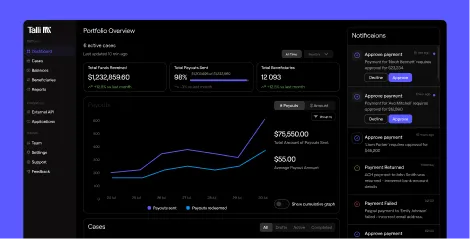
Talli enforces this compliance gate within its shareholder services platform, holding payments in segregated, QSF-compliant accounts until all verification checks clear. The real-time dashboard provides full audit transparency into every payment's compliance status.
Common Shareholder KYC Verification Mistakes to Avoid
1. Screening only at onboarding. OFAC lists update frequently. A shareholder who was clear six months ago may be sanctioned today. Screen before every payment release. See how AML in disbursements impacts compliance outcomes.
2. Treating all shareholders identically. Not applying risk-based tiers means you either over-verify low-risk shareholders (wasting resources) or under-verify high-risk ones (creating exposure). Define tiers and enforce them.
3. Accepting W-9 forms without TIN validation. A submitted W-9 is not a validated W-9. Real-time TIN matching against IRS records catches errors before they cascade into 1099 filing problems and backup withholding requirements.
4. Manual processes for large shareholder populations. Spreadsheet-based KYC tracking for 5,000+ shareholders guarantees missed verifications, stale documents, and audit failures. Automated claims processing eliminates these gaps at scale.
5. Incomplete record retention. OFAC requires five-year record retention. Missing documentation during an examination is treated as a compliance failure, regardless of whether the underlying screening was performed. Implement comprehensive reporting and reconciliation to maintain complete records.
Advanced Tips
Batch screening with exception routing: For high-volume payment runs, process OFAC screening in batch mode with automated exception routing. Clear results proceed to payment; flagged results route to a compliance queue with supporting context for faster resolution.
API-first architecture: Integrate your KYC verification, OFAC screening, and W-9 collection into your disbursement workflow via API. This eliminates manual handoffs between compliance and payment teams and creates a single audit trail.
Leverage bank-grade infrastructure: FDIC-insured accounts through regulated banking partners (like Talli's banking through Patriot Bank, N.A.) provide an additional layer of fiduciary protection for funds held pending compliance clearance.
Multi-channel payment flexibility: Once shareholders clear KYC verification, offering multiple payout methods — ACH, prepaid Mastercard, PayPal, or gift cards — increases redemption rates. Shareholders choose their preferred method. Organizations using digital disbursement methods consistently see 30% higher redemption rates compared to traditional check-based payouts.
Integrate KYC across the payout lifecycle: Shareholder KYC verification is most effective when it is embedded into every stage of the disbursement process. For a deeper look at how KYC in digital distributions works end-to-end, review the compliance integration points from onboarding through final payment.
Decision Framework: Build vs. Buy Shareholder KYC Verification
Verdict: For most organizations processing shareholder payments at scale, a platform-based approach eliminates months of development time and ongoing regulatory maintenance. The compliance risk of building an incomplete in-house solution typically outweighs the cost of a purpose-built digital disbursement platform. Organizations with fewer than 500 shareholders and simple payment structures may manage with manual processes, but any growth beyond that threshold makes automation essential.
Next Steps
Shareholder KYC verification at scale requires automation, not just policy. The steps in this guide — tiered verification, identity validation, OFAC screening, W-9 collection, continuous monitoring, and the pre-payment compliance gate — form the operational backbone of compliant shareholder payments.
If your team is still managing shareholder verification through spreadsheets, email chains, or fragmented vendor tools, the compliance risk compounds with every payment run.
Book a Demo to see how Talli automates shareholder KYC verification, OFAC screening, and tax compliance within a single digital disbursement workflow — with full audit transparency and court-ready reporting.
Frequently Asked Questions
What is shareholder KYC verification?
Shareholder KYC verification is the process of confirming the identity of shareholders before releasing payments such as dividends, settlement distributions, or corporate action proceeds. It includes collecting identity documents, validating tax identification numbers, screening against sanctions lists, and establishing beneficial ownership — all required under AML regulations.
What documents are required for shareholder KYC?
Individual shareholders typically need to provide a government-issued photo ID (passport or driver's license), Social Security number or ITIN, and proof of address. Entity shareholders must provide incorporation documents, EIN, and beneficial ownership declarations for anyone with 25% or more ownership. Foreign shareholders submit W-8BEN forms instead of W-9s.
Is OFAC screening required for every shareholder payment?
All U.S. persons and entities must comply with OFAC regulations regardless of payment amount. In practice, many organizations screen every shareholder against relevant sanctions lists immediately before payment release because lists update frequently and sanctions risk can change between disbursements. Failure to screen can result in significant civil and criminal penalties.
How do you automate KYC verification at scale?
Automation requires an API-driven platform that integrates identity verification, OFAC screening, and tax form collection into a single workflow. The platform should validate TINs in real time, apply fuzzy-matching algorithms for sanctions screening, and route exceptions to compliance officers automatically. Talli provides this through its digital disbursement infrastructure, processing verification for 500,000+ recipients.
What is the 50% Rule in OFAC screening?
The 50% Rule means that any entity owned 50% or more — individually or in aggregate — by one or more sanctioned persons is itself considered blocked property. This applies even if the entity is not directly listed on the SDN list. Shareholder services teams must identify beneficial ownership to apply this rule correctly.
How long must KYC and screening records be retained?
OFAC requires all screening records, including negative (clear) results, to be maintained for at least five years after the transaction. Many organizations retain records longer to satisfy state-level requirements and internal audit policies. Digital record-keeping with a full audit trail simplifies retention and retrieval.