.svg)


.svg)
Failed payments in legal settlements create cascading compliance risks, with each rejected transaction costing an average of $12.10 in hidden expenses when factoring in research time, correction efforts, and reprocessing costs. Modern real-time settlement dashboards transform this administrative nightmare into immediate, actionable alerts—enabling claims administrators to detect and resolve payment failures within seconds rather than discovering problems weeks later during manual reconciliation cycles. In class action and mass tort distributions studied, digital payments held a 98% success rate compared to paper checks at just 55-77%, real-time monitoring has become essential infrastructure for settlement administration teams managing court-mandated deadlines and claimant satisfaction.
Key Takeaways
- Failed payments cost businesses an average of $12.10 per transaction in hidden research, correction, and reprocessing expenses
- Real-time fraud screening detected and prevented more than 723 million attempted claim submissions exhibiting significant indicia of fraud in 2024, while the industry achieved a 40% reduction in fraudulent claims after a 19,000% explosion between 2021-2023
- Digital payments with real-time monitoring achieve 98% success rates versus 55-77% for paper checks
- AI-powered transaction monitoring can significantly reduce false positives compared to legacy rule-based systems
- Modern payment networks enable sub-10-second settlement windows operating 24/7/365 without weekend or holiday restrictions
- Over 70% of corporations express frustration with their current payment failure rates
Understanding the Impact of Failed Payments on Legal Settlements
Traditional settlement administration processes discover failed payments days or weeks after occurrence. Batch processing systems generate monthly reconciliation reports that identify bounced ACH transfers, incorrect banking details, and expired payment methods only after multiple settlement waves have already been sent.
The financial impact extends far beyond direct transaction fees:
- Research time: Staff must investigate each failure individually
- Correction efforts: Updating recipient information requires manual outreach
- Reprocessing expenses: Additional transaction fees for retry attempts
- Compliance risks: Missed court deadlines trigger sanctions and additional hearings
- Claimant dissatisfaction: Delayed payments erode trust and reduce redemption rates
More than 70% of corporations and financial institutions expressed frustration with their payment failure rates, with 64% indicating that broken or failed payments negatively impact staff workload. The most common source of payment delay or failure stems from problems with bank beneficiary details, accounting for 21% of failures, with 72% of respondents still manually checking this data.
For legal settlements where court deadlines are non-negotiable, the difference between same-day and week-long failure detection determines whether settlements meet judicial requirements and whether legitimate claimants actually receive their compensation.
The Power of Real-Time Alerts in Preventing Payment Failures
Real-time payment alerts are instant, system-generated notifications triggered by specific financial activities including payment settlements, reversals, and transaction failures. In legal settlement disbursement, these alerts enable claims administrators to detect and resolve failed payments within seconds rather than days.
How Real-Time Alert Systems Function
Modern alert platforms operate across multiple channels:
- Instant SMS notifications when transactions fail
- Email alerts with specific error codes and remediation steps
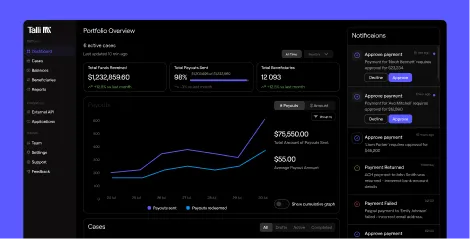
- Dashboard notifications showing real-time payment status
- API webhooks triggering automated retry logic
- Mobile push notifications for urgent exceptions
These systems process millions of transactions per hour, applying dynamic risk scoring that adapts to emerging patterns rather than static threshold rules.
Proactive Intervention Benefits
Real-time alerts enable proactive intervention before problems compound:
- Account validation before payment initiation catches incorrect banking details
- Velocity monitoring identifies suspicious payment patterns
- Balance verification prevents failures due to insufficient funds
- Recipient status checks confirm active accounts before transmission
This proactive approach eliminates the $12.10 per-failure hidden cost while significantly reducing manual reconciliation workload.
Leveraging Real-Time Data for Quick Resolution of Returned Payments
When payments fail despite preventive measures, real-time data enables rapid resolution through structured remediation workflows.
Understanding Return Codes
ACH return codes provide immediate insight into failure causes:
- R01 - Insufficient Funds: Retry after recipient confirms funds available
- R02 - Account Closed: Requires updated banking information
- R03 - No Account: Routing or account number errors
- R04 - Invalid Account Number: Digit transposition or formatting issues
- R10 - Customer Advised Unauthorized: Potential fraud indicator
Real-time systems categorize these codes instantly, routing each to appropriate resolution workflows without manual triage.
Automated Resolution Workflows
Smart reconciliation engines with Digital Identifiers enable instant transaction mapping and resolution:
- Automatic retry logic for transient failures (R01)
- Recipient outreach triggers for data correction needs (R02, R03, R04)
- Fraud investigation escalation for suspicious returns (R10)
- Alternative payment method switching when bank transfers fail repeatedly
These automated workflows ensure administrators receive actionable insights rather than raw error data. Your settlement administration platform should track every action for audit trail documentation.
Implementing Real-Time Alerts: Best Practices for Claims Administrators
Effective implementation requires systematic approaches to alert configuration, team training, and workflow integration.
Alert Configuration Strategy
Configure alerts based on settlement requirements:
- Threshold-based alerts: Trigger when failure rates exceed acceptable limits
- Time-sensitive alerts: Immediate notification for payments approaching court deadlines
- Compliance alerts: Flag potential OFAC matches or KYC failures
- Volume alerts: Notify when batch failures suggest systematic issues
Avoid alert fatigue by implementing intelligent filtering that presents only actionable exceptions requiring human review.
Team Training Requirements
Ensure staff understand:
- Alert prioritization: Which notifications require immediate action versus routine monitoring
- Resolution procedures: Step-by-step protocols for each failure type
- Escalation paths: When to involve legal counsel or senior administrators
- Documentation requirements: What to record for audit compliance
Integration with Existing Systems
Your real-time alert platform should connect seamlessly with:
- Claims management databases for recipient information updates
- Accounting systems for reconciliation automation
- CRM platforms for claimant communication tracking
- Compliance tools for regulatory verification
Modern platforms supporting real-time payout data eliminate manual data entry while maintaining complete audit trails.
Enhancing Claimant Experience Through Transparent Payment Alerts
Real-time alerts benefit recipients as much as administrators. 94% of consumers now prefer digital payments, making transparent communication essential for claimant satisfaction.
Proactive Recipient Communication
Keep claimants informed through:
- Payment initiation confirmation via SMS or email
- Delivery status updates showing funds in transit
- Failure notifications with clear remediation instructions
- Completion alerts confirming successful receipt
This transparency reduces support inquiries while building trust in the settlement process.
Self-Service Resolution Options
Empower claimants to resolve issues directly:
- Secure links for updating banking information without administrator involvement
- Payment method flexibility allowing switches between ACH, prepaid cards, or digital wallets
- Real-time status portals showing payment progress
- Automated FAQ responses addressing common concerns
Platforms offering flexible payout options ensure more claimants complete the process without requiring bank accounts for those who are unbanked or underbanked.
Smart Reminder Systems
Automated reminders across email, SMS, and other channels help claimants complete the payout process quickly. These smart follow-ups significantly improve redemption rates by catching claimants who missed initial notifications or need to update their information.
Compliance and Security in Real-Time Payment Alert Systems
Legal settlements demand rigorous compliance standards that real-time systems must maintain without sacrificing speed.
Regulatory Requirements
Essential compliance capabilities include:
- KYC verification: Identity confirmation before payment release
- OFAC screening: Sanctions list checking with 5-minute refresh cycles rather than 24-hour industry standard
- W-9 collection: Automated tax documentation gathering
- AML monitoring: Pattern analysis for suspicious activity
- Complete fund segregation: Dedicated accounts preserving QSF ownership
OFAC emphasizes a risk-based approach and notes that the speed of instant payments should not discourage institutions from implementing risk-based sanctions controls
Fraud Prevention Infrastructure
Real-time fraud detection prevented over 723 million claims in 2024, while the industry achieved a 40% reduction in fraudulent claims—a coordinated response to fraudulent claims that exploded by 19,000% between 2021-2023.
Key fraud indicators detected in real-time include:
- Duplicate payment destinations: Reduced 53% year-over-year
- Newly created email domains: Down 70%
- International email domains for US-only settlements: Down 53%
- Bulk registrations from disposable email providers: Down 61%
Audit Trail Documentation
Every alert, action, and resolution must generate timestamped documentation for court oversight. Systems must maintain:
- Complete transaction histories from initiation through completion
- Alert logs showing notification timing and delivery confirmation
- Resolution records documenting corrective actions taken
- Compliance verification stamps for each payment
The Role of AI in Optimizing Real-Time Payment Resolution
Artificial intelligence transforms real-time alerts from simple notifications into intelligent decision-support systems.
Predictive Analytics
AI-powered systems analyze historical patterns to predict:
- Which recipients are likely to experience payment failures based on past behavior
- Optimal retry timing for transient failures
- Fraud probability scoring for incoming claims
- Resource allocation needs for anticipated support volumes
False Positive Reduction
Legacy rule-based monitoring systems generate high false positive rates, creating massive operational overhead. AI-powered systems can significantly reduce false positives by analyzing:
- Behavioral patterns across transaction histories
- Device fingerprinting for consistency verification
- Network relationships between claimants
- Velocity patterns distinguishing legitimate activity from fraud
This accuracy improvement means fewer legitimate payments incorrectly flagged and delayed, directly improving claimant experience while maintaining robust fraud protection.
Automated Remediation
Machine learning algorithms enable automated responses including instant retry for qualifying failures, automatic routing to alternative payment methods, self-healing workflows that correct minor data issues, and escalation triggers when automated resolution fails.
Transforming Payouts: From Weeks to Minutes with Smart Alerts
The efficiency gains from real-time alert systems compound across entire settlement workflows.
Speed Improvements
Traditional paper check processes require 2-6 weeks for distribution, confirmation, and cashing. Digital payments with real-time monitoring complete in 24-48 hours or less.
Modern real-time payment networks including FedNow complete full payment cycles—authorization, clearing, settlement, and confirmation—within 10 seconds or less, operating 24/7/365 without weekend or holiday restrictions. The FedNow Service fee for a customer credit transfer is $0.045, significantly cheaper than wire transfers ($15-50) while delivering comparable settlement speed.
Success Rate Improvements
The difference in payment success rates is substantial:
- Digital payments with real-time monitoring: 98% success rate
- Paper checks with claims process: 77% success rate
- Paper checks without claims process: 55% success rate
This 21-43 percentage point improvement directly impacts how many legitimate claimants actually receive their settlements.
Return on Investment
For high-volume settlements, real-time alert systems deliver compounding savings through elimination of $12.10 per-failure hidden costs, significant reduction in manual reconciliation time, improved redemption rates reducing cy-pres distributions, reduced support costs through proactive communication, and fewer court hearings due to deadline compliance.
Class action settlements using digital payments increased 3,200% from 2020-2024, from 17 cases to 558 cases, demonstrating industry-wide recognition of these benefits.
Why Talli Streamlines Real-Time Payment Resolution for Legal Settlements
Talli delivers comprehensive solutions specifically designed for claims administrators managing legal settlements with court-mandated compliance requirements.
Talli's AI-driven payment platform provides:
- Real-time dashboard visibility showing every dollar with full transparency on completion rates, fund flows, and sync capabilities with existing CRM systems
- Instant exception alerts when payments fail, enabling immediate retry attempts or alternative payment method switching
- Complete fund segregation with dedicated accounts for every settlement, preserving QSF ownership and simplifying reporting
- Built-in compliance including KYC, OFAC, W-9 collection, fraud mitigation, and audit logs
- Smart reminder systems across email, SMS, and more to help claimants complete the payout process
- Flexible payout options including prepaid cards, digital wallets, and direct deposit—no bank account required
The platform creates payout distribution campaigns, tracks every payout status, and monitors completion rates in real time, helping administrators meet tight deadlines while maintaining full control over compliance and claimant experience.
Banking services are provided by Patriot Bank, N.A., Member FDIC. The Easy Prepaid Mastercard is issued by Patriot Bank, N.A., Member FDIC, pursuant to a license from Mastercard International.
Frequently Asked Questions
What are real-time alerts and how do they prevent payment failures?
Real-time alerts are instant, system-generated notifications triggered by specific financial activities including payment settlements, reversals, and transaction failures. They prevent payment failures by enabling immediate detection and resolution—typically within seconds rather than days or weeks. When a payment fails due to incorrect banking information, closed accounts, or insufficient funds, real-time alerts immediately notify administrators who can trigger retry attempts, request updated information, or switch to alternative payment methods.
How does real-time monitoring improve legal settlement success rates?
Digital payments with real-time monitoring achieve 98% success rates compared to paper checks at 55-77%. This improvement comes from immediate failure detection, automated retry logic, proactive recipient communication, and the ability to switch payment methods when bank transfers fail. Real-time monitoring also ensures compliance with court deadlines by identifying and resolving issues before they cause delays.
What compliance requirements must real-time payment alert systems meet for legal settlements?
Legal settlement payment systems must maintain KYC verification, OFAC sanctions screening, W-9 tax documentation collection, AML monitoring, and complete fund segregation preserving QSF ownership. OFAC explicitly requires risk-based sanctions screening capable of detecting suspicious transactions in real time. Systems must also generate timestamped audit trails documenting every alert, action, and resolution for court oversight.
Can claimants receive real-time notifications about their payment status?
Yes, modern settlement platforms send claimants real-time notifications via SMS or email at key stages: payment initiation confirmation, delivery status updates, failure notifications with remediation instructions, and completion alerts confirming successful receipt. Many platforms also provide self-service portals where claimants can check payment status, update banking information, or select alternative payment methods without contacting support.
How do real-time alerts help with fraud prevention in legal settlements?
Real-time fraud screening prevented over 723 million claims in 2024 by analyzing multiple fraud indicators at the point of claim submission—before fraudulent claims enter the payment queue. These systems detect duplicate payment destinations, newly-created email domains, international registrations for US-only settlements, and suspicious bulk submissions. The industry achieved a 40% reduction in fraudulent claims after addressing the fraud explosion of 19,000% between 2021-2023.