.svg)


.svg)
Achieving ISO-aligned security for class action payout platforms demands implementing Information Security Management Systems (ISMS) that protect sensitive claimant data while maintaining legal payout compliance throughout the disbursement lifecycle. With settlement fraud increasing by 19,000% between 2021-2023, platforms handling millions in settlement funds face mounting pressure to demonstrate robust security controls. Modern compliance automation can shorten the path to audit readiness from many months to a few months (depending on scope and existing controls) while cutting manual evidence-collection work substantially (often saving teams dozens of hours per month), transforming security from an operational burden into a competitive differentiator that unlocks enterprise contracts.
Key Takeaways
- ISO 27001:2022 contains 93 Annex A controls across organizational, people, physical, and technological domains for settlement administration security
- Compliance automation platforms can reduce certification time by up to 82% through automated evidence collection and continuous monitoring
- ISO 27001 certification costs typically range from $50,000-$200,000 depending on organization size and existing security posture
- AI-powered fraud detection reduces fraudulent claims by 40% through fuzzy matching and behavioral analysis
- Digital payment processing such as ACH often costs under ~$0.50–$1 per transaction, while processing a paper check is commonly estimated at roughly $4–$20 once labor, postage, and bank fees are included
Understanding ISO 27001 for Information Security Management in Class Action Settlements
ISO 27001 establishes the framework for Information Security Management Systems (ISMS) that protect claimant data throughout settlement distribution. The 2022 version from ISO includes 93 Annex A controls organized across four domains: organizational controls, people controls, physical controls, and technological controls.
For class action payout platforms, ISO 27001 certification matters because:
- Enterprise client requirements increasingly mandate certification before awarding settlement administration contracts
- Risk assessment frameworks identify threats specific to payment processing and claimant data handling
- Audit trail requirements align with court expectations for transparent fund distribution
- Continuous improvement cycles ensure security evolves with emerging fraud tactics
The certification process requires documenting your ISMS scope, conducting risk assessments, implementing controls, and passing external audits. Compliance automation platforms can handle up to 70% of tasks including evidence collection and daily security benchmarking.
Settlement administrators benefit from ISO 27001's emphasis on information governance and data protection. The framework requires defining clear ownership of claimant data, establishing access controls, and maintaining audit logs—all critical for compliance in payouts.
Implementing ISO 27002 Best Practices for Secure Class Action Payout Operations
ISO 27002 provides detailed implementation guidance for the security controls referenced in ISO 27001. While ISO 27001 defines what controls are needed, ISO 27002 explains how to implement them effectively for payment operations.
Access Control and Identity Management
Secure payout platforms require strict access controls:
- Role-based permissions limiting employee access to payment data on a need-to-know basis
- Multi-factor authentication for all administrative functions
- Privileged access management with session recording for audit trails
- Automated user provisioning tied to employment status changes
Integration with enterprise identity providers like Okta or Azure AD enables automatic user access reviews and MFA verification. Leading compliance platforms support hundreds of integrations including identity management systems.
Operational Security Controls
ISO 27002 emphasizes operational security measures critical for settlement processing:
- Change management procedures for payment system modifications
- Capacity planning to handle batch payment volumes during settlement distributions
- Backup and recovery ensuring payment records survive system failures
- Logging and monitoring to detect unauthorized access attempts
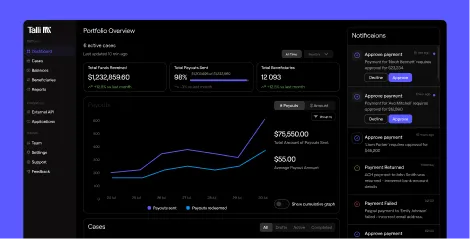
Real-time dashboards provide total control and visibility over fund flows, completion rates, and compliance status. These dashboards transform security monitoring from reactive to proactive.
Ensuring Privacy Compliance with ISO 27701 in Legal Payout Systems
ISO 27701 extends ISO 27001 to create a Privacy Information Management System (PIMS) specifically addressing personally identifiable information (PII). Class action settlements collect sensitive claimant data including Social Security numbers, bank account details, and home addresses—making privacy protection paramount.
Key ISO 27701 requirements for payout platforms include:
- Data subject rights management enabling claimants to access, correct, or delete their information
- Consent management documenting claimant authorization for data processing
- Privacy impact assessments before launching new settlement campaigns
- Data breach notification procedures meeting regulatory timelines
- Processor agreements with banking partners and verification vendors
The standard helps platforms demonstrate compliance with both GDPR for international settlements and state privacy laws like CCPA/CPRA for California residents. Privacy by design principles ensure data minimization—collecting only information necessary for payment processing and tax reporting.
Calculating the ISO 27001 Certification Cost for Class Action Payment Platforms
ISO 27001 certification requires significant investment, but returns justify the expense through contract wins and operational efficiency.
Direct Certification Costs
Primary expenses typically include:
- Stage 1 and 2 external audits: $50,000-$200,000 depending on organization size
- Annual surveillance audits: often several thousand to low five figures per year, depending on scope and audit days
- Recertification audits (every 3 years): vary widely by scope; often comparable to a large portion of the initial audit cost
- Compliance automation platform: $10,000-$50,000 annually
- Implementation consulting: $15,000-$75,000 for complex environments
Hidden Costs to Budget
Beyond direct fees, account for:
- Staff time for implementation (20-40% FTE for compliance manager over 6 months)
- Remediation costs if gap assessments reveal major deficiencies
- Integration development for systems without pre-built connectors
- Training for staff on new compliance workflows
ROI Justification
A mid-size law firm investing $175,000 in Year 1 can expect:
- Contract wins requiring certification: $5M-$10M+ in new business
- Labor savings from automation: $60,000 annually
- Payment processing cost reduction: $130,000 per 10,000-claimant settlement
- Avoided fraud losses: $250,000-$500,000 annually
Break-even occurs immediately upon winning a single enterprise contract requiring certification.
Key Security Measures for Open Class Action Settlements and Unclaimed Funds
Open settlements and unclaimed class action funds present unique security challenges. Without proof-of-purchase requirements, platforms must verify claimant eligibility through alternative means while preventing fraudulent claims.
Identity Verification Controls
Robust KYC processes prevent fraud while minimizing legitimate claimant friction:
- Government ID verification using automated document scanning
- Address validation through authoritative databases
- SSN/TIN verification for tax reporting accuracy
- Device fingerprinting to detect suspicious submission patterns
Understanding KYC false positive rates helps calibrate verification thresholds. Overly aggressive detection blocks legitimate claimants; too permissive settings enable fraud.
OFAC Screening Requirements
Every settlement payment requires OFAC screening against sanctions lists before processing. Automated screening integrated into payment workflows ensures compliance without manual intervention.
OFAC compliance failures expose administrators to severe penalties and reputational damage. Real-time screening catches newly sanctioned individuals even mid-settlement.
Audit Trail Documentation
Courts expect detailed documentation of claims processing. ISO-aligned platforms maintain:
- Complete transaction logs showing who accessed what data when
- Payment status tracking from initiation through delivery confirmation
- Exception handling documentation for manual review decisions
- W-9 collection records for tax compliance
Securing Claimant Experience: Digital Wallet Integration and Flexible Payout Options
Security and claimant convenience aren't mutually exclusive. ISO-aligned platforms protect payment data while offering flexible options that maximize redemption rates.
Payment Method Security
Each payment channel requires specific security controls:
- ACH transfers: Bank account verification, fraud monitoring, NACHA compliance
- Prepaid cards: PCI DSS Level 1 compliance, activation controls, balance protection
- Digital wallets: Tokenization, encryption, two-factor authentication
- Paper checks: Positive pay services, check fraud detection (though 30% never reach recipients)
Claimants receiving secure links via SMS or email can select their preferred payment method without creating accounts—reducing friction while maintaining security.
Accessibility Without Compromise
Approximately 5.4-6% of U.S. households remain unbanked. ISO-compliant platforms accommodate these claimants through prepaid cards and retail cash pickup options, ensuring no eligible recipient is excluded due to payment infrastructure limitations.
Real-time dashboards with total control and visibility enable administrators to monitor completion rates across all payment methods and identify bottlenecks in the payout process.
Mitigating Fraud and Ensuring Fund Segregation in ISO-Compliant Payouts
The massive explosion in settlement fraud demands sophisticated prevention measures. AI-powered detection combined with strict fund controls protects both claimants and administrators.
AI-Powered Fraud Detection
Modern fraud prevention combines multiple detection methods:
- Fuzzy matching identifying duplicate claims with slight variations
- Behavioral analysis detecting automated submission patterns
- Device fingerprinting tracking suspicious device clusters
- Velocity checks flagging unusual claim volumes
These techniques reduce fraudulent claims by 40% compared to manual review processes.
Fund Segregation Architecture
Complete fund segregation preserves Qualified Settlement Fund (QSF) ownership while simplifying reporting. ISO-aligned platforms maintain:
- Dedicated accounts for each settlement preventing commingling
- Three-way reconciliation matching bank statements, trust ledgers, and accounting records
- Fee deduction controls ensuring administrative costs come from proper accounts
- Automated audit logs documenting every fund movement
Banking services through FDIC-insured institutions like Patriot Bank, N.A. provide additional protection for settlement funds.
Achieving Higher Redemption Rates with ISO-Aligned Security and Smart Follow-ups
Security controls that frustrate legitimate claimants defeat the purpose of settlement administration. ISO-aligned platforms balance protection with engagement strategies that maximize redemption.
Secure Communication Channels
Smart reminders through verified channels improve completion rates:
- SMS notifications with secure, time-limited payment links
- Email reminders with personalized claim status updates
- Multi-channel coordination preventing claimant fatigue
- Opt-out management respecting communication preferences
These automated touchpoints help claimants complete the payout process without compromising security. Higher completion rates benefit claimants while reducing administrative overhead from unclaimed funds.
User Trust Through Transparency
Claimants who trust the platform are more likely to engage. ISO certification provides credible third-party validation of security practices, increasing willingness to provide sensitive payment information.
Building an ISO-Compliant Foundation: Speed, Scale, and Reliability for Legal Payouts
ISO 27001 certification establishes infrastructure capable of handling settlement distributions at any scale while maintaining security and compliance.
Scalable Architecture Requirements
ISO-aligned platforms support:
- Batch processing for settlements with 100,000+ recipients
- Peak capacity during settlement deadline periods
- Geographic redundancy ensuring availability during regional outages
- Performance monitoring identifying bottlenecks before they impact claimants
Automated processing pipelines maintain compliance at every step while dramatically reducing processing time.
Business Continuity Planning
ISO 27001 requires documented disaster recovery and business continuity plans. For payout platforms, this means:
- Redundant payment processing infrastructure
- Data backup and recovery procedures
- Communication protocols for service disruptions
- Regular testing of recovery capabilities
These controls ensure settlement deadlines are met even when unexpected incidents occur. The NIST Cybersecurity Framework provides additional guidance on resilience planning for critical financial systems.
Why Talli Simplifies ISO-Aligned Settlement Payouts
While various platforms address pieces of the compliance puzzle, Talli delivers comprehensive settlement payment infrastructure with security controls built into every workflow.
Talli's AI-driven payment platform addresses ISO alignment through:
- Embedded compliance automation including KYC, OFAC, W-9 collection, fraud mitigation, and audit logs—eliminating the need to integrate separate compliance tools
- Complete fund segregation with dedicated accounts for every settlement, preserving QSF ownership and simplifying court reporting
- Real-time dashboards providing total control and visibility over completion rates, fund flows, and compliance status
- Flexible payout options letting claimants choose ACH, prepaid Mastercard, digital wallets, or gift cards without creating accounts
- Smart follow-ups across email, SMS, and more to maximize redemption rates while maintaining secure communication
Banking services provided by Patriot Bank, N.A., Member FDIC ensure settlement funds receive institutional-grade protection. The Easy Prepaid Mastercard is issued by Patriot Bank, N.A. pursuant to a license from Mastercard International.
For claims teams needing compliance, speed, and total visibility, Talli automates and safeguards every payout—so administrators can meet tight deadlines without losing control over claimant experience.
Frequently Asked Questions
What is the primary difference between ISO 27001 and ISO 27701 for a class action payout platform?
ISO 27001 establishes the Information Security Management System (ISMS) framework with 93 Annex A controls covering organizational, people, physical, and technological security domains. ISO 27701 extends ISO 27001 specifically for privacy management, creating a Privacy Information Management System (PIMS) that addresses personally identifiable information handling. For class action payouts, ISO 27001 protects overall system security, while ISO 27701 ensures claimant data privacy rights are respected—both are increasingly required by enterprise clients and courts overseeing large settlements.
How long does ISO 27001 certification take for settlement administration platforms?
Timelines vary widely, but many organizations plan 6–12+ months, and often start preparing 12–18 months ahead of the target certification date. However, compliance automation platforms can achieve audit-ready status significantly faster for organizations with strong existing security posture. A realistic timeline for mid-size settlement administrators using automation is 4-6 months: 1-2 months for gap assessment and platform selection, 2-3 months for implementation and policy development, and 1 month for internal audits and external certification audits. Annual surveillance audits require 1-2 weeks and are mandatory to maintain certification.
What specific security controls from ISO 27002 are most relevant to preventing fraud in class action payouts?
Critical ISO 27002 controls for fraud prevention include access control policies limiting payment system access to authorized personnel, cryptographic controls protecting claimant financial data, logging and monitoring to detect unauthorized activities, and supplier relationship security ensuring banking partners maintain equivalent controls. For settlement-specific fraud, platforms supplement these with AI-powered detection achieving 40% fraud reduction through fuzzy matching, device fingerprinting, behavioral analysis, and velocity checks—measures that extend beyond standard ISO 27002 guidance.
What are the benefits of ISO certification beyond regulatory compliance for settlement administrators?
ISO 27001 certification unlocks tangible business benefits: enterprise settlement contracts often explicitly require certification, with single contracts worth $5M-$10M or more. Operational efficiency improves through significant reduction in compliance labor via automation. Fraud prevention controls reduce losses by protecting against the 19,000% increase in settlement fraud since 2021. Client trust increases as certification provides credible third-party validation. Insurance premiums may decrease with demonstrated security controls. The certification investment typically breaks even immediately upon winning a single enterprise contract requiring it.
Can a class action payout platform achieve ISO 27001 certification without significant IT resources?
Yes. Modern compliance automation platforms handle up to 70% of compliance tasks automatically, including evidence collection, control monitoring, and audit preparation. This reduces the team needed from dedicated security staff to a small cross-functional group: compliance lead, part-time IT support, legal operations oversight, and external auditor. Platforms with pre-built integrations for cloud infrastructure and payment systems eliminate custom development requirements. The key investment is selecting the right compliance automation tool and dedicating consistent time to implementation over 4-6 months.