.svg)


.svg)
Selecting a digital disbursement vendor for legal settlements requires thorough evaluation of Service Level Agreement terms that define uptime guarantees ranging from 99.5% to 99.9%, response time commitments, and financial penalties for service failures. With settlement fraud increasing dramatically in recent years, claims administrators need vendors that combine robust SLA commitments with real-time monitoring dashboards and automated compliance controls. The difference between a well-structured SLA and a vague service commitment can mean millions in delayed payments, compliance violations, and eroded claimant trust.
Key Takeaways
- Industry-standard uptime for digital disbursement platforms ranges from 99.5% to 99.9%, with premium providers claiming up to 99.999%
- Critical incident response times should target 1-2 hours for initial acknowledgment with 4-6 hour resolution windows
- Digital payment methods achieve 98%+ transaction success rates compared to 55-77% for paper checks
- API response time commitments should guarantee ≤1000ms response time for 99.99% of “Critical API Calls”
- SOC 2 Type II, PCI DSS Level 1, and automated KYC/AML screening are baseline security requirements
- Performance standard credits and financial remedies provide meaningful accountability when vendors fail SLA commitments
Understanding the Fundamentals of Service Level Agreements for Payment Processing
A Service Level Agreement establishes the contractual foundation between your organization and a digital disbursement vendor. These agreements define measurable performance standards, accountability mechanisms, and remediation procedures that protect both parties throughout the settlement distribution lifecycle.
The core components of an effective SLA include:
- Performance metrics – Quantified standards for uptime, transaction speed, and system availability
- Incident classification – Severity levels determining response priorities and escalation paths
- Service credits – Financial compensation structures for performance failures
- Exclusions – Force majeure events and scheduled maintenance windows
- Reporting requirements – Documentation and audit trail obligations
For legal settlement administrators, SLAs carry additional weight. Court-mandated distribution deadlines leave no room for vendor failures. A comprehensive SLA management approach in complex payment environments ensures you maintain control over compliance obligations while delegating operational execution to your vendor.
Understanding the distinction between availability SLAs and performance SLAs matters significantly. Availability guarantees focus solely on system uptime, while performance SLAs encompass transaction processing speed, fraud detection accuracy, and API responsiveness. Leading vendors provide both, recognizing that an available system processing transactions slowly fails claimants just as thoroughly as downtime.
Key SLA Terms to Evaluate in Digital Disbursement Payment Processing
Uptime Guarantees and Availability Commitments
Uptime percentages translate directly into acceptable downtime windows. The differences between seemingly similar percentages prove substantial:
- 99.5% uptime – Approximately 43 hours of annual downtime
- 99.9% uptime – Approximately 8.7 hours of annual downtime
- 99.99% uptime – Approximately 52 minutes of annual downtime
- 99.999% uptime – Approximately 5 minutes of annual downtime
Some providers publicly disclose specific commitments. Marqeta guarantees a 99.99% transaction success rate with financial remedies for failures. Runa claims 99.999% uptime through redundant infrastructure. Most vendors, however, reserve SLA details for client agreements rather than public documentation.
Transaction Processing Speed
Processing speed determines how quickly claimants receive funds after authorization. Evaluate these benchmarks against vendor commitments:
- ACH transfers – 1-2 business days standard processing
- Wire transfers – Same-day settlement during banking hours
- Digital wallets – Near-instant delivery
- Prepaid cards – Immediate availability upon issuance
Paper check distribution historically requires 2-3 weeks from issuance to claimant deposit, with significant failure rates due to address changes, lost mail, and uncashed checks. Digital methods compress this timeline dramatically while improving completion rates.
Fraud Detection and Prevention Standards
With settlement fraud experiencing a dramatic increase, fraud prevention capabilities deserve explicit SLA coverage. Evaluate vendor commitments around:
- Real-time screening – Automated verification before payment release
- Pattern recognition – AI-powered detection of anomalous claim submissions
- False positive rates – Balance between security and legitimate claimant friction
- Resolution timelines – Speed of fraud investigation and fund recovery
Your SLA should specify fraud mitigation response times and vendor liability for approved fraudulent payments when their systems fail to detect obvious red flags.
Evaluating Uptime and Performance Monitoring Capabilities
Real-Time Dashboard Requirements
Effective monitoring requires visibility into system performance as it happens, not through delayed reports. Essential dashboard capabilities include:
- System status indicators – Current operational state across all services
- Transaction throughput – Real-time volume and success rate metrics
- Queue depth monitoring – Pending transactions awaiting processing
- Error rate tracking – Failed transactions with categorized failure reasons
- Geographic performance – Regional latency and availability variations
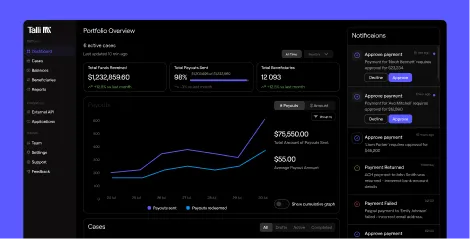
Real-time settlement dashboards transform claims administration by providing total control and visibility over fund flows, completion rates, and engagement metrics.
Automated Alerting Systems
Proactive notification prevents small issues from escalating into settlement-wide failures:
- Threshold-based alerts – Notifications when metrics approach SLA boundaries
- Anomaly detection – AI-driven identification of unusual patterns
- Escalation automation – Progressive notification chains based on severity
- Incident tracking – Automated ticket creation with audit trails
- Resolution confirmation – Closure notifications with root cause documentation
Your vendor should provide configurable alerting that integrates with your existing monitoring infrastructure. Look for webhook support, email notifications, and SMS alerts for critical incidents.
Historical Reporting and Trend Analysis
Beyond real-time visibility, comprehensive historical data enables continuous improvement:
- Performance trend reports – Monthly and quarterly SLA compliance summaries
- Incident post-mortems – Detailed analysis of service disruptions
- Capacity planning data – Transaction volume trends for scaling decisions
- Compliance documentation – Court-ready audit reports for regulatory review
Assessing Data Security and Compliance Within Vendor SLAs
Certification Requirements
Security certifications provide third-party validation of vendor controls. Baseline requirements include:
- SOC 2 Type II – Annual audits of security, availability, and confidentiality controls
- PCI DSS Level 1 – Highest payment card security standard for processors handling over 6 million transactions annually
- ISO 27001 – International information security management certification
- FDIC-insured banking partnerships – Deposit protection for settlement funds
Automated Compliance Controls
Manual compliance processes create bottlenecks and errors. Evaluate automation capabilities for:
- KYC verification – Automated identity confirmation with acceptable false positive rates
- OFAC screening – Real-time sanctions list checking before payment release
- W-9 collection – Automated tax document gathering and TIN verification
- 1099 generation – Year-end tax reporting automation
- Audit trail creation – Immutable transaction logs for regulatory review
For legal settlements specifically, compliance in payouts extends beyond standard payment regulations. QSF (Qualified Settlement Fund) support, escheatment tracking, and court-ready reporting capabilities distinguish specialized vendors from general payment processors.
Data Encryption and Privacy
SLAs should specify data protection standards including:
- Encryption at rest – AES-256 or equivalent for stored data
- Encryption in transit – TLS 1.2+ for all data transmission
- Key management – HSM-based key storage with rotation policies
- Data residency – Geographic restrictions for regulated data
- Breach notification – Timelines and procedures for security incidents
Comparing Service Level Agreement Templates for Customer Support
Response Time Commitments
Support response times should scale with incident severity:
- Critical (Severity 1) – System-wide outage: 1-2 hour response, 4-6 hour resolution target
- High (Severity 2) – Major functionality impaired: 4-hour response, 24-hour resolution
- Medium (Severity 3) – Partial feature impact: 8-hour response, 72-hour resolution
- Low (Severity 4) – Minor issues or inquiries: Next business day response
Vendors serving legal settlement administrators should provide dedicated support channels recognizing the court-mandated deadlines governing distribution timelines.
Support Channel Availability
Evaluate the breadth and depth of support access:
- 24/7/365 availability – Round-the-clock coverage for critical issues
- Dedicated account managers – Named contacts understanding your specific settlement requirements
- Technical escalation paths – Direct access to engineering teams for complex issues
- Self-service resources – Knowledge bases, API documentation, and troubleshooting guides
- Claimant support – Vendor assistance for recipient inquiries (reducing your administrative burden)
Escalation Procedures
Clear escalation frameworks prevent issues from stalling:
- Automatic escalation triggers – Time-based progression to senior resources
- Management notification thresholds – When leadership becomes involved
- Executive escalation contacts – Named individuals for unresolved critical issues
- Regulatory escalation protocols – Procedures when compliance timelines are threatened
Evaluating Financial Guarantees and Penalties in SLAs
Service Credit Structures
Service credits provide financial accountability for performance failures. Common structures include:
- Percentage-based credits – Refund percentages tied to uptime shortfalls
- Tiered penalties – Escalating credits for repeated or severe failures
- Credit caps – Maximum liability limits (typically 10-30% of monthly fees)
- Credit application – How refunds apply (future invoices vs. cash payments)
Marqeta's published terms include Performance Standard Credits for API response time and transaction success rate failures, demonstrating industry-leading transparency in financial accountability.
Liquidated Damages and Direct Compensation
Beyond service credits, some agreements include:
- Direct financial compensation – Cash payments for documented losses
- Consequential damage coverage – Liability for downstream impacts
- Penalty interest – Charges on delayed settlement distributions
- Regulatory fine sharing – Vendor responsibility for compliance failures
Force Majeure and Exclusions
Understand what circumstances exempt vendors from SLA obligations:
- Natural disasters – Events beyond reasonable control
- Third-party failures – Banking partner or network outages
- Scheduled maintenance – Pre-announced service windows
- Customer-caused issues – Failures resulting from your actions
- Cyberattacks – Some agreements exclude sophisticated security incidents
Best Practices for Monitoring Vendor Performance and SLA Adherence
Establishing Internal Monitoring Protocols
Don't rely solely on vendor-reported metrics:
- Independent monitoring – Third-party uptime verification tools
- Transaction sampling – Regular test payments validating end-to-end processing
- Reconciliation automation – Daily matching of initiated versus completed transactions
- Performance benchmarking – Comparing actual results against SLA commitments
- Trend documentation – Tracking performance changes over contract periods
Regular Performance Reviews
Structured review cadences maintain accountability:
- Weekly operational reviews – Transaction volumes, error rates, pending issues
- Monthly SLA compliance reports – Formal measurement against contractual commitments
- Quarterly business reviews – Strategic alignment, roadmap updates, relationship health
- Annual contract evaluations – Comprehensive assessment informing renewal decisions
Documentation for Dispute Resolution
Maintain comprehensive records supporting potential SLA claims:
- Incident timestamps – Precise timing of service disruptions
- Impact documentation – Affected transactions, claimant complaints, downstream consequences
- Communication logs – Support tickets, emails, call recordings
- Resolution timelines – Actual versus committed response and resolution times
- Financial impact calculations – Quantified costs of vendor failures
Holistic Vendor Selection: Beyond SLA Terms
Integration Capabilities
Technical integration determines operational efficiency:
- API architecture – RESTful APIs with comprehensive documentation
- Webhook support – Real-time event notifications to your systems
- Pre-built connectors – Integrations with common CRM and accounting platforms
- Batch processing – Bulk payment file uploads for high-volume distributions
- Data synchronization – Real-time payout data syncing to your existing tools
Scalability and Future-Proofing
Evaluate capacity for growth:
- Volume handling – Proven capability for settlements ranging from 1,000 to 100,000+ recipients
- Geographic expansion – Multi-currency and international payment support
- Feature roadmap – Planned enhancements aligned with industry evolution
- Technology architecture – Cloud-native infrastructure enabling elastic scaling
Recipient Experience
Claimant satisfaction directly impacts redemption rates:
- Payment method flexibility – ACH, wire, digital wallets, prepaid cards without requiring bank accounts
- Mobile-first design – Secure links via SMS or email, no account creation required
- Smart reminders – Automated follow-ups across channels to drive completion
- Self-service status checking – Claimant visibility into payment progress
Digital payment options reduce processing costs through automation while improving the claimant experience that drives higher completion rates.
Why Talli Delivers Superior SLA Performance for Legal Settlements
While general payment processors serve broad markets, Talli builds specifically for legal settlement administration where SLA failures carry court-mandated consequences.
Talli's AI-driven payment platform addresses the unique requirements of claims administrators through:
- Purpose-built legal compliance – Automated QSF support, escheatment tracking, and court-ready audit trails that general processors lack
- AI-powered fraud prevention – Real-time pattern recognition addressing the dramatic increase in settlement fraud through automated screening
- Complete fund segregation – Dedicated accounts preserving Qualified Settlement Fund ownership while simplifying reporting
- Multi-rail payment flexibility – ACH, wire, digital wallets, and prepaid Mastercards through a single platform
- Automated tax compliance – Built-in W-9 collection, TIN verification, and 1099 generation eliminating manual reporting
The platform provides real-time dashboards for total control and visibility, enabling claims teams to monitor delivery, completion, and engagement metrics instantly. Smart reminders across email and SMS help claimants complete the payout process faster, driving higher redemption rates than traditional distribution methods.
Banking services provided by Patriot Bank, N.A., Member FDIC, with KYC, OFAC, W-9 collection, fraud mitigation, and audit logs built into every transaction. For claims administrators facing tight court deadlines without room for vendor failure, Talli's specialized focus delivers the compliance, speed, and visibility that general-purpose payment platforms cannot match.
Frequently Asked Questions
What uptime percentage should I require in a digital disbursement vendor SLA?
Industry standards for digital disbursement platforms range from 99.5% to 99.9% uptime, translating to approximately 8-43 hours of acceptable annual downtime. Premium providers claim up to 99.999% uptime through redundant infrastructure. For legal settlements with court-mandated deadlines, target minimum 99.9% availability with explicit financial penalties for failures. Ensure the SLA specifies how uptime is measured, what exclusions apply, and how maintenance windows factor into calculations.
How do I verify a vendor's actual SLA performance versus their claims?
Implement independent monitoring beyond vendor-reported metrics. Use third-party uptime monitoring tools to validate availability claims. Conduct regular test transactions to verify end-to-end processing times. Request historical performance reports during vendor evaluation, and include contractual rights to audit SLA compliance. Real-time dashboards should provide transparent access to current system status and historical performance data.
What security certifications are essential for digital disbursement vendors?
Baseline requirements include SOC 2 Type II certification (annual security audits), PCI DSS Level 1 compliance (payment card security), and FDIC-insured banking partnerships. For legal settlements, verify automated OFAC screening capabilities, KYC/AML compliance automation, and immutable audit trail generation. These certifications provide third-party validation that vendor security controls meet industry standards for protecting settlement funds and claimant data.
What financial remedies should an SLA include for performance failures?
Effective SLAs include service credits tied to specific performance shortfalls, typically structured as percentage refunds against monthly fees. Some vendors like Marqeta offer Performance Standard Credits for API response time and transaction success rate failures. Look for tiered penalty structures that escalate for repeated failures, clear credit application processes, and reasonable caps (typically 10-30% of monthly fees). For critical legal settlements, negotiate direct compensation provisions beyond standard service credits.
How important is claimant experience when evaluating disbursement vendor SLAs?
Claimant experience directly impacts redemption rates and settlement completion success. Digital payment methods achieve 98%+ transaction success rates compared to 55-77% for paper checks. Evaluate vendor capabilities for payment method flexibility (no bank account required), mobile-first access via secure SMS/email links, and automated reminder systems. While not traditional SLA metrics, these features determine whether claimants actually receive and access their settlement funds.