.svg)


.svg)
Tax compliance in digital settlements demands precision across 1099 reporting, Qualified Settlement Fund management, and W-9 collection—with IRS penalties reaching $60-$310 per form capable of destroying settlement budgets on large class actions. Modern digital disbursement platforms automate these complex requirements while reducing per-payment costs, with industry benchmarks putting the median cost to issue a paper check around $2–$4, while ACH/electronic payments are often well under $1 per transaction (though costs vary by program and vendor). The result transforms tax compliance from an administrative nightmare into a streamlined workflow that captures higher redemption rates and eliminates years of escheatment tracking.
Key Takeaways
- Digital settlement platforms reduce payment costs from around $8-$20 per check to $1-$3 per digital payment while automating tax compliance
- 1099-MISC reporting is required for payments exceeding $600 unless excluded under IRC Section 104
- Traditional check-based settlements typically see 15-25% uncashed rates compared to 2-5% for digital payments
- Automated platforms achieve around 95% reduction in tax reporting errors versus manual preparation
- Qualified Settlement Funds (QSFs) under IRC Section 468B require dedicated accounts and specific tax reporting protocols
- Digital disbursement delivers payments in 24-48 hours versus 7-14 days for traditional checks
- Around 80% of claimants prefer digital payment methods over paper checks
Understanding the Foundation of Digital Tax Compliance: KYC and W-9 Collection
The foundation of tax compliance in digital settlements rests on accurate data collection before any payments occur. Know Your Customer (KYC) verification and W-9 form collection establish the taxpayer identification numbers (TINs) and identity confirmation required for IRS reporting obligations.
The Importance of Accurate Taxpayer Data Collection
W-9 collection determines whether your settlement triggers 1099 reporting requirements. The IRS mandates Form 1099-MISC for settlement payments exceeding $600, with specific exceptions under IRC Section 104(a)(2) for physical injury claims. Incomplete or inaccurate W-9 data creates cascading compliance failures:
- Missing TINs trigger backup withholding requirements at 24%
- Incorrect taxpayer names result in IRS B-Notice penalties
- Invalid addresses cause returned mail and escheatment complications
- Duplicate submissions create reconciliation nightmares during audits
Digital platforms automate W-9 collection through secure claimant portals, validating TIN data against IRS databases in real-time. This eliminates the estimated 8-12% error rate common in manual preparation while reducing claimant friction.
Integrating KYC and W-9 Processes for Efficiency
Modern settlement platforms combine KYC verification with W-9 collection into unified workflows. This integration eliminates duplicate data entry while ensuring regulatory compliance across multiple frameworks:
- Identity verification through government ID matching
- Address confirmation against USPS databases
- OFAC screening for sanctions compliance
- TIN validation with IRS records
- Fraud detection through behavioral analytics
The combined approach reduces onboarding time from days to hours while creating comprehensive audit trails that satisfy both court oversight and IRS requirements.
Leveraging Fund Segregation for Simplified Tax Reporting and QSF Ownership
Qualified Settlement Funds under IRC Section 468B provide tax deferral benefits that require strict fund segregation and dedicated reporting. Proper QSF management preserves ownership while simplifying the complex tax treatment of settlement proceeds.
How Dedicated Accounts Protect QSF Ownership
QSF structures allow defendants to claim tax deductions upon fund contribution while deferring claimant taxation until actual distribution. This timing benefit requires:
- Segregated accounts for each settlement maintaining fund isolation
- Court-established entities meeting IRS requirements for qualified status
- Independent administration separate from defendant control
- Accurate ownership tracking throughout the disbursement lifecycle
Digital platforms supporting complete fund segregation eliminate commingling risks that could jeopardize QSF status. Each settlement maintains dedicated accounts with full audit trails documenting every fund movement.
Streamlining Reporting with Transparent Fund Flows
QSF tax reporting demands precise documentation of investment income, distributions, and administrative expenses. Manual tracking across large settlements creates reconciliation challenges that digital platforms solve through:
- Real-time fund flow visibility across all settlement accounts
- Automated income tracking for QSF tax filings
- Distribution reconciliation matching payments to claimant records
- Expense allocation for administrative cost reporting
- Year-end reporting with IRS-ready documentation
Platforms with built-in reconciliation capabilities reduce month-end closing from days to hours while ensuring QSF compliance throughout multi-year settlements.
Automating Tax Compliance: The Role of AI and Digital Platforms in Settlements
Manual tax form preparation is labor-intensive and error-prone at scale, especially when payments, W-9s, corrections, and re-issuance are tracked across spreadsheets and multiple vendors. AI-driven automation transforms this burden into a streamlined workflow that eliminates human error while maintaining complete compliance.
Transforming Compliance with Intelligent Automation
Modern settlement platforms automate the entire 1099 lifecycle:
Form Generation: Automatic creation of 1099-MISC or 1099-NEC forms based on payment type, amount, and claimant classification. The system applies IRC Section 104 exclusions automatically for qualifying physical injury payments.
Threshold Monitoring: Real-time tracking of aggregate payments to identify when claimants cross the $600 reporting threshold, triggering automated W-9 requests if not already on file.
Electronic Delivery: IRS-compliant electronic delivery of tax forms to claimants with consent tracking, eliminating printing and mailing costs while accelerating delivery.
IRS Filing: Direct electronic filing with the IRS, including corrections and amendments, with confirmation tracking and error resolution.
This automation achieves around 95% reduction in tax reporting errors compared to manual preparation while eliminating penalty exposure from late or incorrect filings.
From Manual to Automated: The Digital Settlement Workflow
The transition from spreadsheet-based tracking to automated platforms follows a predictable implementation path:
- Data Migration: Upload claimant database with validation against existing records
- Rule Configuration: Set payment thresholds, tax treatment rules, and reporting parameters
- Portal Setup: Configure branded claimant portal with W-9 collection and payment selection
- Test Processing: Run sandbox payments validating 1099 generation and compliance workflows
- Production Launch: Activate automated processing with real-time monitoring dashboards
Most implementations complete within 2-4 weeks for standard settlements, with complex multi-tier structures requiring 6-8 weeks.
Mitigating Risks: Fraud Detection and Audit Logs in Digital Payouts
Settlement fraud costs continue escalating, making robust prevention essential for compliance and claimant protection. Digital platforms embed fraud mitigation directly into payment workflows while maintaining immutable audit trails for regulatory scrutiny.
Building a Secure Foundation: The Power of Immutable Audit Trails
Every digital payment generates comprehensive audit documentation:
- Transaction timestamps with millisecond precision
- IP address logging for claimant portal access
- Device fingerprinting identifying suspicious patterns
- Approval chains documenting authorization workflows
- Change tracking for any claimant data modifications
These audit logs satisfy court oversight requirements while providing defensible documentation during IRS examinations. The immutable nature of digital records eliminates the he-said-she-said disputes common with paper-based processes.
Proactive Fraud Mitigation in Every Digital Transaction
Automated fraud detection identifies suspicious activity before payments process:
- Duplicate claim detection across multiple settlements
- Identity verification failures flagged for manual review
- Anomalous banking patterns indicating potential fraud
- Geographic inconsistencies between claimant data and IP locations
- Velocity checks identifying unusual submission patterns
OFAC screening ensures no payments reach sanctioned individuals or entities, protecting settlement administrators from regulatory violations.
Real-time Reconciliation and Reporting for Tax Compliance Visibility
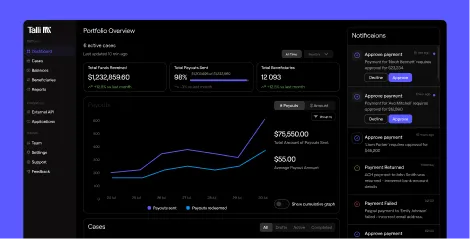
Settlement administrators need immediate visibility into payment status, completion rates, and compliance metrics. Real-time dashboards transform compliance monitoring from reactive firefighting to proactive management.
Gaining Total Control: Dashboards for Real-time Payout Tracking
Modern platforms provide comprehensive analytics:
- Payment status tracking showing pending, completed, and failed transactions
- Redemption rate monitoring with demographic breakdowns
- Compliance metrics including W-9 completion rates and 1099 generation status
- Fund flow visualization tracking every dollar from QSF to claimant
- Exception reporting highlighting items requiring manual intervention
These dashboards enable claims teams to identify and resolve issues before they become compliance problems, reducing the administrative burden of settlement management.
Automated Reporting: Syncing Payout Data to Your CRM
Integration capabilities extend visibility beyond the payment platform:
- API connectivity enabling real-time data synchronization
- Accounting exports for general ledger reconciliation
- Court reporting with automated status documentation
- Stakeholder dashboards providing appropriate visibility levels
- Tax filing integration with IRS electronic submission systems
Seamless data flow eliminates manual reconciliation while ensuring all systems reflect current payment status.
Ensuring Legal and Banking Compliance in Digital Settlement Platforms
Digital settlement platforms operate within strict regulatory frameworks requiring proper licensing, banking partnerships, and security certifications. Understanding these requirements helps administrators select compliant vendors.
The Backbone of Trust: FDIC-Insured Banking Partners
Reputable platforms partner with FDIC-insured institutions for fund management. These partnerships provide:
- Deposit insurance protecting settlement funds up to applicable limits
- Regulatory oversight ensuring banking compliance
- Segregated accounts maintaining fund isolation
- Wire transfer capabilities for large distributions
- ACH processing for cost-effective payments
Banking partnerships through established institutions like Patriot Bank, N.A., Member FDIC, provide the regulatory foundation necessary for settlement fund management.
Payment Regulations with Licensed Providers
PCI DSS Level 1 compliance ensures secure handling of payment card data when offering prepaid card options. Additional regulatory requirements include:
- Money transmitter licensing in applicable states
- SOC 2 Type II certification for data security
- State escheatment compliance for unclaimed funds
- Consumer protection adherence for payment processing
- Anti-money laundering protocols for fund movements
Platforms meeting these requirements provide defensible compliance posture for settlement administrators.
Flexible Payout Options and Claimant Experience: Impact on Compliance
Claimant payment preferences directly impact redemption rates and compliance outcomes. Offering multiple payment methods increases completion rates while reducing the administrative burden of unclaimed funds.
Enhancing Claimant Experience to Boost Compliance
Around 80% of claimants prefer digital payments over traditional checks, with modern platforms offering:
- ACH direct deposit for banked claimants
- Prepaid Mastercard options for immediate access
- Digital wallet integration with popular platforms
- Gift card alternatives for specific use cases
- Check backup for claimants preferring traditional methods
This flexibility achieves around 92% redemption rates compared to 75% with check-only distributions, dramatically reducing escheatment obligations and simplifying compliance.
Beyond Traditional Checks: Modern Payment Method Compliance
Each payment method carries specific compliance requirements:
ACH Payments: Require bank account verification and NACHA compliance. Average delivery in 24-48 hours with costs around $0.25-$1.00 per transaction.
Prepaid Cards: Issued pursuant to Mastercard International licensing with activation fees of $3-$7. Cards provide immediate access without bank account requirements.
Digital Wallets: Integration with PayPal, Venmo, and similar platforms. Higher fees (2-3% plus fixed charges) but preferred by younger demographics.
Gift Cards: Distributed through partners like InComm with merchant-specific redemption. Useful for settlement structures providing product-based compensation.
Scaling Digital Payouts While Maintaining Tax Compliance and Control
Large settlements involving thousands or hundreds of thousands of claimants require platforms designed for scale without sacrificing compliance accuracy.
Powering Payouts: From Hundreds to Hundreds of Thousands
Enterprise settlement platforms handle massive distributions:
- Batch processing for thousands of simultaneous payments
- Automated retry logic for failed transactions
- Fallback payment methods when primary options fail
- Phased distribution for settlements requiring staged payouts
- Multi-tier calculations for complex settlement structures
Whether processing 1,000 or 100,000 recipients, automated platforms maintain consistent compliance while eliminating manual bottlenecks.
Maintaining Control in High-Volume Digital Settlements
Scale introduces complexity that manual processes cannot address:
- Aggregate reporting tracking completion across claimant segments
- Exception management identifying and resolving issues at scale
- Compliance monitoring ensuring 1099 accuracy across all payments
- Audit documentation maintaining defensible records for every transaction
- Performance metrics measuring efficiency against benchmarks
High-volume payout capabilities become essential as settlement sizes grow and court-mandated timelines tighten.
Why Talli Streamlines Tax Compliance in Digital Settlements
Talli's AI-driven payment platform addresses the specific tax compliance challenges facing settlement administrators with purpose-built automation and comprehensive fund management.
Talli automates KYC, OFAC, and W-9 collection processes, ensuring vital tax information is gathered without manual intervention. The platform supports complete fund segregation with dedicated accounts for every settlement, preserving QSF ownership and simplifying reporting throughout the disbursement lifecycle.
Key compliance features include:
- Automated 1099 generation with IRS electronic filing
- Real-time dashboard for total control and visibility over payment status
- Built-in fraud mitigation and comprehensive audit logs
- Flexible payout options including digital wallets, prepaid Mastercards, and ACH
- Smart reminders across email and SMS to increase redemption rates
Banking services provided by Patriot Bank, N.A., Member FDIC, ensure proper fund segregation and regulatory compliance. The Easy Prepaid Mastercard is issued pursuant to a license from Mastercard International, with gift cards issued by InComm and distributed by Talli.
For claims teams managing tight deadlines without losing control over compliance or claimant experience, Talli provides the automation and 1099 issuance accuracy needed to streamline tax compliance while improving redemption rates.
Frequently Asked Questions
What triggers 1099 reporting requirements for settlement payments?
Settlement payments exceeding $600 require 1099-MISC reporting to both the recipient and IRS. However, payments for physical injuries or physical sickness may be excluded under IRC Section 104(a)(2). The determination depends on the nature of the underlying claim, not the payment amount. Digital platforms automatically apply these rules based on settlement classification, generating appropriate tax forms while maintaining documentation of exclusion rationale.
How does fund segregation affect Qualified Settlement Fund tax treatment?
QSFs under IRC Section 468B require dedicated accounts maintaining fund isolation from defendant control. Commingling settlement funds jeopardizes qualified status, potentially eliminating the tax deferral benefits that QSFs provide. Digital platforms supporting complete fund segregation maintain separate accounts for each settlement, preserving QSF ownership while simplifying the tax reporting required for investment income, distributions, and administrative expenses.
What are the penalties for incorrect or late 1099 filings?
For 2024, IRS penalties for incorrect 1099 filings range from $60 to $310 per form depending on how late corrections are filed. For large settlements with thousands of claimants, these penalties can total hundreds of thousands of dollars. Intentional disregard carries even higher penalties. Automated platforms achieving around 95% error reduction compared to manual preparation eliminate most penalty exposure while maintaining defensible compliance documentation.
Can digital platforms handle complex multi-tier settlement structures?
Yes, enterprise digital platforms support complex settlement calculations including tiered payments based on claim severity, installment structures spread over multiple years, attorney fee deductions with separate 1099-NEC reporting, and varying tax withholding requirements across states. These platforms calculate appropriate payments automatically while generating correct tax documentation for each tier, dramatically simplifying administration for settlements with thousands or hundreds of thousands of recipients.
How do digital payments reduce escheatment compliance obligations?
Traditional check-based settlements typically experience 15-25% uncashed rates, requiring settlement administrators to track unclaimed funds for 3-5 years depending on state requirements before remitting to state unclaimed property programs. Digital payments achieve 2-5% unclaimed rates through higher redemption, dramatically reducing escheatment tracking obligations. The resulting compliance simplification and cost savings often exceed the platform fees themselves.