.svg)


.svg)
Verifying payment eligibility for thousands of claimants presents a critical bottleneck for claims administrators managing class-action settlements and mass tort distributions. Manual verification methods that take 5-10 minutes per claimant cannot keep pace with modern settlement volumes, while fraudulent claim rates reportedly increased over 19,000% between 2021 and 2023. Modern AI-driven payment platforms can automate eligibility verification to process claims in under 30 seconds while reducing administrative costs by up to 70%, transforming what once took weeks into a streamlined process that meets court deadlines without sacrificing compliance.
Key Takeaways
- AI-powered verification systems achieve 95% faster processing than manual methods while reducing denial rates by 20%
- Organizations implementing automated verification can scale from 50 to 500+ daily verifications without proportional staff increases
- Digital payment options combined with automated eligibility checks improve redemption rates by 25-40% compared to paper-based processes
- Compliance automation significantly reduces manual burden through built-in KYC, OFAC screening, and W-9 collection
- A significant percentage of paper checks in settlements never get cashed, creating months of administrative tracking burden
- Multi-layered fraud prevention combining biometrics, device fingerprinting, and behavioral analytics is essential for protecting settlement funds
Streamlining Employment Eligibility Verification for Claim Payouts
The foundation of any scalable payout operation begins with accurate claimant identification and eligibility confirmation. Settlement administrators must verify that each recipient is entitled to receive funds while maintaining complete audit trails for court reporting and regulatory compliance.
The Importance of Accurate Claimant Identification
Identity verification in mass payouts serves dual purposes: preventing fraud and ensuring funds reach legitimate recipients. Traditional phone-based verification methods create bottlenecks that compound with volume, while errors in identification can trigger costly payment failures and reprocessing delays.
Accurate identification requires verifying:
- Government-issued ID documents using OCR and facial recognition
- Tax identification numbers (SSN, EIN) against IRS databases
- Banking information for ACH payment routing
- Address verification against postal databases
- Sanctions screening through OFAC watchlists
Modern identity verification solutions evaluate accuracy rates, latency performance, and geographic coverage when processing high-volume verifications. For settlement administrators, choosing the right verification approach directly impacts both fraud prevention and claimant completion rates.
Automating Document Review for Faster Approvals
Manual document review creates the largest bottleneck in eligibility verification. Staff members reviewing supporting documentation—proof of purchase, medical records, employment verification—can process only a fraction of what automated systems handle.
Automated claims verification combines multiple technologies:
- Optical Character Recognition (OCR) extracts data from uploaded documents
- Machine learning models validate document authenticity
- Rules engines check eligibility criteria automatically
- Exception routing flags only complex cases for human review
A mid-sized organization implementing these systems documented scaling daily verifications 10x within weeks while simultaneously reducing payment denials by 28%.
Advanced Payment Processing for Small Business and Enterprise Claims
Whether handling 1,000 or 100,000 recipients, payment processing infrastructure must scale without proportional cost increases. The technical architecture supporting eligibility verification directly determines how efficiently organizations can distribute settlement funds.
Tailoring Payment Solutions for Different Business Sizes
Small claims administrators and large settlement administration firms face different challenges. Smaller operations need affordable solutions without extensive technical requirements, while enterprises require robust APIs and customizable workflows.
Scalable infrastructure accommodates both through:
- Batch processing for handling multiple verifications simultaneously
- API integration connecting verification systems with existing case management software
- Configurable thresholds adjusting verification intensity based on payment amounts
- Real-time dashboards providing visibility across all active settlements
The key is maintaining compliance consistency regardless of scale. Payment processor compliance requirements remain constant whether processing ten payments or ten thousand.
Ensuring System Scalability for Peak Payout Periods
Settlement distributions rarely occur at steady volumes. Court approval timelines, claim filing deadlines, and distribution windows create peak periods where verification capacity must surge dramatically.
Building for peak capacity requires:
- Cloud-based infrastructure that scales computing resources on demand
- Load balancing distributing verification requests across multiple processing nodes
- Queue management prioritizing time-sensitive verifications
- Failover systems ensuring continuity during component failures
Organizations that properly architect for scale can handle significant volume increases without degrading processing speeds or accuracy.
Leveraging Payment Processing Software for Efficiency and Control
Purpose-built payment processing software transforms eligibility verification from manual overhead into automated workflow. The right platform handles verification, compliance, disbursement, and reporting within a unified system.
Key Features to Look for in Claims Payment Software
Settlement administrators evaluating payment platforms should prioritize features directly impacting verification efficiency:
Multi-method verification combining document review, database checks, and identity confirmation
- Compliance automation for KYC, AML, and tax reporting requirements
- Payment flexibility supporting ACH, digital wallets, prepaid cards, and paper checks
- Audit trail generation documenting every verification decision
- Real-time reporting on verification status and completion rates
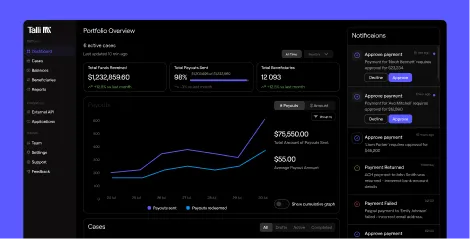
Real-time settlement dashboards provide claims administrators complete visibility into verification progress, fund flows, and claimant engagement—essential for meeting court reporting requirements.
How Software Reduces Manual Errors and Speeds Up Payouts
Human error in manual verification creates cascading problems: incorrect payments require clawbacks, missed fraud signals result in fund loss, and data entry mistakes delay legitimate disbursements.
AI-powered verification systems address these issues through:
- Consistent rule application eliminating judgment variability between staff members
- Automated data validation catching formatting errors before processing
- Cross-reference checking identifying duplicate claims automatically
- Pattern recognition flagging anomalies that human reviewers might miss
One healthcare billing operation documented an 11x increase in verification frequency after implementing AI-powered systems, resulting in a 20% decrease in denials due to eligibility discrepancies.
Selecting the Right Payment Processing Companies for Large-Scale Claims
Vendor selection for payment processing directly impacts verification capability, compliance posture, and operational efficiency. Not all providers can handle the unique requirements of legal settlement disbursements.
Evaluating a Provider's Security and Compliance Posture
Security and compliance form non-negotiable requirements for settlement administration. Providers must demonstrate:
- PCI DSS Level 1 certification for payment data protection
- SOC 2 Type II attestation validating security controls
- OFAC screening integration checking recipients against sanctions lists
- KYC verification capability confirming claimant identities
- Tax reporting automation generating 1099 forms accurately
Understanding OFAC screening requirements is essential for claims administrators, as sanctions violations carry severe penalties regardless of intent.
Funds disbursement compliance requires maintaining detailed audit trails, adapting verification levels based on risk assessments, and ensuring regulatory documentation stays current across jurisdictions.
Ensuring Compliance with Employment Eligibility Verification Forms
Tax and regulatory compliance adds complexity layers to eligibility verification. Settlement administrators must collect proper documentation while minimizing friction that reduces claimant completion rates.
Best Practices for Digital Form Collection and Storage
W-9 collection, in particular, creates challenges at scale. Requiring physical forms dramatically reduces completion rates, while improper collection triggers IRS penalties.
Effective digital form management includes:
- Electronic W-9 capture with digital signature capability
- TIN verification against IRS databases before payment processing
- Automatic backup withholding when TIN validation fails
- Secure document storage meeting IRS retention requirements
- 1099 generation automation at year-end
Legal payout compliance demands particular attention to tax documentation, as class-action settlements often distribute taxable income requiring proper reporting to both recipients and the IRS.
Transforming Claims Administration with Automated Payouts
The shift from manual to automated claims administration represents a fundamental change in how organizations approach eligibility verification and fund distribution.
Enhancing Claimant Experience Through Efficient Administration
Claimant experience directly impacts redemption rates. Complex verification processes, unclear requirements, and slow payment timelines all reduce the percentage of eligible claimants who actually receive their funds.
Digital-first payment approaches improve claimant experience through:
- Mobile-optimized verification allowing document upload from smartphones
- Real-time status updates keeping claimants informed throughout the process
- Multiple payment options accommodating banked and unbanked recipients
- Automated reminders re-engaging claimants who start but don't complete verification
The 25-40% improvement in redemption rates from digital payment options stems largely from reduced friction in the verification and payment selection process.
Implementing Robust Fraud Prevention in Mass Payout Systems
The explosion in settlement fraud requires multi-layered prevention strategies. Single-point verification methods cannot detect sophisticated fraud schemes including synthetic identities, duplicate claims, and deepfake documentation.
Detecting and Mitigating Payout Fraud Risks
Effective fraud prevention combines multiple detection methods:
- Device fingerprinting identifying submissions from known fraud networks
- Velocity checking flagging unusual patterns in claim submissions
- Biometric verification confirming identity through facial recognition
- Behavioral analytics detecting automation or scripted submissions
- Cross-claim analysis identifying duplicate submissions across settlements
AI-enabled fraud detection identifies new fraud schemes that remain undetectable with traditional rule-based methods, while reducing administrative burden by catching fraud before payment rather than requiring costly clawbacks.
Claims verification systems powered by AI can process verifications without phone calls while simultaneously improving fraud detection rates through pattern recognition across large datasets.
Optimizing Payouts: Increasing Redemption Rates with Smart Follow-Ups
Verification completion rates directly determine settlement success. Claimants who begin but abandon the verification process represent recoverable value through strategic re-engagement.
Automating Communication for Higher Completion
Multi-channel communication automation improves completion rates without proportional staff increases:
- SMS reminders achieving higher open rates than email alone
- Personalized messaging addressing specific verification steps remaining
- Deadline notifications creating urgency before distribution cutoffs
- Help desk integration routing stuck claimants to live support
- Progress tracking showing claimants how close they are to completion
Understanding KYC false positive rates helps administrators balance fraud prevention with user experience—overly aggressive verification creates friction that reduces legitimate claim completion.
Claims redemption rate optimization requires continuous monitoring of where claimants abandon the process, allowing targeted improvements to the highest-friction verification steps.
Why Talli Streamlines Payment Eligibility Verification at Scale
While numerous payment platforms exist, Talli delivers comprehensive solutions specifically designed for legal settlement disbursements and mass claims distribution.
Talli addresses the core challenges of payment eligibility verification through:
- Automated KYC/OFAC screening with W-9 collection and fraud mitigation built into every payout workflow
- Complete fund segregation supporting dedicated accounts for every settlement while preserving QSF ownership
- Flexible payment options including ACH, digital wallets, and prepaid cards—no bank account required for claimants
- Real-time dashboards providing total visibility into verification status, completion rates, and fund flows
- Smart follow-up automation across email and SMS to help claimants complete verification faster
Unlike generic payment processors, Talli's platform handles the specific regulatory requirements of legal settlements including court reporting, qualified settlement fund compliance, and multi-party agreement structures.
The platform supports whether it's 1,000 or 100,000 recipients, scaling verification capacity without sacrificing compliance or claimant experience. Banking services provided by Patriot Bank, N.A., Member FDIC ensure security and regulatory compliance throughout the disbursement lifecycle.
For claims administrators facing tight deadlines and growing verification volumes, Talli transforms what used to take weeks into a process that takes minutes—while maintaining the audit trails and compliance documentation courts require.
Frequently Asked Questions
What is the average time savings when automating claimant eligibility verification?
Automated verification systems reduce processing time by 95% compared to manual methods, taking verification from 5-10 minutes per claimant down to under 30 seconds. Organizations implementing automation typically see capacity increases from 50 to 500+ daily verifications without adding staff. For large settlements with thousands of claimants, this translates to reducing overall processing timelines from weeks to days.
How does an AI-driven platform prevent fraud in mass legal settlements?
AI-driven platforms implement multi-layered fraud prevention combining identity verification, device fingerprinting, behavioral analytics, and cross-claim analysis. These systems detect new fraud schemes undetectable with traditional rules while reducing false positives that block legitimate claimants. Given that fraudulent claims reportedly increased over 19,000% between 2021-2023, automated fraud detection has become essential for protecting settlement funds.
Can claimants choose their preferred payment method through automated verification platforms?
Yes, modern platforms support multiple payment methods including ACH direct deposit, digital wallets, prepaid cards, and traditional paper checks. Offering payment flexibility significantly improves redemption rates—settlements using digital payment options see 25-40% higher completion rates compared to paper-only distributions. Platforms like Talli allow claimants to receive a secure link via SMS or email and select the payment method that works best for their situation, with no bank account required for prepaid card options.
What compliance requirements must eligibility verification systems meet for legal settlements?
Legal settlement verification systems must incorporate KYC (Know Your Customer) identity confirmation, OFAC sanctions screening, W-9 tax documentation collection, and comprehensive audit trail generation. AML compliance obligations require monitoring payments to prevent illicit financial activity. Systems must also support qualified settlement fund (QSF) requirements including fund segregation and court reporting formats. Automated compliance significantly reduces manual burden while ensuring consistent adherence to regulatory requirements.
What reporting and visibility do claims administrators get from automated verification platforms?
Modern platforms provide real-time dashboards showing verification status for every claimant, completion rates by verification step, fund flow tracking, and engagement metrics. Administrators can monitor delivery, completion, and claimant engagement in real-time with built-in reporting for stakeholders and courts. These dashboards enable proactive identification of bottlenecks and allow teams to address verification failures before they impact distribution timelines.