.svg)


.svg)
Class-action lawsuits provide a critical pathway for North Dakota residents to seek justice against corporations, government entities, and organizations responsible for widespread harm. North Dakota's legal market presents unique challenges for plaintiffs seeking experienced class-action representation, given the state's small population and limited number of specialized attorneys.
Claims administrators and law firms seeking partnerships or referrals must identify attorneys with proven capabilities in case management, settlement negotiations, and courtroom advocacy. Avvo’s directory lists about 7 attorneys in North Dakota under “Class Action across various practice areas, making careful evaluation essential for successful case outcomes. When settlements conclude, platforms like Talli streamline fund distribution with AI-driven payment technology, ensuring claimants receive their compensation quickly and securely. The following analysis examines leading North Dakota class-action law firms, their specializations, and the factors that distinguish top-tier practices in this demanding legal field.
1) Timothy Q. Purdon - Robins Kaplan LLP
Timothy Q. Purdon at Robins Kaplan LLP represents the most extensively documented class-action practitioner serving North Dakota plaintiffs. His credentials include serving as Former U.S. Attorney for the District of North Dakota, providing deep insight into federal court procedures.
Purdon has earned recognition as a Chambers USA Leading Practitioner in Litigation: General Commercial in North Dakota for 2025. He also received Best Lawyers in America "Lawyer of the Year" designation in 2023.
Notable Class Action Cases:
- Hanson v. Acceleration Life - Represented 2,000 long-term care policyholders in insurance fraud litigation
- Rose v. United Equitable - Secured relief for 8,000 policyholders in insurance fraud case
- Sauby v. City of Fargo - Led civil rights class action involving 54,000 citizens over traffic fines
- Data privacy litigation – Represented clients in data privacy and information-security disputes involving large groups of affected consumers
The firm handles complex litigation across multiple practice areas including long-term care insurance fraud, civil rights violations, data privacy breaches, and oil field disputes.
Robins Kaplan LLP operates as a national firm with significant North Dakota presence. Their resources allow them to handle cases involving thousands of class members while maintaining detailed case management throughout lengthy proceedings.
2) Mac J. Schneider - Fredrikson & Byron
Mac J. Schneider at Fredrikson & Byron brings substantial federal experience to class-action litigation in North Dakota. He served as U.S. Attorney for the District of North Dakota from 2022 until 2025.
Schneider has achieved lead or co-counsel status in multiple certified class actions across state and federal courts. His track record includes recovering $5 million or more in securities fraud class actions.
Key Accomplishments:
- Successfully certified wage and hour class action for agricultural workers
- Lead counsel in securities fraud recovery exceeding $5 million
- Civil rights litigation experience in federal courts
The Fargo-area attorney focuses on business litigation, civil rights matters, and government investigations. His former prosecutorial background provides advantages when handling cases requiring federal court expertise.
Fredrikson & Byron maintains offices serving North Dakota and the broader region. Claims administrators working with this firm can expect attorneys with deep knowledge of federal procedural requirements and class certification standards.
3) Schneider Law Firm
Schneider Law Firm operates as one of the few law firms in North Dakota with litigators experienced in complex class-action lawsuits. The Fargo-based firm handles multi-party litigation that many general practice firms avoid.
The firm distinguishes itself through its focus on complex litigation requiring substantial resources and specialized knowledge. Their attorneys understand the procedural intricacies involved in achieving class certification.
Practice Focus:
- Complex class action lawsuits
- General civil litigation
- Multi-party disputes
Schneider Law Firm operates separately from Mac Schneider at Fredrikson & Byron. This distinction matters for claims administrators researching North Dakota legal options.
The firm's Fargo location positions it to serve clients throughout North Dakota's eastern region. Their experience in complex cases makes them suitable for matters requiring extensive discovery and expert testimony coordination.
4) Vogel Law Firm
Vogel Law Firm maintains offices serving Fargo, Bismarck, and clients statewide. The firm has earned multiple Super Lawyers recognitions, including two attorneys named "Among North Dakota's Top 5."
The firm's litigation capabilities extend across North Dakota and Minnesota. Their attorneys have received Rising Stars recognition, indicating strong performance among younger practitioners.
Recognition and Capabilities:
- Multiple Super Lawyers honorees
- Two attorneys ranked in North Dakota's Top 5
- Rising Stars recognition for emerging talent
- Multi-state representation (North Dakota and Minnesota)
Vogel Law Firm handles business litigation, tort litigation, and various dispute types that may include class-action components. Their broad practice allows them to identify potential class issues across multiple industries.
Claims administrators should note the firm's strong regional reputation and established presence in North Dakota legal circles. Their multi-office structure provides accessibility for plaintiffs throughout the state.
5) Crowley Fleck - Tort Litigation Group
Crowley Fleck's Tort Litigation Group brings over 200 years of combined attorney experience to complex dispute resolution. The firm maintains offices in Bismarck and Williston, serving clients across multiple states.
The firm holds licenses in Montana, North Dakota, and Wyoming. Their attorneys practice in state and federal courts, including the Eighth, Ninth, and Tenth Circuits.
Multi-State Capabilities:
- Licensed in Montana, North Dakota, and Wyoming
- Practice in Eighth, Ninth, and Tenth Circuit Courts
- 200+ years combined attorney experience
- Complex tort litigation expertise
Crowley Fleck handles mass disputes and complex torts requiring coordination across jurisdictions. Their regional presence proves valuable for cases spanning multiple states.
Claims administrators should verify the firm's specific capabilities for plaintiff-side class actions. Their extensive tort litigation background provides resources for handling large-scale matters with significant damage claims.
6) MinnDak Law
MinnDak Law specializes in consumer protection matters affecting North Dakota and Minnesota residents. The firm is led by consumer attorney Catrina Smith and focuses on credit reporting violations, debt collection harassment, and identity theft cases (confirm current North Dakota licensure for North Dakota matters).
The firm handles cases involving Fair Credit Reporting Act violations and unlawful debt collection practices. These areas frequently generate consumer protection class actions when corporate misconduct affects multiple consumers.
Consumer Protection Focus:
- Fair Credit Reporting Act (FCRA) violations
- Debt collection harassment
- Identity theft cases
- Credit reporting errors
MinnDak Law represents victims of credit reporting errors and unlawful debt collection. Their specialized focus allows deep expertise in consumer financial protection statutes.
Claims administrators working with consumer financial cases may find MinnDak Law's expertise valuable. The firm's geographic coverage across North Dakota and Minnesota serves plaintiffs in the region's most populated areas.
7) Additional Class Action Attorneys
The Avvo legal directory currently lists 7 North Dakota attorneys under “Class Action,” but the directory is not a complete statewide census. These practitioners maintain peer endorsements and verified credentials through the platform.
North Dakota's total attorney population is estimated at over 1,600 statewide. This limited market means class-action specialists represent a small fraction of available legal resources.
Market Characteristics:
- 7 verified class-action attorneys statewide
- Estimated over 1,600 total attorneys in North Dakota
- Concentration in Fargo and Bismarck metro areas
- Limited Grand Forks representation
Plaintiffs in Grand Forks and rural areas may need to travel to Fargo (approximately 81 miles) for class-action representation. The state's geography requires flexibility when selecting counsel for complex litigation matters.
Claims administrators and law firms should contact individual practitioners to verify current case acceptance and specific practice areas. The Avvo directory provides peer endorsement information and professional background details for each listed attorney.
Key Factors to Consider When Choosing a Class-Action Law Firm
Selecting the right legal representation requires careful evaluation of attorney qualifications, proven track records, and communication practices. These core elements determine whether a firm can effectively manage complex multi-plaintiff litigation and achieve favorable outcomes for all parties involved.
Experience in Complex Litigation
Class-action cases demand specialized legal expertise that extends beyond traditional litigation skills. Attorneys must demonstrate proficiency in federal procedural rules, class certification requirements, and multi-district litigation management.
Critical Experience Markers:
- Years handling class-action cases specifically
- Familiarity with relevant industry regulations
- Track record with similar case types
- Knowledge of federal court procedures
Former U.S. Attorneys like Timothy Purdon and Mac Schneider bring federal prosecution experience valuable for complex class certification proceedings. Their backgrounds provide insight into government agency cooperation and federal court expectations.
Law firms should provide detailed case histories demonstrating their ability to navigate complex discovery processes. They must show competence in managing large-scale document review, expert witness coordination, and multi-jurisdictional legal challenges.
Resource Requirements Include:
- Adequate staffing for extensive case management
- Financial capacity for lengthy litigation
- Technology systems for document management
- Established relationships with expert witnesses
Success Rate and Case Outcomes
Past performance indicators provide the most reliable measure of a firm's capabilities in class-action representation. Claims administrators and referring attorneys should examine both settlement amounts and dismissal rates when evaluating potential counsel.
Key Performance Metrics:
- Settlement Values: Average and total recovery amounts
- Case Resolution Time: Duration from filing to conclusion
- Class Certification Rate: Percentage of cases achieving class status
- Fee Structures: Transparency in contingency arrangements
Documented class sizes in North Dakota range from 2,000 to 54,000 members based on verified case histories. These numbers indicate the scale of litigation that experienced practitioners can manage effectively.
Red Flags to Avoid:
- Reluctance to share case outcome data
- High rates of voluntary dismissals
- Limited experience in relevant practice areas
- Unclear fee arrangements or cost structures
Client Communication and Support
Effective communication systems ensure all stakeholders receive timely updates throughout lengthy class-action proceedings. Law firms must establish clear protocols for regular case status reports and milestone notifications.
Communication Standards Include:
- Regular progress reports to claims administrators
- Accessible client portals for case updates
- Designated points of contact for inquiries
- Clear explanation of legal procedures and timelines
Professional firms maintain dedicated support staff to handle administrative tasks and client communications. This allows lead attorneys to focus on case strategy while ensuring all parties remain informed of developments.
Technology Integration:
- Secure document sharing platforms
- Automated notification systems
- Online case status tracking
- Video conferencing capabilities for remote meetings
When settlements conclude, Talli's AI-driven platform provides real-time tracking and transparent fund distribution for claims administrators managing complex payouts. The platform handles KYC verification, OFAC screening, and W-9 collection automatically, reducing administrative burden during the final chapter of settlements.
Class-Action Lawsuits in North Dakota
Class-action lawsuits in North Dakota allow groups of individuals with similar legal claims to pursue legal action together against defendants. These cases involve specific procedural requirements and can be filed in either state or federal courts depending on the circumstances.
Common Types of Class-Action Cases
North Dakota courts handle various types of class-action lawsuits that affect multiple plaintiffs with similar damages. Insurance fraud cases represent a significant category, particularly involving long-term care policies and premium practices.
Consumer protection cases target unfair business practices, false advertising, and data privacy violations. North Dakota's growing digital economy generates increasing litigation in this area.
Civil rights class actions address government overreach and constitutional violations. The Sauby v. City of Fargo case demonstrated how municipal practices can affect tens of thousands of residents.
Employment-related class actions include wage and hour violations affecting agricultural workers. North Dakota's farming industry creates unique employment litigation patterns.
Data breach and privacy violations have become increasingly common. Financial institutions and corporations operating in North Dakota face class-action exposure when customer information protections fail.
Role of State and Federal Courts
North Dakota state courts handle class actions involving state law claims and cases where damages fall below federal thresholds. State courts apply North Dakota's specific procedural rules for class certification and case management.
Federal courts take jurisdiction when cases involve federal law violations or meet diversity requirements. Cases with defendants from different states and damages exceeding $5 million typically move to federal court.
The court system determines whether a case qualifies for class-action status through specific criteria:
- Numerosity requires too many plaintiffs to join individually
- Commonality demands shared legal or factual issues among class members
- Typicality ensures representative plaintiffs have claims similar to other class members
- Adequacy requires competent counsel and representatives who will protect class interests
Former U.S. Attorneys practicing in North Dakota bring particular expertise to federal class certification proceedings. Their familiarity with federal procedures streamlines complex litigation management.
How Technology Empowers Efficient Class-Action Payouts
Modern class-action settlements require sophisticated technology to manage distributions efficiently. Digital payment platforms reduce administrative costs while improving claimant satisfaction rates.
Traditional paper check distribution creates delays and increases unclaimed fund rates. Digital alternatives allow claimants to receive payments through methods that work best for their circumstances.
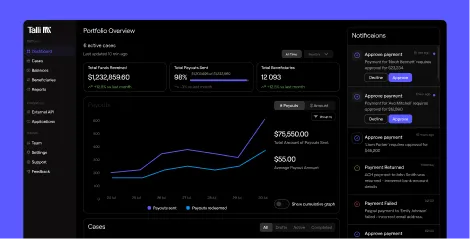
Talli's AI-driven platform addresses these challenges by automating compliance verification and offering multiple payment options. The platform supports dedicated accounts for every settlement, preserving QSF ownership while simplifying reporting requirements.
Claims administrators benefit from real-time dashboards showing completion rates, fund flows, and payout status. Smart reminders across email and SMS help claimants complete the payout process, improving high-volume payout efficiency.
Frequently Asked Questions
What is a class-action lawsuit and how does it work in North Dakota?
A class-action lawsuit allows multiple individuals with similar claims to pursue legal action as a group against a defendant. In North Dakota, cases can proceed in state or federal court depending on the claims involved and damages sought. Courts must certify the class before litigation proceeds, requiring proof of numerosity, commonality, typicality, and adequacy of representation.
How do I choose the best class-action law firm in North Dakota for my case?
Prioritize firms with documented experience in similar case types. Former U.S. Attorneys like Timothy Purdon and Mac Schneider bring federal court expertise valuable for complex litigation. Verify the firm's track record through case histories and professional recognitions like Chambers USA rankings or Best Lawyers designations. Consider geographic accessibility, as most class-action attorneys practice from Fargo or Bismarck offices.
What types of class-action cases are common in North Dakota?
Insurance fraud cases involving long-term care policies represent a significant category in North Dakota. Civil rights actions against government entities, consumer protection cases, employment wage violations in agricultural settings, and data privacy breaches also generate class litigation. The state's energy industry creates additional exposure in oil field dispute matters.
Can I join a class-action lawsuit if I live outside North Dakota?
Multi-state class actions may include residents from multiple jurisdictions when common issues exist. National firms like Robins Kaplan LLP handle cases spanning numerous states. Class membership typically depends on the specific harm alleged rather than geographic residence. Courts evaluate whether including out-of-state plaintiffs serves judicial efficiency and fairness goals.
How are payouts distributed in a class-action settlement?
Settlement distributions follow court-approved plans specifying payment amounts and methods. Claims administrators verify eligibility and process payments to class members. Modern platforms like Talli streamline distribution through digital payment options, reducing unclaimed fund rates and accelerating delivery. Claimants may receive compensation through direct deposit, digital wallets, or prepaid cards depending on the settlement structure.