.svg)


.svg)
Comprehensive data compiled from extensive research on environmental litigation trends, settlement distribution challenges, and claims administration efficiency
Key Takeaways
- Environmental class action settlements have reached historic scale – Class action settlements totaled $42 billion in 2024, with 3M's PFAS settlement alone reaching $10.3 billion, creating unprecedented demands on settlement distribution systems
- Toxic tort and environmental litigation is accelerating – Companies facing environmental and toxic tort class actions doubled from 10% to 21% between 2023 and 2024, with climate litigation reaching 2,967 total cases globally
- Claimant participation rates remain critically low – Only 9% of class members submit claims when receiving direct notice, leaving billions in settlement funds unclaimed
- Traditional distribution methods create severe delays – Settlement checks take 6 months to several years for delivery through traditional methods, with some complex environmental cases like the BP Oil Spill extending payments beyond 10 years
- Digital payment solutions address critical gaps – With attorney fees consuming 25-35% of settlements and administrative inefficiencies costing organizations millions, modern platforms with real-time tracking and flexible payment options significantly improve redemption rates
Understanding the Rise of Environmental Class Actions
1. Class action settlements exceeded $40 billion for third consecutive year
Environmental litigation operates within a broader class action landscape that has reached unprecedented scale. Class action settlements totaled $42 billion in 2024, marking the third consecutive year exceeding $40 billion. This sustained volume creates massive operational demands for claims administrators managing complex distributions across thousands or millions of claimants. Source: Duane Morris Class Action Review
2. Combined settlements totaled $159.4 billion over three years
The cumulative impact of class action litigation between 2022-2024 reached $159.4 billion in combined settlements. This three-year total underscores the sustained growth in settlement volumes requiring efficient reconciliation and reporting systems to manage fund flows and maintain stakeholder visibility. Source: Risk & Insurance
3. Environmental and toxic tort cases doubled year-over-year
Environmental and toxic tort class actions impacted 21% of companies experiencing class actions in 2024, doubling from 10% in 2023. This sharp increase reflects growing regulatory scrutiny and public concern over environmental contamination, particularly PFAS "forever chemicals" exposure. Organizations facing these cases require platforms capable of handling high-volume settlement submissions efficiently. Source: Norton Rose Fulbright
4. Climate litigation reached 2,967 cases globally
Total climate litigation cases reached 2,967 globally by the end of 2024, with 226 new cases filed during the year. The United States accounted for 164 of these new filings, demonstrating the concentrated litigation activity requiring sophisticated claims administration platforms. Source: LSE Grantham Research Institute
Key Data Points on Environmental Class Action Settlements
5. 3M PFAS settlement reached $10.3 billion
The 3M PFAS settlement reached $10.3 billion, making it the largest class action settlement of 2024. Payable over 13 years to public water systems across the United States, this settlement exemplifies the scale and duration challenges facing modern claims administrators. Distribution of this magnitude demands platforms with complete fund segregation and long-term tracking capabilities. Source: Expert Institute
6. DuPont, Chemours, and Corteva PFAS settlement totaled $1.185 billion
The combined DuPont, Chemours, and Corteva PFAS settlement reached $1.185 billion to resolve over 300 lawsuits filed since 2018. This settlement received final approval in February 2024, demonstrating the multi-year timelines typical of environmental class actions requiring sustained administrative infrastructure. Source: Expert Institute
7. Product liability class actions generated $23.40 billion in settlements
Product liability class actions, which include many environmental contamination cases, generated $23.40 billion in top 10 settlements in 2024. This category remains the largest source of class action settlements, requiring real-time settlement dashboards for monitoring distribution progress across massive claimant pools. Source: Duane Morris Class Action Review
8. Ten class action settlements exceeded $1 billion each in 2024
A total of 10 class action settlements exceeded $1 billion each in 2024, reflecting the growing scale of mass tort and environmental litigation. Settlements of this magnitude involve claimant pools that can exceed hundreds of thousands of individuals, making automated distribution systems essential for timely payments. Source: Duane Morris Class Action Review
9. Attorney fees typically consume 25-35% of settlement amounts
Attorney fees typically consume 25-35% of total settlement amounts, with the 3M PFAS settlement resulting in nearly $1 billion in attorneys' fees alone. This allocation makes efficient distribution of remaining funds to claimants even more critical for maximizing settlement impact and ensuring beneficiaries receive their full entitled amounts. Source: Risk & Insurance
Challenges in Distributing Funds for Environmental Class Actions
10. Only 9% of class members submit claims with direct notice
Despite receiving direct notification, only 9% of class members submit claims in class action settlements. This participation gap leaves billions in settlement funds unclaimed annually, directly harming intended beneficiaries. Platforms like Talli address this through smart reminder systems and multi-channel engagement strategies. Source: FTC Consumer Class Actions
11. Large consumer class actions experience claims rates of only 1-2%
Large consumer class actions experience claims rates of only 1-2%, leaving 98-99% of settlement funds unclaimed in many cases. This represents a systemic failure in traditional claims administration that digital platforms with flexible payout options and simplified submission processes can address significantly to improve claimant participation. Source: Edelson PC
12. Traditional settlement checks take 6 months to several years for delivery
Traditional settlement checks take 6 months to several years for delivery, creating extended periods where claimants remain unpaid. This timeline also increases the risk of outdated addresses and uncashed checks, further reducing effective distribution rates and leaving legitimate claimants without compensation. Source: Talli Settlement Statistics
13. BP Oil Spill payments extended beyond 10 years after incident
Payments for the BP Oil Spill settlement extended beyond 10 years after the initial incident, demonstrating the extreme timelines possible in complex environmental class actions. Modern AI-driven platforms can reduce settlement distribution timelines from weeks to days, dramatically improving claimant experience. Source: Deepwater Horizon Settlement
14. Average class action lawsuits take 2-3 years from filing to distribution
Average class action lawsuits take 2-3 years from filing to final distribution, creating extended operational demands on claims administrators. This timeline underscores the need for platforms that maintain consistent tracking and reporting throughout the settlement lifecycle while providing stakeholders with transparent visibility into progress. Source: UCLA Law Study
Ensuring Compliance and Security in Environmental Payouts
15. 70% of organizations involved in regulatory proceedings in 2024
A total of 70% of organizations were involved in at least one regulatory proceeding in 2024, up from 61% in 2023. This increase in regulatory scrutiny makes compliance-focused payout systems with built-in KYC, OFAC screening, and W-9 collection essential for claims administrators. Source: Norton Rose Fulbright Survey
16. Median regulatory proceedings per organization doubled
Median regulatory proceedings per organization doubled from 1 to 2 between 2023-2024, indicating intensifying compliance requirements across industries. Settlement administrators must maintain rigorous audit trails and fund segregation practices to meet these heightened regulatory demands and avoid penalties. Source: Norton Rose Fulbright Survey
17. 73% of companies adjusting environmental claims to mitigate greenwashing exposure
A full 73% of respondents say they are considering or already adjusting environmental claims to mitigate greenwashing exposure. This trend reflects increased scrutiny of environmental marketing and the need for transparent, verifiable settlement processes that can withstand regulatory review and public accountability standards. Source: Norton Rose Fulbright Survey
18. Federal government wins approximately 70% of environmental cases
The federal government wins approximately 70% of environmental cases it brings, while environmental advocacy groups win about 50% of their litigation cases. These success rates drive continued filing of environmental claims and resulting settlement distributions, creating sustained demand for efficient administrative infrastructure. Source: Nature Sustainability
Leveraging Technology for Faster and More Transparent Payouts
19. Courts granted 69% of class certification motions in 2024
Courts granted 69% of class certification motions in 2024, up from 63% in 2023. This increasing approval rate translates to more certified classes requiring distribution infrastructure, making scalable platforms essential for processing large-scale claimant distributions in real-time across diverse claimant populations. Source: Duane Morris Blog
20. 56% of corporate counsel say reaching settlements has become more difficult
A total of 56% of corporate counsel say reaching pre-trial settlement has become moderately or significantly more difficult in 2024. Once settlements are reached, efficient distribution becomes critical for closing cases and satisfying court requirements while managing stakeholder expectations throughout the extended litigation process. Source: Norton Rose Fulbright Survey
21. Over 80% of corporate counsel concerned about nuclear verdicts
Over 80% of corporate counsel are increasingly concerned about "nuclear verdicts" (unexpectedly high jury awards). This concern drives settlement preferences, increasing demand for efficient claims administration platforms that can handle resulting distributions quickly and transparently to satisfy all parties and close cases efficiently. Source: Norton Rose Fulbright Survey
22. Average litigation spend reached $2.4 million in 2024
Average litigation spend reached $2.4 million in 2024, a 6% increase from 2023. Organizations with revenue over $1 billion spent an average of $4.3 million on litigation, making cost-efficient settlement administration essential for managing total case expenses and optimizing resource allocation. Source: Norton Rose Fulbright Survey
23. 92% of respondents say settling before trial is important
A total of 92% of respondents say settling disputes before trial is important, driving demand for efficient post-settlement distribution capabilities. Quick, transparent payouts help satisfy court requirements and close cases faster while reducing ongoing administrative costs and stakeholder management burdens throughout the settlement lifecycle. Source: Norton Rose Fulbright Survey
Maximizing Redemption Rates with Smart Payout Strategies
24. Individual class action payouts typically range from $20 to $500
Individual class action payouts typically range from $20 to $500, amounts that claimants may not pursue through cumbersome processes. Platforms offering digital wallet payments and no bank account requirements remove barriers that cause abandonment and improve overall redemption rates significantly. Source: Federal Judicial Center
25. Data breach class action filings more than doubled since 2022
Data breach class action filings reached 1,488 in 2024, more than double the 604 filings in 2022. This growth in digital-era litigation creates demand for modern platforms with digital identity verification and fraud prevention capabilities to protect settlement funds and ensure legitimate claimants receive payments. Source: Risk & Insurance
26. 60% of all climate litigation cases in the Global South were filed in the last five years
60% of all climate litigation cases ever filed in the Global South were filed in the last five years, expanding the geographic scope of environmental class actions. This international growth requires platforms capable of handling diverse payment methods and compliance requirements across jurisdictions with varying regulatory frameworks. Source: LSE Grantham Research Institute
27. 48% of corporate counsel expect increased lawsuits in 2025
A total of 48% of corporate counsel expect increased lawsuit numbers in 2025, with 32% anticipating increased regulatory proceeding exposure. This projected growth means claims administrators must prepare for higher volumes requiring scalable, high-volume payout infrastructure that can handle surges efficiently. Source: Norton Rose Fulbright Survey
28. 24% of organizations experienced class action litigation in 2024
A total of 24% of organizations experienced class action litigation in 2024, with employment and labor being the most common type at 52%, followed by consumer protection at 41%. Environmental cases now represent a growing share of this litigation activity, requiring specialized administrative capabilities for effective distribution. Source: Norton Rose Fulbright Survey
Conclusion: The Future of Environmental Settlement Administration
Environmental class actions have entered a new era of unprecedented scale and complexity. With settlements routinely exceeding billions of dollars and claimant pools spanning thousands or millions of individuals, traditional paper-based distribution methods are no longer viable. The statistics presented here demonstrate critical gaps: only 9% claims submission rates, multi-year payment delays, and billions left unclaimed annually.
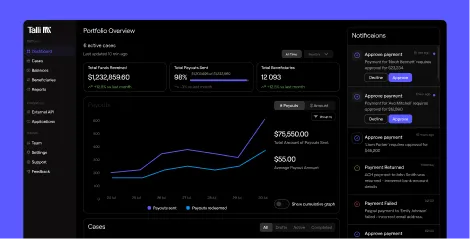
Modern claims administrators must adopt digital-first platforms that address these challenges through automated compliance screening, real-time reporting dashboards, flexible payment options, and multi-channel claimant engagement. Solutions like Talli's AI-powered settlement administration platform reduce distribution timelines from months to days while improving redemption rates through digital wallets, instant notifications, and simplified claim submission processes.
As environmental litigation continues accelerating—with climate cases growing globally and PFAS settlements reaching historic levels—the organizations that embrace digital-first settlement administration will gain competitive advantages in cost efficiency, compliance adherence, and stakeholder satisfaction. The future of environmental settlement distribution lies in platforms that combine regulatory rigor with claimant-centric design.
Frequently Asked Questions
What defines an environmental class action lawsuit?
Environmental class actions are lawsuits filed on behalf of a group of plaintiffs who suffered similar harm from environmental contamination, pollution, or toxic exposure. Common cases involve PFAS "forever chemicals" contamination of water supplies, chemical plant emissions affecting nearby communities, or toxic waste disposal impacting public health. These cases often involve thousands or millions of claimants across wide geographic areas.
How are settlement amounts determined in environmental class action cases?
Settlement amounts reflect the scope of environmental damage, number of affected individuals, cost of remediation, and strength of evidence against defendants. Major PFAS settlements like 3M's $10.3 billion agreement consider water system contamination costs, health monitoring needs, and cleanup expenses. Individual claimant payments typically range from $20 to $500, though some cases involving severe personal injury may provide larger individual awards.
What are the biggest hurdles in distributing funds to claimants?
The primary challenges include low participation rates (only 9% of class members submit claims with direct notice), outdated claimant contact information, extended distribution timelines (6 months to 10+ years), and administrative complexity in verifying eligibility across large claimant pools. Traditional paper-based methods compound these issues, leaving billions in settlement funds unclaimed.
How does technology improve settlement payout speed and accuracy?
Modern platforms automate KYC verification, OFAC screening, and W-9 collection while providing real-time dashboards for monitoring distribution progress. Digital payment options including direct deposit, prepaid cards, and digital wallets eliminate check processing delays and reduce uncashed payment rates. Multi-channel notification systems using SMS and email improve claimant engagement compared to single-channel approaches.
Can claimants choose their preferred payment method for environmental settlements?
Yes, modern settlement distribution platforms offer claimants flexible payment options including direct bank transfers, prepaid Mastercard cards, digital wallet integration, and gift cards. This flexibility is particularly important for unbanked populations who may not have traditional bank accounts. Platforms like Talli provide secure links via SMS or email where claimants select their preferred payment method without creating accounts.