.svg)


.svg)
The hair relaxer cancer lawsuit represents one of the largest active mass tort litigations in 2026, with over 11,440 federal cases as of March 2026 consolidated under MDL 3060 in the Northern District of Illinois. For claimants awaiting compensation, understanding the settlement process, eligibility requirements, and payout timelines is critical—especially as bellwether trials approach and settlement negotiations intensify. Modern digital disbursement solutions are becoming essential for efficiently processing payments across thousands of individual claims.
Key Takeaways
- As of early February 2026, MDL 3060 contains over 11,000 federal cases, with each case requiring individualized settlement calculations rather than equal class action distributions
- NIH Sister Study found women using hair straighteners 4+ times yearly face 2.5x higher uterine cancer risk compared to non-users
- Bellwether trials expected late 2026/early 2027, with global settlement fund disbursements likely in 2027-2028
- 20+ defendant corporations including L'Oréal, Revlon, and Strength of Nature create complex multi-source payment coordination
- Qualifying injuries in the federal MDL focus on uterine, endometrial, and ovarian cancers; uterine fibroid/hysterectomy claims are generally being pursued in separate state-court proceedings
- Digital payment technology reduces settlement distribution timelines from months to days while maintaining compliance
Understanding the Hair Relaxer Cancer Lawsuit and Its Impact
The Judicial Panel on Multidistrict Litigation (JPML) established MDL 3060 on February 6, 2023, consolidating all federal hair relaxer lawsuits under Judge Mary M. Rowland. This litigation stems from scientific evidence linking chemical hair straightening products to serious health conditions, primarily affecting Black women who used these products frequently over many years.
Unlike class actions where settlements divide equally among participants, MDL cases maintain individual status. Each plaintiff's settlement is calculated based on specific factors including:
- Injury severity
- Duration of product use
- Individual documented damages
- Medical treatment requirements
This creates significant complexity for claims administration.
The History of Hair Relaxer Lawsuits
The litigation's scientific foundation rests on a landmark October 2022 National Institutes of Health Sister Study involving 33,497 women tracked for 11 years. Key findings include:
- Women using chemical straighteners more than four times yearly had 2.5x higher uterine cancer risk
- Lifetime uterine cancer risk increased from 1.64% to 4.05% for frequent users
- Chemicals including phthalates, parabens, formaldehyde, and bisphenol A act as endocrine disruptors
A subsequent October 2023 Boston University Black Women's Health Study tracking 44,798 Black women for 22 years confirmed that postmenopausal Black women using relaxers more than twice yearly or for over 5 years had 50% increased uterine cancer risk.
The NIH Sister Study noted that approximately 60% of study participants who reported using straighteners were self-identified Black women, though the litigation is open to all races who meet usage requirements.
Key Allegations Against Manufacturers
Major cosmetic companies named as defendants include L'Oréal USA (Dark & Lovely, SoftSheen-Carson brands), Revlon Consumer Products, Strength of Nature LLC, and hundreds of cases targeting second-wave defendants including John Paul Mitchell Systems, Wella Operations, and Advanced Beauty.
Plaintiffs allege manufacturers:
- Failed to warn consumers about cancer risks despite internal knowledge
- Exploited lax FDA cosmetic regulations—a relatively short list of ingredients explicitly prohibited or restricted by FDA regulation, versus the EU’s Annex II list of over 1,600 prohibited substances
- Targeted marketing toward Black women since the 1950s
- Continued sales after scientific evidence emerged
Eligibility Criteria for Hair Relaxer Cancer Lawsuit Claims
Understanding qualification requirements is essential before pursuing a claim. Plaintiffs must meet three primary requirements to participate in the litigation.
Defining 'Regular Use' of Hair Relaxers
Regular use is typically defined as:
- 4+ applications per year for 5+ consecutive years
- Some cases involve shorter but intensive use patterns
- Product usage spanning multiple years demonstrates sustained exposure
- Both professional salon applications and at-home use qualify
Required Medical Documentation for Your Claim
Qualifying injuries in the federal MDL bellwether process include:
- Uterine cancer
- Endometrial cancer
- Ovarian cancer
Uterine fibroid/hysterectomy claims are primarily being pursued in separate state-court proceedings.
Essential documentation includes:
- Medical records confirming diagnosis date and type
- Proof of product usage (receipts, salon records, photographs, testimony)
- Documentation of damages (medical expenses, lost wages)
- Treatment records showing ongoing care requirements
Expected Hair Relaxer Cancer Lawsuit Settlement Payouts and Compensation
While no settlements have been finalized as of early 2026, legal analysts project substantial compensation based on case specifics and comparable mass tort outcomes.
Factors Influencing Individual Settlement Amounts
Settlement valuation matrices consider over 50 factors, with the most significant including:
Cancer Type and Severity: Uterine, ovarian, and endometrial cancers receive higher compensation than fibroids. Later-stage diagnoses at discovery typically receive more substantial settlements than early-stage cases.
Age at Diagnosis: Women diagnosed under age 35 with fertility loss command premium settlements. Younger diagnoses with longer life expectancy impacts also increase compensation values.
Product Use Duration and Frequency: Longer documented use periods strengthen causation arguments. Cases showing 10+ years of frequent use typically receive higher valuations than shorter exposure periods.
Documented Medical Expenses: All verified medical costs are directly compensated, including surgery, chemotherapy, radiation, hospitalization, and ongoing treatment requirements.
Lost Wages and Future Earnings: Verified income loss due to treatment, recovery, and ongoing disability factors into settlement calculations. Future earning capacity impacts are included for younger plaintiffs.
Pain, Suffering, and Quality of Life: Non-economic damages account for physical pain, emotional distress, loss of consortium, and permanent lifestyle changes.
Projected Payout Timelines
Settlement fund establishment typically follows bellwether trial outcomes. Based on current MDL scheduling:
- 2026: Settlement negotiations continue parallel to trial preparation
- Late 2026/Early 2027: Bellwether trials expected
- 2027: Global settlement agreements likely finalized
- 2027-2028: Individual disbursements to claimants begin
Understanding Qualified Settlement Funds becomes critical during this phase, as these structures aggregate defendant contributions while maintaining legal segregation for tax purposes.
The Legal Process: Your Hair Relaxer Lawsuit Claim
The MDL structure creates a unique legal pathway different from traditional individual lawsuits or class actions.
Steps to Filing a Hair Relaxer Claim
The typical process includes:
- Initial consultation with a personal injury attorney specializing in mass torts
- Case evaluation reviewing medical records and product usage history
- Lawsuit filing either in federal MDL or state court proceedings
- Plaintiff Fact Sheet submission detailing injuries and damages
- Discovery phase including medical record authorization
- Settlement negotiation or trial depending on case progression
A Special Settlement Master (Ellen K. Reisman) was appointed in April 2025 to facilitate settlement negotiations, indicating movement toward resolution.
Working with a Personal Injury Attorney
Key considerations when selecting legal representation:
- Experience with mass tort litigation and MDL proceedings
- Track record with product liability cases
- Clear fee structure (typically contingency-based at 33-40%)
- Resources for medical expert testimony
- Communication practices for case updates
Key Dates and Deadlines for the 2026 Hair Relaxer Settlements
Critical milestones shape the litigation trajectory and settlement timing.
Important Milestones in the Settlement Timeline
According to court scheduling orders:
- October 31, 2025: Plaintiff expert reports due
- December 1, 2025: Defense expert reports due
- January 8, 2026: "Science Day" with scientific evidence presentations
- February 23, 2026: Bellwether trial selection finalized
- March 2, 2026: General causation discovery closes
- April 1, 2026: Daubert motions challenging expert testimony due
- Late 2026/2027: Bellwether trials commence
State court proceedings in Georgia (600+ cases), Pennsylvania, Illinois, and New York operate on separate timelines and may reach settlements independently.
How Technology is Streamlining Hair Relaxer Settlement Payouts
With over 11,000 individual cases requiring personalized settlement calculations, traditional manual processing cannot efficiently handle disbursement demands. Modern mass payout technology addresses these challenges through automation and digital infrastructure.
Faster Payouts with Digital Solutions
Digital payment platforms reduce settlement distribution from months to days through:
- Automated calculation engines applying tier-based matrices to individual claim data
- Real-time status tracking eliminating status inquiry calls that consume attorney resources
- Multiple payment options including digital wallets, prepaid cards, and ACH transfers
- Self-service claimant portals providing transparency throughout the process
For claims administrators managing high-volume distributions, these capabilities transform operational efficiency while improving claimant experience.
Ensuring Compliance in Mass Tort Disbursements
Multi-defendant settlements like the hair relaxer litigation require sophisticated compliance infrastructure. AI-driven payment platforms address these requirements with:
- Complete fund segregation maintaining separate accounts for each defendant's contributions
- KYC, OFAC, and W-9 collection baked into the verification workflow
- Fraud mitigation and audit logs ensuring regulatory compliance
- Medicare/Medicaid lien coordination tracking resolution before disbursement
Banking services through FDIC-insured institutions provide the regulatory foundation for secure fund handling.
Maximizing Your Hair Relaxer Settlement Claim: Tips and Best Practices
Proactive steps strengthen your position throughout the claims process.
What to Do After Receiving a Settlement Offer
Essential actions include:
- Preserve all evidence including product containers, receipts, and photographs
- Maintain medical record continuity documenting ongoing treatment
- Track all expenses related to diagnosis and treatment
- Respond promptly to attorney requests for information
- Understand tax implications (physical injury settlements typically non-taxable)
Avoid common pitfalls:
- Posting case details on social media
- Missing documentation deadlines
- Accepting quick settlements without legal review
- Failing to resolve medical liens before accepting payment
Why Talli Powers Compliant Hair Relaxer Settlement Distribution
The complexity of multi-defendant fund coordination in the hair relaxer litigation demands robust compliance infrastructure. With Revlon's 2022 bankruptcy adding separate claims processing requirements and 20+ defendants contributing to settlement funds, disbursement technology must handle unprecedented coordination challenges.
Talli's OFAC-compliant platform automates every critical compliance requirement:
- Complete fund segregation preserving QSF ownership across multiple defendant contributions
- Identity verification and KYC preventing fraudulent claims before disbursement
- Tax documentation automation including 1099 issuance for settlements exceeding $600
- Lien resolution tracking for Medicare/Medicaid reimbursement coordination
- State unclaimed property compliance for uncashed payments
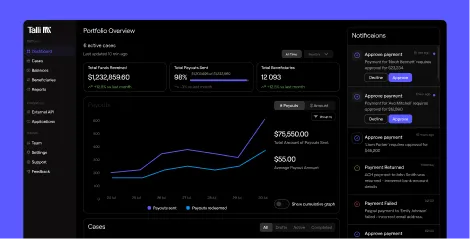
Talli automates and safeguards every claims payout, ensuring complete fund segregation while preserving QSF ownership and simplifying reporting throughout the disbursement lifecycle. The platform's digital disbursement infrastructure reduces settlement distribution timelines from months to days, enabling claims administrators to focus on claimant service rather than operational complexity.
Ready to speed up your payouts? Talli's platform handles compliance complexity so claims administrators can process thousands of individualized settlements efficiently and securely.
Frequently Asked Questions
What types of cancer are linked to hair relaxer use?
Scientific studies have established connections between chemical hair relaxer use and uterine cancer, ovarian cancer, and endometrial cancer. The NIH Sister Study specifically found frequent users (4+ times yearly) face 2.5x higher uterine cancer risk. Some state court proceedings also accept claims involving uterine fibroids requiring hysterectomy, though the federal MDL initially focused exclusively on cancer diagnoses.
Can I still file a claim if I used hair relaxers years ago?
Yes, many plaintiffs used products decades before their diagnosis. The litigation examines long-term cumulative exposure, with some plaintiffs documenting use spanning 20+ years before developing cancer. However, statute of limitations rules vary by state, and certain jurisdictions are evaluating statute of repose challenges that could affect older claims. Consulting with an attorney promptly is advisable.
How are settlements divided when I use products from multiple manufacturers?
Unlike class actions with uniform payouts, MDL settlements calculate proportional allocation based on which specific products you used during different time periods. If you used three different brands over 15 years, your settlement may draw from three separate defendant contribution pools. Claims platforms must track these proportional allocations and coordinate payment timing across multiple defendant settlement agreements.
What payment options are available for receiving my settlement?
Modern settlement administration offers multiple payment methods beyond traditional paper checks, including ACH direct deposit, digital wallet transfers, prepaid Mastercard options, and other digital payment solutions. Digital payment options typically process faster and have higher redemption rates than checks, which often go uncashed or require reissuance due to address changes.
How long will it take to receive a settlement payout?
Based on current MDL scheduling, individual disbursements will likely begin in 2027-2028 following bellwether trial outcomes and global settlement agreement finalization. However, state court cases may settle on different timelines. Once a settlement is approved, actual payment processing depends on the claims administrator's technology—digital platforms can reduce disbursement from months to days, while traditional paper check processes may take 6-12 months after settlement approval.