.svg)


.svg)
The NEC baby formula litigation represents one of the most significant mass tort cases affecting premature infants and their families, with nearly 1,000 claims filed nationwide and hundreds consolidated in the ongoing multidistrict litigation against major formula manufacturers. While individual settlements and verdicts continue, families affected by necrotizing enterocolitis face critical decisions about potential compensation, documentation requirements, and payment processing. Understanding the claims process—and selecting secure payment methods—will determine whether eligible claimants receive full compensation efficiently or face unnecessary delays.
Key Takeaways
- NEC litigation involves claims that cow’s milk-based formulas increased NEC risk in premature and very-low-birth-weight infants (often under 1,500 grams)
- Eligible claimants must demonstrate formula exposure, NEC diagnosis, and resulting injuries through comprehensive medical documentation
- Mass tort settlement payouts often face significant redemption challenges with traditional paper check distribution methods
- Digital payment platforms can reduce settlement distribution timelines from weeks to days while improving compliance
- KYC, OFAC screening, and W-9 collection requirements apply to all settlement disbursements regardless of award amount
- Families should preserve all NICU records, formula purchase receipts, and medical bills documenting NEC treatment costs
- Multiple payout options including digital wallets and prepaid cards serve claimants without traditional bank accounts
Understanding the NEC Baby Formula Litigation
Necrotizing enterocolitis is a devastating intestinal disease primarily affecting premature infants. The condition occurs when bacteria invade the intestinal wall, causing inflammation, tissue death, and potentially fatal complications. Research published by the National Institutes of Health confirms that premature infants fed cow's milk-based formula face significantly elevated NEC risk compared to those receiving breast milk. Families whose premature infants developed NEC after consuming these formulas have alleged that manufacturers failed to adequately warn about heightened risks for vulnerable newborns.
What is NEC?
NEC remains one of the leading causes of death among premature infants in neonatal intensive care units. The disease typically presents within the first two weeks of life, particularly in babies born before 32 weeks gestation or weighing less than 1,500 grams at birth.
Common symptoms include:
- Abdominal distension and tenderness
- Feeding intolerance and vomiting
- Bloody stools
- Temperature instability
- Lethargy and breathing difficulties
- Intestinal perforation requiring emergency surgery in severe cases
Medical research has increasingly linked cow's milk-based formula feeding in premature infants to elevated NEC risk. This scientific foundation underlies the thousands of lawsuits filed against formula manufacturers Abbott Laboratories (Similac) and Mead Johnson (Enfamil).
History of the Lawsuit
The NEC baby formula litigation has gained momentum as early test cases—primarily in state courts—have produced mixed outcomes, while the federal MDL has seen key bellwether cases decided on pretrial motions as litigation continues to move forward. Cases have been consolidated into multidistrict litigation (MDL No. 3026) in the Northern District of Illinois to streamline pretrial proceedings.
Individual verdicts have included substantial awards, with juries finding that manufacturers knew or should have known about NEC risks but failed to provide adequate warnings to hospitals and families. As mass payout trends indicate, these cases increasingly move toward structured resolution programs that can process multiple claims efficiently.
Key Parties Involved
The primary defendants in NEC litigation include:
- Abbott Laboratories: Manufacturer of Similac brand formulas
- Mead Johnson Nutrition: Manufacturer of Enfamil brand formulas (now owned by Reckitt Benckiser)
- Hospital systems: Some claims involve hospital feeding protocols and disclosure practices
Plaintiffs consist of parents and legal guardians of premature infants who developed NEC after formula feeding, including wrongful death claims for infants who did not survive the disease.
Who is Eligible for Compensation?
Eligibility for NEC litigation compensation focuses on establishing the connection between formula exposure and infant injury. While specific criteria may vary depending on individual case circumstances, general requirements follow established patterns.
Identifying Eligible Infants
Potentially eligible claims generally require:
- Prematurity: Birth before 37 weeks gestational age, with strongest claims for infants born before 32 weeks
- Low birth weight: Infants weighing less than 1,500 grams (approximately 3.3 pounds) at birth
- Formula exposure: Documented feeding of cow's milk-based formula during NICU stay
- NEC diagnosis: Confirmed necrotizing enterocolitis diagnosis by treating physicians
- Resulting injury: Documented complications including surgery, bowel resection, short bowel syndrome, developmental delays, or death
Required Documentation
Successful claims require comprehensive medical documentation. Claimants should gather:
- Complete NICU medical records including feeding logs
- NEC diagnosis and staging documentation
- Surgical records if applicable
- Pathology reports from any tissue removal
- Long-term treatment records for ongoing complications
- Death certificates for wrongful death claims
- Formula brand identification from hospital records
- Billing records documenting medical expenses
Exclusion Criteria
Claims may face challenges based on:
- NEC diagnosis predating formula exposure
- Full-term infants without prematurity risk factors
- Inability to document specific formula brand usage
- Claims filed after statute of limitations expiration
- Prior settlement or release agreements covering NEC claims
Steps to Participate in NEC Litigation
The claims process requires careful attention to deadlines, documentation requirements, and submission procedures. Proper claim filing significantly impacts both approval likelihood and potential compensation amounts.
Initial Steps for Claimants
Families seeking compensation should:
- Consult with qualified counsel: NEC claims involve complex medical and legal issues requiring experienced representation
- Gather medical records: Request complete NICU records from birth hospital
- Document formula exposure: Obtain feeding logs showing specific formula brands administered
- Calculate damages: Compile medical expenses, ongoing care costs, and other economic losses
- Meet filing deadlines: Submit all required documentation within applicable timeframes
Working with Legal Counsel
Attorney representation provides significant advantages:
- Case evaluation determining claim strength and potential value
- Document collection and organization assistance
- Medical expert coordination for causation opinions
- Negotiation with defendants and administrators
- Trial representation if cases proceed to verdict
Most NEC attorneys work on contingency arrangements, meaning families pay legal fees only if compensation is recovered.
Anticipated Compensation in NEC Cases
Compensation in NEC cases varies dramatically based on injury severity, documented damages, and jurisdictional factors. Understanding potential compensation structures helps families set realistic expectations while pursuing maximum recovery.
Factors Influencing Awards
Individual compensation amounts depend on multiple variables:
- Injury severity: Higher awards for surgical intervention, bowel resection, or death
- Long-term complications: Ongoing disabilities and care needs increase claim value
- Documented expenses: Medical bills, therapy costs, and equipment expenses
- Economic losses: Lost parental wages during extended hospitalizations
- Non-economic damages: Pain and suffering, emotional distress, loss of consortium
Compensation Categories
When settlements occur in mass tort cases, they typically establish tiered compensation based on injury categories:
- Tier 1 (Severe): Wrongful death or permanent severe disability
- Tier 2 (Significant): Surgical intervention with lasting complications
- Tier 3 (Moderate): Medical NEC requiring extended treatment
- Tier 4 (Minor): NEC diagnosis with full recovery
Each tier carries different base compensation ranges, with individual adjustments based on specific circumstances and documentation strength.
Projected Case Values
While specific values remain confidential during litigation, similar mass tort cases involving infant injuries have produced individual awards ranging from thousands to millions of dollars depending on injury severity. Legal payout research indicates that well-documented claims with severe injuries command significantly higher compensation than those with incomplete records or minimal long-term effects.
Ensuring Secure and Efficient Payouts with Talli
When settlements or verdicts result in compensation, payment processing becomes critical. Research shows that significant portions of settlement funds go unclaimed due to payment processing failures, outdated addresses, and banking barriers.
How Talli Enhances Payment Distribution
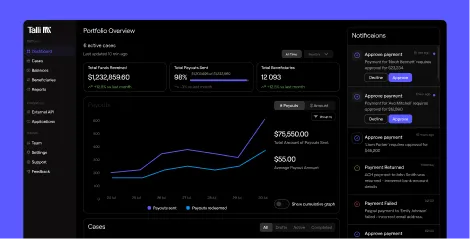
Talli's AI-driven payment platform addresses common settlement payout challenges:
- No bank account required: Claimants without traditional banking access receive funds through digital wallets or prepaid cards
- Secure link delivery: Recipients receive payment access via SMS or email without creating accounts
- Choice of payment method: Claimants select the option that works best for their circumstances
- Real-time tracking: Both administrators and recipients monitor payment status throughout distribution
The platform's approach reflects modern settlement administration practices, meeting claimants where they are rather than forcing outdated payment methods.
Compliance and Security Features
Every settlement payout must meet strict regulatory requirements. Talli integrates:
- KYC verification: Know Your Customer protocols confirming recipient identity
- OFAC screening: Office of Foreign Assets Control compliance preventing prohibited transactions
- W-9 collection: Tax documentation gathering for IRS reporting requirements
- Fraud mitigation: Advanced detection preventing unauthorized payment access
- Audit logs: Complete transaction records for regulatory review
Banking services provided by Patriot Bank, N.A., Member FDIC, ensure deposits carry federal insurance protection.
Speed and Transparency
Traditional settlement distribution timelines can stretch for weeks or months. Digital payment methods enable same-day or next-day payment delivery once claims receive approval, with the Easy Prepaid Mastercard issued by Patriot Bank, N.A., Member FDIC, pursuant to a license from Mastercard International.
Compliance in Large-Scale Disbursements
Mass tort cases involving thousands of claimants require rigorous compliance frameworks protecting all parties. Legal compliance standards demonstrate that regulatory adherence directly impacts successful distribution.
Meeting Regulatory Standards
Settlement disbursements must satisfy:
- Federal tax reporting requirements for payments exceeding thresholds
- State unclaimed property laws for undelivered payments
- Anti-money laundering protocols
- Consumer financial protection regulations
- Court oversight and reporting obligations
Reporting and Reconciliation Tools
Effective settlement administration requires:
- Complete fund segregation preserving Qualified Settlement Fund integrity
- Real-time reporting on completion rates and fund flows
- CRM integration for case management systems
- Stakeholder dashboards showing distribution progress
Talli supports dedicated accounts for every settlement, simplifying reporting and ensuring legal compliance throughout the disbursement lifecycle.
Maximizing Payment Success Rates
Families who endured NEC trauma deserve compensation that actually reaches them. Traditional payout methods often leave substantial funds unclaimed due to various barriers.
Overcoming Payout Barriers
Common obstacles preventing successful payment include:
- Address changes: Families relocate after NICU stays, losing contact with administrators
- Check expiration: Paper checks go uncashed due to mail delays or overlooked envelopes
- Banking access: Not all families maintain traditional bank accounts for check deposits
- Complex processes: Multi-step redemption requirements discourage completion
Digital Tools for Claimants
Modern payout platforms eliminate traditional barriers through:
- SMS and email notification delivery regardless of physical address
- Mobile-accessible payment links working on any smartphone
- Multiple redemption options including digital wallets, prepaid cards, and direct deposit
- Extended redemption windows beyond typical check validity periods
Personalized Communication
Smart reminder systems improve completion rates:
- Initial payment notification via preferred channel
- Follow-up reminders for incomplete redemptions
- Multiple contact methods capturing different preferences
- Support access for claimants encountering issues
Talli's Role in NEC Settlement Disbursements
When NEC cases result in compensation—whether through individual settlements, verdicts, or potential future structured settlement programs—efficient payment distribution becomes essential to ensuring families receive their awards promptly and securely.
Talli's specialized settlement payment platform addresses the unique challenges of mass tort disbursements. By offering multiple payment options, the platform ensures that all eligible families can access their compensation regardless of banking status. Digital wallets, prepaid cards, and direct deposit options accommodate diverse claimant needs while maintaining strict compliance with regulatory requirements.
The platform's real-time tracking capabilities provide transparency throughout the payment process. Administrators can monitor distribution progress, identify potential delivery issues, and ensure maximum fund redemption. For claimants, this means faster access to compensation with clear visibility into payment status—reducing anxiety during an already difficult time.
Perhaps most importantly, Talli's approach prioritizes security without sacrificing accessibility. Comprehensive identity verification, fraud prevention, and regulatory compliance protect all parties while streamlined user interfaces make the payment experience straightforward for families who may be navigating complex legal and financial processes for the first time.
By reducing settlement distribution timelines and increasing redemption rates, Talli ensures that compensation awarded to NEC families actually reaches them—fulfilling the fundamental purpose of legal remedies for these devastating injuries.
Frequently Asked Questions
What is necrotizing enterocolitis and why is it linked to baby formula lawsuits?
Necrotizing enterocolitis is a severe intestinal disease primarily affecting premature infants where bacteria invade the intestinal wall, causing inflammation and tissue death. Medical research has identified elevated NEC risk when premature infants receive cow's milk-based formula compared to breast milk feeding. Lawsuits allege that formula manufacturers knew or should have known about these risks but failed to adequately warn hospitals and families, particularly for the most vulnerable premature infants in neonatal intensive care units.
How long does the NEC claims process typically take?
The timeline for NEC cases varies significantly based on whether claims proceed to trial or settle. Individual trials can take months to years from filing to verdict, while settled cases may resolve more quickly once negotiations conclude. After any resolution, payment processing timelines depend on the distribution method chosen—with digital payment platforms enabling distribution within days compared to weeks or months for traditional paper check methods.
Can families participate if they no longer have all medical records?
Incomplete documentation weakens claims but doesn't automatically disqualify participation. Hospital medical records departments maintain NICU files for extended periods and can provide copies upon request. Legal counsel can assist with record retrieval from multiple facilities if infants are transferred between hospitals. While complete records strengthen claim value and approval likelihood, alternative documentation demonstrating formula exposure and NEC diagnosis may be acceptable in some circumstances.
What tax implications should claimants expect from NEC compensation?
Settlement payments may have varying tax treatment depending on the nature of compensation. Medical expense reimbursements generally receive different treatment than damages for pain and suffering. Claimants should consult tax professionals regarding their specific circumstances. Settlement administrators issue appropriate tax documentation including 1099 forms when required, ensuring 1099 issuance accuracy for proper tax compliance.
Can claimants choose how they receive settlement payments?
Modern settlement administration platforms offer multiple payment options accommodating diverse claimant circumstances. Choices typically include direct deposit to existing bank accounts, digital wallet transfers, prepaid debit cards, and in some cases paper checks for those preferring traditional methods. This unified payment approach ensures all eligible claimants can access their compensation regardless of banking status.