.svg)


.svg)
Comprehensive data compiled from extensive research on financial inclusion, legal settlement disbursement, and digital payment transformation
Key Takeaways
- The unbanked population remains substantial – Approximately 5.6 million U.S. households lack bank accounts, with 66.2% relying exclusively on cash for all transactions, creating significant barriers to receiving legal settlement payments through traditional methods
- Paper checks fail unbanked claimants systematically – Between 15-20% of paper settlement checks go uncashed, while check-cashing services extract 5-8% of the check's value from recipients who lack banking access
- Digital payment solutions dramatically outperform traditional methods – Digital payment platforms achieve 98% success rates, with 94% of settlement payees preferring digital options when offered
- The financial burden on unbanked individuals is severe – Being unbanked costs individuals up to $3,000 annually in alternative financial service fees, while Americans paid an estimated $1.5 billion just to cash checks in 2021
- Settlement participation rates remain critically low – Class action claim participation routinely lingers below 10%, often under 1%, with approximately 9.5% of Americans moving annually and missing checks mailed to old addresses
- Digital adoption in settlements is accelerating rapidly – The number of class actions and mass torts with digital payments increased by more than 3,200% in four years, from 17 cases in 2020 to 558 in 2024
- AI-driven platforms reduce fraud while increasing accessibility – Real-time screening prevented 723 million fraudulent claims in 2024, while unified payment solutions ensure both banked and unbanked claimants receive their funds
Understanding the Unbanked: Who They Are and Why It Matters
1. 4.2% of U.S. households were unbanked in 2023, representing approximately 5.6 million households
The unbanked population in the United States represents a significant segment lacking access to traditional banking services. These 5.6 million households cannot receive settlement payments through direct deposit without incurring substantial fees at check-cashing services, creating barriers for claims administrators distributing funds. Source: FDIC National Survey
2. 14.2% of U.S. households were underbanked in 2023, representing approximately 19 million households
Beyond the fully unbanked, nearly one in seven American households qualifies as underbanked, meaning they have bank accounts but rely on alternative financial services. Combined with unbanked populations, approximately 24.6 million households face challenges receiving settlement payments through traditional methods. Source: FDIC National Survey
3. 6% of adults were unbanked in 2023, meaning neither they nor their spouse or partner had a checking, savings, or money market account
Federal Reserve data confirms persistent banking exclusion in America. This 6% figure translates to approximately 15.6 million adults who cannot receive ACH transfers or easily cash traditional settlement checks, requiring alternative payment methods for legal settlements. Source: Federal Reserve Report
4. 1.4 billion adults worldwide still lack financial accounts as of 2021
Global financial exclusion remains a massive challenge, with over a billion adults lacking access to formal financial services. For multinational settlements or class actions with international claimants, digital payment platforms offering prepaid cards provide essential infrastructure for fund distribution. Source: World Bank Global Findex
5. 22% of adults with income below $25,000 were unbanked compared with 1% of adults with income of $100,000 or more
Income inequality directly correlates with banking access, creating a 22-fold disparity. Lower-income individuals who often need settlement funds most urgently face the greatest barriers to receiving payments, particularly in consumer protection or employment dispute settlements. Source: Block
The Landscape of Unbanked Payments: Key Statistics and Trends
6. 66.2% of unbanked households rely exclusively on cash for all transactions
The overwhelming majority of unbanked households operate entirely within the cash economy, making traditional settlement payment methods fundamentally incompatible with their financial lives. Digital-first payment approaches with prepaid card options directly address this accessibility gap for claimants. Source: FDIC 2023 Survey
7. 10.6% of Black households were unbanked in 2023, compared to 3% of White households
Racial disparities in banking access create uneven settlement fund distribution outcomes. With Black households four times more likely to be unbanked, equitable settlement distribution demands payment options that don't assume universal banking access for diverse claimant populations. Source: Block
8. 9.5% of Hispanic households were unbanked in 2023
Hispanic communities face significantly elevated unbanked rates compared to the general population. For settlements arising from consumer protection violations or employment disputes, payment platforms offering transparency in settlement distribution must ensure equitable access regardless of banking status. Source: FDIC
9. 32% of unbanked adults used nonbank check cashing or money orders in 2023
Nearly one-third of unbanked individuals already engage with alternative financial services, demonstrating willingness to use non-traditional payment channels. This existing behavior pattern suggests high receptivity to prepaid cards and digital wallet options eliminating check-cashing fees. Source: Federal Reserve Report
Challenges and Risks: The True Cost of Traditional Payout Methods
10. Check-cashing services charge 5% to 8% of the check's value
Unbanked claimants receiving paper settlement checks face immediate value erosion when cashing them. On a $500 settlement payment, check-cashing fees consume $25-$40 of entitled funds, effectively taxing the unbanked and undermining settlements' compensatory purpose for vulnerable populations. Source: GOV.UK
11. Americans paid an estimated $1.5 billion in fees just to cash checks in 2021
The aggregate cost of check-cashing across the country represents massive wealth transfer away from financially vulnerable populations. Settlement administrators choosing paper check distribution contribute to this systemic problem. Eliminating uncashed checks through digital alternatives preserves settlement value. Source: Corpay Research
12. Approximately 12% of Americans move every year, causing checks mailed to old addresses to miss intended recipients
Address mobility creates structural problems for mail-based settlement distribution. With over 40 million Americans relocating annually, paper checks mailed months after claim submission frequently arrive at outdated addresses. Digital delivery via email reaches claimants regardless of location changes. Source: NCOA
13. 63% of organizations reported check fraud incidents in 2024
Paper checks create substantial fraud exposure for settlement administrators. Handling settlement fraud requires moving away from vulnerable paper instruments toward digital payment rails with built-in verification and real-time fraud detection capabilities. Source: Association for Financial Professionals
14. Check fraud reported by financial institutions in 2024 reached $688 million
The financial magnitude of check fraud underscores risk inherent in paper-based settlement distribution. Settlement funds lost to fraudulent check manipulation represent direct failure to compensate legitimate claimants. AI-driven platforms protect settlement funds while ensuring genuine claimants receive payments. Source: Western Alliance Bank Report
Secure and Convenient Alternatives: Digital Payment Solutions
15. Digital payment platforms achieve success rates around 98%, compared to only 55-77% for traditional mailed checks
The performance gap between digital and paper-based distribution is substantial. Digital platforms achieve near-universal success in fund delivery, while paper checks fail between 23% and 45% of the time, potentially representing millions in improved distribution. Source: Western Alliance Bank Report
16. 94% of payees prefer digital payments when given the choice in class action settlements
When offered options, the overwhelming majority of settlement recipients choose digital payment methods. This preference reflects the convenience, speed, and accessibility of digital payments compared to waiting for mail delivery and finding check-cashing services for unbanked claimants. Source: Western Alliance Bank Report
17. The number of class actions and mass torts with digital payments increased by more than 3,200% in four years
From 17 cases in 2020 to 558 in 2024, digital payment adoption in legal settlements has exploded. This trend reflects growing recognition that digital distribution better serves claimant interests, suggesting digital options will become standard practice. Source: Western Alliance Bank Report
18. Digital payments in settlements cost only $0.25-$0.75 per transaction versus $1-$2+ for paper checks
Beyond improved success rates, digital payments reduce per-transaction costs substantially. When including printing, mailing, and bank fees, paper checks often exceed $20 in total processing cost. Digital platforms cut costs while improving claimant outcomes. Source: Talli Research
19. Unbanked individuals utilized prepaid cards for approximately 11% of their transactions, nearly five times higher than banked consumers
Prepaid cards already form a significant part of unbanked individuals' financial lives. This existing familiarity makes prepaid card settlement distribution a natural fit, with platforms offering prepaid Mastercard options providing secure, accessible payment channels. Source: Corpay
20. Lacking a bank account increases the likelihood of using prepaid cards by roughly 80%
The correlation between unbanked status and prepaid card usage demonstrates this payment channel's viability for settlement distribution. Claimants without bank accounts are substantially more likely to already understand prepaid cards, reducing friction in payment redemption. Source: Corpay
21. 33.8% of unbanked households relied upon prepaid cards or nonbank online payment services in 2023
One-third of unbanked households already conduct transactions through prepaid cards or digital payment services, demonstrating infrastructure readiness for digital settlement distribution. This adoption rate continues growing as mobile phone access expands nationwide. Source: Corpay
Boosting Redemption Rates: Engaging Unbanked Claimants
22. Class action claim participation rates routinely linger below 10%, often under 1%
Settlement participation represents a persistent industry challenge. With redemption rates often falling below double digits, substantial settlement funds never reach beneficiaries. Digital platforms with smart reminders across email and SMS dramatically improve completion rates by reducing friction. Source: Duke University School of Law
23. Only 9% of class members submit claims when receiving direct notice
Even with direct notification, fewer than one in ten eligible claimants completes the claims process. This dismal rate reflects confusion and process friction rather than lack of interest. Convenient mobile-first claim submission helps claimants complete processes faster. Source: FTC
24. Settlement checks face strict 90 or 180-day expiration dates
Paper checks create artificial urgency that many claimants miss, particularly those with unstable housing or limited mail access. Expired checks require reissuance, adding administrative burden and delaying compensation. Digital payments eliminate expiration concerns by enabling immediate fund access. Source: CFPB
Compliance and Fraud Prevention in Unbanked Payments
25. Real-time screening prevented 723 million fraudulent claims in 2024
Advanced fraud detection capabilities protect settlement integrity while ensuring legitimate claimants receive funds. Platforms with KYC, OFAC, and W-9 collection provide compliance infrastructure essential for large-scale settlement distribution, protecting both funds and claimant data. Source: Western Alliance Bank Report
26. Fraudulent claims declined 40% in 2024 through real-time digital verification
Digital payment platforms with integrated verification dramatically reduce fraud compared to paper-based systems. The 40% decline demonstrates how technology protects settlement integrity while maintaining accessibility for legitimate unbanked claimants through complete fund segregation and reporting. Source: Western Alliance Bank Report
Moving Forward: Technology Enabling Financial Inclusion in Settlements
The data clearly demonstrates that traditional paper-based settlement distribution systematically fails unbanked populations while imposing substantial costs on both administrators and claimants. Over $42 billion was paid out in class action settlements in 2024, yet millions of dollars never reach intended recipients due to uncashed checks, address changes, and prohibitive check-cashing fees.
Digital payment platforms offer transformative solutions that simultaneously improve accessibility for unbanked claimants, reduce administrative costs, prevent fraud, and increase redemption rates. With 94% of settlement payees preferring digital options and success rates reaching 98%, the shift toward digital-first payment approaches represents both operational efficiency and social justice.
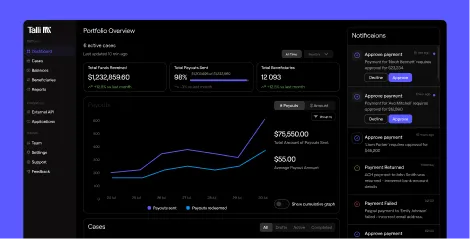
Claims administrators implementing real-time settlement dashboards can monitor delivery, completion, and engagement across diverse payment methods, ensuring equitable outcomes for all claimants regardless of banking status. The future of settlement distribution lies in flexible, secure platforms that meet claimants where they are—whether through direct deposit, prepaid cards, or digital wallets.
Frequently Asked Questions
What does 'unbanked' mean in the context of legal claims?
Unbanked refers to individuals who lack checking, savings, or money market accounts at traditional financial institutions. In legal claims, this means these claimants cannot receive settlement payments via direct deposit or ACH transfer and may struggle to cash paper checks without paying substantial fees at check-cashing services.
What are the most common challenges when distributing payments to unbanked claimants?
The primary challenges include: paper checks going uncashed (15-20% failure rate), check-cashing fees consuming 5-8% of payment value, address changes causing missed deliveries, expired checks requiring reissuance, and fraud vulnerability with paper instruments. Digital payment solutions address each of these challenges.
How can digital payment platforms help unbanked individuals receive their settlements?
Digital platforms offer prepaid cards, digital wallets, and gift card options that don't require bank accounts. Claimants receive secure links via SMS or email, select their preferred payment method, and access funds immediately—no bank account required and no check-cashing fees.
Are prepaid cards a secure option for unbanked claimant payments?
Yes. Prepaid cards issued by FDIC-member banks like Patriot Bank, N.A. provide the same consumer protections as traditional debit cards. Combined with KYC verification, OFAC screening, and fraud mitigation built into modern payment platforms, prepaid cards offer both security and accessibility.
What compliance measures are crucial when paying unbanked claimants?
Essential compliance measures include KYC (Know Your Customer) verification, OFAC screening for sanctions compliance, W-9 collection for tax reporting, complete fund segregation to preserve QSF ownership, comprehensive audit logs, and fraud mitigation systems. AI-driven platforms automate these requirements while maintaining accessibility.
How do automated reminders improve payout rates for the unbanked?
Smart reminders across email, SMS, and multiple channels help claimants complete the payout process before funds expire or addresses change. Multi-channel outreach significantly increases response rates compared to single-channel approaches, ensuring more claimants—including unbanked individuals—successfully receive their settlement funds.