.svg)


.svg)
Workers' compensation premium audits reconcile estimated payroll against actual exposure, and when businesses overpay, carriers owe refunds. Workers' comp premium audits can result in either additional premium, a refund or credit, or no material adjustment, depending on how actual payroll and exposure compare with the original estimates. Refund frequency varies by insurer and book of business. Yet traditional paper check disbursement creates operational bottlenecks through stale payments, reissues, delayed delivery, and ongoing unclaimed-property administration.
Key Takeaways
- Audit outcomes depend on how actual payroll and exposure compare to original estimates, with some carriers reporting significant portions of policyholders receiving credits after annual audits
- Refund timing varies by carrier and jurisdiction, with digital disbursement reducing the payment-delivery portion compared with mailing paper checks
- Traditional paper check processing costs approximately $7.78-$20 per transaction versus around $0.40-$1.00 for digital payments, representing estimated 80-95% cost reduction
- Digital payment options can reduce the stale-check and reissue problems associated with paper-based disbursements
- Independent policy reviews can uncover classification, payroll, or experience-rating errors that may affect the final premium
- Standard workers' comp policy language generally permits carriers or rating organizations to audit relevant records during the policy period and for up to three years after the policy ends
- Multi-channel digital payment infrastructure enables carriers to offer ACH, prepaid cards, and digital wallets while automating compliance workflows
Understanding Your Workers' Comp Audit: What It Is and Why It Matters
A workers' compensation audit serves as the reconciliation mechanism between estimated premiums paid at policy inception and actual payroll exposure at policy expiration. As workers' compensation expert Randy Sieberg explains, the audit process determines the actual exposure base generated over the policy period. While simple in concept, audits continue causing employers trouble because "it only takes one error in the process to cause a costly problem."
The Purpose of a Workers' Comp Audit
Insurance companies conduct audits to ensure premiums accurately reflect business risk exposure. At policy start, carriers calculate premiums based on estimated payroll figures and employee classifications. Because these are estimates, the audit process verifies actual numbers after the policy term ends.
The core components audited include:
- Payroll records by job classification
- Employee headcount and hours worked
- Subcontractor payments and certificate documentation
- Overtime premiums and executive exclusions
- Experience modification rate (EMR) accuracy
Key Factors in the Audit Process
Audits typically occur 60-90 days after policy expiration for physical audits, with phone and online audits processing faster. The auditor examines "ledgers, journals, registers, vouchers, contracts, tax reports, payroll and disbursement records" as permitted under standard policy audit rights.
Three outcomes can emerge from an audit:
- Additional premium when actual exposure exceeds estimates
- A refund or credit when actual exposure is lower than estimated
- Little or no adjustment when the original estimates closely match actual exposure
Navigating the Insurance Premium Audit Process for Optimal Outcomes
Audit preparation directly impacts whether businesses receive refunds or face unexpected additional charges. Proper documentation and proactive engagement help ensure accurate outcomes.
Preparing for Your Premium Audit
The Hartford and other carriers require comprehensive audit documentation including:
- Form 941 quarterly federal tax returns
- W-2 and 1099 wage statements
- Certificates of insurance for all subcontractors
- Detailed business operation descriptions by job function
- Overtime records documenting premium pay separate from base wages
Businesses should reconcile payroll records before the auditor arrives, ensuring totals match tax filings and that employee classifications accurately reflect actual job duties performed.
Common Audit Triggers and Pitfalls
Classification errors represent the most frequent audit adjustment cause. Workers performing duties outside their assigned class code, such as clerical employees occasionally assisting with warehouse tasks, may trigger reclassification to higher-rate codes.
Additional common issues include:
- Missing subcontractor certificates causing contractor payments to be charged as payroll
- Improperly excluded overtime when state rules weren't followed
- Owner/officer inclusion errors when exemptions weren't properly filed
- Payroll calculation mistakes from system or reporting errors
Unlocking Potential Refunds: How to Get a Workers' Comp Overpayment Back
When actual payroll falls below initial estimates or classification corrections reduce exposure, carriers owe refunds to policyholders. Some carriers report approximately 54% of policyholders receive refunds after completing annual audits, making refund disbursement a significant operational volume.
Identifying Overpayments After Your Audit
Refunds occur when:
- Actual payroll was lower than estimated at policy inception
- Employee classifications are corrected to lower-risk codes
- Overtime premium exclusions are properly applied
- Subcontractor certificates reduce charged payroll amounts
- Experience modification rate corrections lower final premiums
Third-party premium recovery firms may identify additional overpayments involving classifications, payroll calculations, subcontractor treatment, or experience-rating issues. However, recovery rates reported by individual firms should not be treated as representative of workers' comp policies industry-wide.
Steps to Claim Your Workers' Comp Refund
Refund timing varies by carrier, jurisdiction, and audit process. For example, NEXT states that its workers' comp audit refunds are issued to the payment method on file within 30 days after the audit summary. Common refund methods include:
- Credit application to next policy period invoice
- Direct deposit (ACH) to bank account on file
- Paper check mailed to policyholder address
- Digital payment options via platforms like Talli
For carriers processing thousands of annual refunds, traditional paper check disbursement creates operational challenges. Check processing costs approximately $7.78-$20 per transaction when accounting for printing, postage, reconciliation, and reissuance. Digital payments cost approximately $0.40-$1.00 per transaction, representing estimated 80-95% cost reduction.
Modern disbursement platforms for carriers enable multi-channel payment distribution including ACH direct deposit (1-2 day delivery), prepaid Mastercard (virtual cards in 30 seconds), and digital wallets (PayPal/Venmo). When policyholders receive payment method choices, digital adoption can reach high rates compared to traditional paper check methods.
Choosing the Right Workers' Comp Insurance Providers for Your Business
Provider selection impacts audit experiences, refund handling, and overall policy satisfaction. The relationship between carriers and policyholders extends far beyond initial premium quotes.
Key Criteria for Selecting a Provider
Evaluate carriers based on:
- Audit process transparency and timeline clarity
- Refund disbursement methods available (digital vs. paper-only)
- Customer service accessibility during audit disputes
- Financial ratings indicating claims-paying ability
- Classification expertise for your specific industry
Benefits of Strong Provider Relationships
Established relationships with carriers and agents facilitate smoother audits and faster refund processing. Agents familiar with your operations can proactively identify classification corrections before audits occur, potentially triggering refunds rather than waiting for the annual reconciliation process.
How Workers' Comp Premiums Are Calculated: Factors Influencing Your Rate and Audit
Understanding premium calculation mechanics is essential for anticipating audit adjustments and identifying refund opportunities.
The Role of Payroll and Job Classifications
Premium calculation follows a straightforward formula:
Premium = (Payroll / 100) × Classification Rate × Experience Modifier
Each element affects audit outcomes:
- Payroll is verified against tax records and accounting documentation
- Classification codes carry different rates based on injury risk
- Experience modifier reflects your loss history compared to industry averages
States maintain varying classification systems. 37 states use NCCI as their rating bureau with standardized codes, while California, New York, Pennsylvania, and other states operate independent bureaus with different classification structures.
Understanding Your Experience Modifier
The experience modification rate (EMR) significantly impacts premiums. An EMR below 1.0 reduces premiums; above 1.0 increases them. Errors in EMR calculation, such as incorrectly attributed claims or mathematical mistakes, represent potential adjustment triggers when corrected.
Premium recovery firms that conduct independent policy reviews on contingency-fee basis may identify classification errors and mod miscalculations, with recoveries potentially extending into multiple future policy years.
Finding Local Support: Workers' Comp Insurance Near Me for Small Businesses
Small businesses and LLCs benefit from accessible expertise when handling audit questions and refund claims.
Advantages of Local Insurance Experts
Local agents and brokers provide:
- State-specific compliance knowledge for your jurisdiction
- Classification guidance based on regional industry practices
- Audit representation during carrier reviews
- Dispute assistance when challenging audit findings
Online vs. Local: What's Best for Your Small Business?
Digital-first carriers offer streamlined audit processes with online submission portals and faster processing times. Traditional carriers with local agents provide hands-on support during complex audits. Many businesses benefit from hybrid approaches: digital platforms for routine transactions combined with agent relationships for audit disputes and complex coverage questions.
Beyond the Audit: Managing Your Business Insurance Policy Effectively
Proactive policy management reduces audit surprises and maximizes refund potential.
Proactive Policy Management Strategies
Effective practices include:
- Quarterly payroll reviews comparing actual to estimated
- Mid-term adjustments when significant operational changes occur
- Classification verification when job duties change
- Subcontractor certificate tracking with expiration alerts
- EMR monitoring for accuracy and improvement opportunities
The Benefits of Regular Policy Reviews
Annual policy reviews before renewal, not just during audits, identify potential classification corrections, coverage gaps, and premium optimization opportunities. Some carriers offer pay-as-you-go billing with payroll integration, reducing year-end audit adjustments through real-time premium calculation.
The Role of a Premium Auditor: Understanding Their Scope and Your Rights
Premium auditors verify payroll and classifications, but policyholders retain significant rights during the process.
What to Expect from Your Auditor
Auditors review documentation, may interview key personnel, and compare records against prior policy periods. The audit methodology examines all records relating to the policy including payroll registers, tax reports, and subcontractor documentation.
Physical audits occur on-site at business locations. Phone audits involve document submission followed by auditor questions. Mail audits require completing detailed questionnaires with supporting documentation.
Your Rights During a Workers' Comp Audit
Policyholders maintain important protections:
- Dispute windows of 30-90 days to challenge findings
- Documentation requests to review auditor workpapers
- Appeal procedures through state insurance departments
- Audit provisions that generally allow carriers or rating organizations to examine relevant policy records for up to three years after the policy period ends
In most NCCI states, policyholders that cannot resolve disputes directly with their carrier may use NCCI's Dispute Resolution Process for issues involving application of NCCI manual rules, including classifications and experience rating. Further review or appeal procedures vary by jurisdiction and dispute type.
Premium recovery firms operate on a contingency-fee basis to audit historical policies, document errors, and file correction requests. These specialists often identify classification errors and mod miscalculations carriers overlooked during initial audits.
Why Carriers Choose Talli for Premium Refund Disbursement
For insurance carriers managing high-volume refund disbursements, Talli's digital disbursement platform provides infrastructure designed to address traditional payment-processing challenges.
Traditional refund processing creates significant operational friction:
- High per-transaction costs of approximately $7.78-$20 for printing, postage, reconciliation
- Extended delivery timelines that can frustrate policyholders
- Stale and unclaimed checks creating reissue and escheatment tracking requirements
- Manual workflows consuming staff time for reissuance and exception handling
Talli's multi-channel payment infrastructure directly addresses each challenge:
- ACH direct deposit at approximately $0.25-$0.50 per transaction with 1-2 day delivery
- Prepaid Mastercard via Patriot Bank N.A. with virtual cards available in under a minute
- Digital wallets including PayPal and Venmo for flexible digital delivery
- Multiple digital payment options that can reduce stale checks, reissues, and unclaimed-payment administration
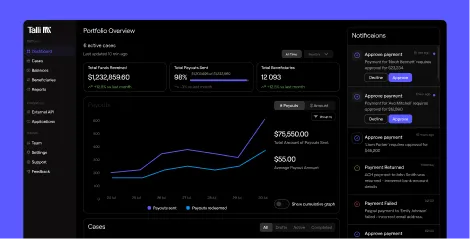
The platform supports regulated insurance payment workflows with OFAC controls, BSA/AML controls, configurable approvals, automated reconciliation, and auditable payment records. Real-time tracking dashboards provide visibility into payment status, completion rates, and audit-ready documentation.
For carriers seeking to reduce operational costs while improving policyholder experience, Talli's purpose-built insurance infrastructure delivers measurable ROI through transaction cost savings, reduced escheatment liability, and automated reconciliation workflows.
Frequently Asked Questions
What happens to unclaimed workers' comp premium refunds?
Uncashed refund checks eventually escheat to state unclaimed property funds after dormancy periods ranging from 1-5 years depending on state law. Carriers must track outstanding checks, attempt re-contact with policyholders, and eventually surrender funds with supporting documentation. This creates ongoing administrative burden and potential liability. Digital payment methods with higher redemption rates significantly reduce escheatment exposure.
Can I dispute my workers' comp audit if I disagree with the refund amount?
Yes, most carriers provide 30-90 day dispute windows after receiving audit results. Disputes should cite specific errors with supporting documentation: mathematical mistakes, incorrect classifications, or missing subcontractor certificates. In most NCCI states, qualifying disputes involving NCCI manual rules may be submitted through NCCI's Dispute Resolution Process after attempts to resolve the issue directly with the carrier. Any further appeal process depends on the applicable state rules.
How do premium recovery firms differ from regular insurance auditors?
Carrier auditors verify payroll and classifications to calculate final premiums and work for the insurance company. Premium recovery firms work on contingency for policyholders, independently auditing policies to identify carrier errors and overcharges. These specialists review multiple years of policy history, finding classification mistakes, EMR errors, and calculation issues that carriers may have missed. They typically charge a percentage of recovered amounts with no upfront fees.
Are workers' comp premium refunds taxable income?
Premium refunds generally aren't taxable income because they represent return of previously paid premiums rather than new income. However, if premiums were deducted as business expenses in prior tax years, the refund may need to be reported as income in the year received. Consult with a tax professional for your specific situation, particularly for large multi-year recoveries.
What documentation should I keep to support potential refund claims?
Maintain comprehensive records for at least 4 years after policy expiration, including quarterly payroll registers, tax filings (Form 941, W-2s, 1099s), subcontractor certificates of insurance, job descriptions by classification, overtime records with premium pay separated, and any correspondence with your carrier about classification questions or mid-term adjustments. This documentation supports both routine audits and potential disputes if you believe you're owed additional refunds.