.svg)


.svg)
The duty of loyalty is the highest fiduciary standard shaping how settlement funds are held, moved, and delivered. In settlement distributions, platform choice is not just operational, it is fiduciary. The strongest disbursement platforms reduce conflict risk through segregated QSF-compliant accounts, automated KYC and OFAC screening, and full audit transparency that aligns platform incentives with claimant outcomes.
The biggest conflict risks come from platform revenue models such as float income on held funds, retention of unclaimed balances, and interchange fees on claimant spending. These models can misalign incentives and draw scrutiny from courts, class counsel, and fee examiners. That is why selecting a disbursement platform should be treated as a fiduciary decision, not a routine procurement choice.
Key Takeaways
- The duty of loyalty is the highest fiduciary obligation, it prohibits any arrangement where the fiduciary, or a party the fiduciary controls, benefits at the expense of beneficiaries.
- Claims administrators acquire fiduciary status based on the functions they perform, not their job title, selection of a disbursement platform is itself a fiduciary act.
- Three common platform revenue models create potential fiduciary conflicts: float income on held funds, unclaimed property retention, and interchange fee arrangements.
- The average class action settlement has only a 9% claim rate, according to FTC research, meaning the majority of claimants never receive their funds, making platform incentive alignment critical.
- A purpose-built digital disbursement infrastructure with segregated QSF-compliant accounts, automated KYC/OFAC screening, and full audit transparency addresses the structural conflicts that generic platforms leave unresolved.
- Modern claims disbursements achieve significantly higher claimant redemption rates than traditional check-based methods, making platform selection a fiduciary decision with direct impact on claimant outcomes.
Duty of Loyalty Settlement Distributions: Definition
Duty of loyalty in settlement distributions means claims administrators and QSF trustees must act exclusively in claimants’ interests when holding, moving, and delivering settlement funds. If a decision benefits the administrator, a vendor, or another third party at the claimant’s expense, it may create a fiduciary conflict and potential breach, even when the conflict was not intentional.
This standard applies to every distribution decision, including the payment platform selected and how funds are handled. Under the Restatement (Third) of Trusts, a fiduciary must act “solely in the interests of the beneficiaries.” Courts have also held that breaches can trigger disgorgement of profits, even when beneficiaries cannot prove direct financial harm.
- Fund custody decisions: Choosing where settlement funds are held, and who earns interest on those balances during the disbursement window, is a duty-of-loyalty question.
- Unclaimed distribution handling: When claimants don't respond or funds go uncashed, who benefits from the residual value is a duty-of-loyalty question.
- Technology vendor selection: If a vendor's business model depends on revenue streams that originate from settlement funds, engaging that vendor without analysis is a potential duty-of-loyalty violation.
The core legal principle: a fiduciary cannot profit from their fiduciary position, and cannot engage agents who do so at beneficiaries' expense.
Why Are Platform Revenue Models Under Scrutiny in 2026?
The legal industry's attention to disbursement platform economics has intensified over the past two years. Courts overseeing large class action and mass tort settlements have grown more sophisticated about how claims administration vendors earn revenue, and fee examiners appointed by courts in complex litigation have begun asking the questions that administrators often do not.
Several trends are driving this shift:
Increased judicial oversight of administrative costs. Courts and special masters in high-value class actions are routinely reviewing administrative fee structures for hidden revenue streams. The question "does this vendor earn additional income from our settlement fund?" is moving from negotiation point to disclosure obligation.
Regulatory attention to unclaimed property. State unclaimed property regulators have intensified enforcement against holders who delay or mismanage escheatment processes. A disbursement platform's unclaimed property practices are no longer a back-office concern, they are a compliance surface that administrators bear responsibility for.
Rising claimant expectations and redemption benchmarks. As digital payment adoption has accelerated across the consumer population, courts and class counsel are increasingly aware that check-based distributions dramatically underperform digital alternatives. Modern claims disbursements achieve significantly higher claimant redemption rates than traditional check-based methods, a performance gap courts and fee examiners are now tracking, per FTC research. A claim rate of 9%, the FTC research benchmark, is no longer defensible if digital alternatives demonstrably outperform it.
Heightened scrutiny of QSF fund custody. The IRS and state tax authorities have become more active in reviewing QSF administration practices, including how funds are held at the platform level. A platform using pooled accounts or ambiguous custody structures now represents meaningful trustee exposure.
For claims administrators evaluating platforms in this environment, the question is no longer whether revenue model analysis is required. It is how to conduct that analysis systematically.
How Do Claims Administrators Acquire Fiduciary Status?
A claims administrator who exercises discretionary authority over the management or administration of settlement funds, including selecting how those funds are held and disbursed, is performing a fiduciary function. As a practical matter, administrators making discretionary decisions about how settlement funds are held and distributed should evaluate those decisions through a fiduciary-conflict lens, but ERISA plan-fiduciary guidance is not the governing authority for every settlement administration context.
In the settlement context, this framework extends to:
- Selecting the disbursement platform: Choosing a vendor that holds and moves settlement funds is a discretionary decision affecting claimant assets.
- Approving the distribution timeline: Decisions about when funds are released, whether reminders are sent, and how unclaimed funds are handled directly affect claimant outcomes.
- Overseeing compliance processes: KYC/OFAC screening, W-9 collection, and 1099 generation are compliance obligations that protect both claimants and the administrator's fiduciary standing.
Three Revenue Models That Create Fiduciary Conflicts
Not every disbursement platform is purpose-built for the legal settlement context. Many were designed for general-purpose commercial payments and adapted for settlement use. Their revenue models reflect their origins, and those models can conflict with the duty of loyalty settlement distributions standard.
1. Float Income on Held Settlement Funds
Platforms that keep interest earned on settlement balances create a fiduciary conflict because that value may belong to the QSF or claimant pool, not the vendor. If undisclosed, the arrangement can raise duty-of-loyalty concerns and potential disgorgement risk, as courts have found in similar undisclosed trustee compensation arrangements. Key questions: Are funds segregated, who earns the interest, and was it disclosed?
2. Unclaimed Property Retention
Low claim rates and large pools of unclaimed class action funds can create a serious duty-of-loyalty issue when platforms profit from balances claimants never redeem. Even if lawful, that model misaligns incentives by rewarding non-delivery. Administrators should ask how unclaimed funds are handled, how quickly escheatment occurs, and whether the platform retains any portion of those balances.
3. Interchange Fee Arrangements
Platforms that earn interchange fees on claimant card spending may have a subtle conflict of interest: they benefit when funds remain on cards longer instead of reaching claimants quickly in cash. That risk grows if inactivity, expiration, or loading fees reduce claimant value. Administrators should ask whether the platform earns interchange and whether any card-related fees reduce the claimant’s net recovery.
QSF Trustee Obligations and Platform Accountability
When settlement funds are administered through a Qualified Settlement Fund (QSF), the fiduciary framework becomes even more explicit. Under 26 CFR § 1.468B-1, a QSF must:
- Operate under continuing governmental authority (court order, consent decree, or government resolution)
- Be administered by a qualified trustee with legally conferred trust powers
- Segregate fund assets and maintain separate trust or escrow accounts
These requirements extend to the platform infrastructure used to hold and move QSF assets. A QSF trustee who places settlement funds with a platform using pooled, non-segregated accounts, or a platform whose custody arrangements don't comply with applicable trust law, may expose the QSF to regulatory scrutiny and tax complications.
The IRS and courts have consistently examined QSF administration for:
- Proper segregation of assets: Funds must be held separately from operating accounts and from other clients' funds
- Tax compliance obligations: The QSF trustee is responsible for Form 1099 reporting, W-9 collection, and backup withholding on distributions
- Audit trail requirements: Court reporting on QSF distributions requires documentation of every transaction, including failed delivery attempts, returns, and unclaimed amounts
A platform that cannot provide court-ready audit documentation, or that co-mingles settlement funds with other accounts, creates QSF compliance risk that ultimately falls on the trustee.
How to Evaluate a Disbursement Platform's Revenue Model
The due diligence framework for evaluating a disbursement platform through a fiduciary lens should cover five areas:
1. Account Segregation
Confirm that settlement funds are held in FDIC-insured, segregated accounts designated for each settlement. Ask for documentation of the banking relationship and whether funds are held at the platform level or passed through to a regulated banking institution.
2. Interest and Float Disclosure
Request explicit disclosure of how the platform earns revenue from held balances. If the platform earns float income, ask whether that income is credited back to the settlement fund or retained by the vendor, and how this arrangement is disclosed to the court.
3. Unclaimed Property Policy
Review the platform's formal unclaimed property policy. Confirm that funds not redeemed within the distribution window are properly escheated to the appropriate state, and that the platform's fee structure does not depend on the volume of unclaimed funds.
4. Claimant Fee Structure
Request a full schedule of any fees applied to claimant-facing instruments, including prepaid cards, digital wallets, or ACH transfers. Any fee that reduces the net amount a claimant receives relative to the awarded distribution is a fiduciary concern.
5. Audit Trail and Court Reporting Capability
A fiduciary-grade platform must produce court-ready reports documenting every distribution attempt, every successful payment, every failure, and every unclaimed amount. This documentation is required for QSF tax compliance and is frequently requested by courts overseeing class action settlements.
Modern Disbursement Infrastructure: Fiduciary Compliance
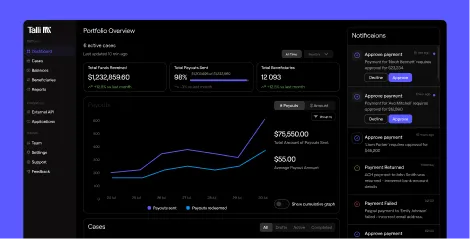
Purpose-built digital disbursement infrastructure resolves the structural conflicts that generic payment platforms leave unresolved. Talli is a digital claims disbursement platform designed specifically for the legal settlement context, built around the fiduciary requirements that claims administrators face.
Talli's architecture addresses each of the fiduciary risk areas identified in the duty of loyalty settlement distributions framework above:
- Segregated QSF-compliant accounts: Settlement funds are held in segregated accounts through FDIC-insured banking via Patriot Bank, N.A., not pooled with other clients or co-mingled with operating funds.
- Automated compliance verification: KYC verification, OFAC screening, W-9 collection, and 1099 generation are handled automatically, reducing the administrator's compliance burden and audit exposure.
- Multiple regulated payout rails: Claimants can receive funds via ACH, prepaid Mastercard, PayPal, or gift cards. Offering multiple options increases claimant completion rates, and higher redemption rates mean fewer unclaimed funds and less residual exposure.
- Full audit transparency: Real-time settlement dashboards and court-ready reporting document every transaction, every status change, and every claimant interaction. Administrators have the documentation required for court reporting at every stage.
- 30-second redemption via claimant portal: Talli's claimant portal allows recipients to select their payment method and complete redemption in under 30 seconds. With 500,000+ recipients processed, the platform has demonstrated this redemption model at scale, driving the higher redemption rates that administrators are duty-bound to pursue.
The result is digital disbursement infrastructure that aligns platform incentives with fiduciary obligations: Talli's model is designed around maximizing claimant redemption, not extracting revenue from unredeemed balances.
Best Practices for Maintaining Fiduciary Duty
Claims administrators can reduce their fiduciary exposure by implementing these practices when selecting and managing a disbursement platform:
Document the selection process. Maintain a record of the vendors evaluated, the criteria applied, and the specific fiduciary factors considered. This documentation demonstrates that the administrator exercised the required care and loyalty in the decision.
Require revenue model disclosure at RFP stage. Before issuing a contract, require prospective vendors to disclose all revenue streams derived from settlement funds, including float income, interchange, and unclaimed property arrangements.
Review court reporting obligations with the platform. Confirm that the platform can produce the audit documentation required by the court overseeing the settlement. This should be defined contractually, not assumed.
Establish redemption rate benchmarks. Set a target claimant redemption rate based on claims redemption benchmarks and select a platform whose design and incentives are aligned with achieving it. A platform that profits from low redemption cannot be aligned with this goal.
Conduct periodic reviews. Fiduciary duty is ongoing. Review the platform's performance, including redemption rates, unclaimed balances, and compliance report accuracy, at regular intervals throughout the disbursement window.
Disclose vendor arrangements to class counsel. In cases where the disbursement platform has any revenue arrangement touching settlement funds, proactively disclose this to class counsel and, where required, to the court. Undisclosed arrangements are the primary source of fiduciary liability in this area.
Common Mistakes Claims Administrators Make
Treating platform selection as a procurement decision. The most common error is delegating platform selection to operations or IT without fiduciary oversight. The selection process must be led or reviewed by someone with fiduciary authority and an understanding of the legal obligations involved.
Assuming technology vendors are not fiduciaries. Platform vendors who exercise discretion over how settlement funds are held or distributed may themselves acquire fiduciary status. Administrators should not assume that engaging a vendor transfers or eliminates their own obligations.
Failing to disclose float arrangements to the court. Float income earned on settlement fund balances is a frequent source of litigation in class action administration. Administrators who fail to disclose these arrangements, or who do not ask about them, expose themselves to disgorgement claims and court sanctions.
Choosing low-cost platforms without analyzing the true cost. A platform that charges lower administration fees but earns revenue through float, interchange, or unclaimed property may cost the settlement fund, and ultimately, claimants, more than a transparently priced purpose-built platform.
Neglecting OFAC and KYC at the distribution stage. OFAC controls should be built into a risk-based compliance workflow and revisited when payment details change, funds are re-issued, or other risk signals appear during the distribution process. Administrators who rely on platforms without automated compliance verification at every payment event bear the compliance risk themselves.
Allowing check-based methods to persist without analysis. Traditional check-based disbursement has a significant uncashing rate and costs $7.78 to $20 per check, according to industry benchmarks. Continuing to rely on check-only distribution without evaluating whether alternative methods could improve claimant outcomes may be harder to justify as courts and counsel scrutinize distribution performance more closely. An administrator who could have achieved significantly higher redemption rates by offering digital options but failed to do so may have difficulty justifying that decision under a duty-of-loyalty analysis.
Final Verdict
The duty of loyalty in settlement distributions does not allow a claims administrator to select a disbursement platform without analyzing its revenue model. The legal standard is clear: fiduciaries cannot engage vendors whose business model benefits at claimants' expense, regardless of whether the administrator was aware of the conflict.
How to navigate that analysis in practice:
- For administrators managing class action disbursements with a QSF structure: Purpose-built digital infrastructure with segregated QSF-compliant accounts and automated compliance screening is the only model that eliminates structural revenue conflicts by design. Generic commercial payment platforms, even well-branded ones, were not designed for the specific custody, compliance, and reporting requirements that QSF administration demands.
- For QSF trustees evaluating platform custody arrangements: The obligations under 26 CFR § 1.468B-1 extend to how and where platform infrastructure holds settlement funds. Pooled accounts and co-mingled custody create QSF compliance risk that ultimately falls on the trustee, not the vendor.
- For administrators using check-based disbursement: A duty-of-loyalty analysis now requires documenting whether digital alternatives were evaluated and why the selected method was chosen. Courts and fee examiners are asking this question, proactive documentation is preferable to retroactive justification.
- For administrators early in platform selection: The five-area due diligence framework in this guide, account segregation, float disclosure, unclaimed property policy, claimant fee structure, and audit trail capability, provides a defensible evaluation record that demonstrates the required fiduciary care.
The clearest path to fiduciary compliance in settlement disbursement is selecting infrastructure designed around maximizing claimant redemption, not extracting value from funds that go unclaimed.
Conclusion
The duty of loyalty in settlement distributions requires more than choosing a platform that appears compliant. Administrators must evaluate how the platform makes money and whether that revenue model supports or undermines claimant recovery. If vendor revenue depends on held balances, unclaimed funds, or claimant card usage, that creates a structural conflict with fiduciary obligations.
The main risks are float income on settlement funds, retention of unclaimed property value, and interchange fee arrangements. Each can shift value from claimants to the vendor. Purpose-built disbursement infrastructure reduces that risk through segregated QSF-compliant accounts, automated KYC and OFAC screening, regulated payout options, and full audit transparency. That allows administrators to document compliance, gives courts clearer oversight, and helps claimants receive funds as intended. Talli is positioned as built for that fiduciary standard.
Frequently Asked Questions
What is the duty of loyalty in settlement distributions?
The duty of loyalty in settlement distributions is the fiduciary obligation requiring claims administrators and QSF trustees to act exclusively in the interests of the claimants they serve. Any decision that benefits a third party, including a disbursement platform vendor, at the expense of claimants may constitute a breach of this duty.
Do Platform Revenue Models Create Fiduciary Conflicts?
Yes. Platforms that earn float income on held balances, retain unclaimed property value, or earn interchange fees from claimant spending have financial incentives that may not align with maximizing claimant redemption. This structural misalignment is a fiduciary concern that administrators must evaluate before engaging a platform.
What Are QSF Trustee Obligations for Platform Selection?
Under 26 CFR § 1.468B-1, QSF trustees must ensure funds are held in segregated accounts under proper trust authority. This obligation extends to the platform used for disbursement, a platform using pooled or co-mingled accounts may create QSF compliance risk for the trustee.
How Should Administrators Disclose Vendor Arrangements?
Disclosure requirements vary by jurisdiction and case. As a best practice, administrators should proactively disclose to class counsel any arrangement through which the disbursement platform earns revenue from settlement funds, including float, interchange, or unclaimed property programs. Courts overseeing class actions frequently scrutinize administrative cost and vendor arrangements.
What Redemption Rate Should Administrators Target?
Industry benchmarks show an average claim rate of approximately 9% across many consumer class actions, per FTC research, with check-based auto-payout settlements losing a significant percentage of issued payments to uncashing. Administrators using modern claims disbursements, offering ACH, prepaid card, and digital wallet options, can achieve significantly higher redemption rates. A duty-of-loyalty analysis requires selecting a platform designed to maximize claimant participation, not one whose revenue model benefits from low redemption.
What Is Float Income and Why Is It a Fiduciary Concern?
Float income is interest earned by a disbursement platform on settlement funds held in its accounts during the disbursement window. Because those funds belong economically to the QSF or the claimant pool, a platform retaining that interest extracts value from the settlement fund, creating a duty-of-loyalty conflict the administrator must disclose to the court and class counsel.
How Do I Evaluate a Platform's Fiduciary Compliance?
Evaluate a disbursement platform across five areas: (1) account segregation, funds held in FDIC-insured, per-settlement accounts; (2) float disclosure, who earns interest and whether it is disclosed to the court; (3) unclaimed property policy, formal escheatment process with no platform retention of unclaimed balances; (4) claimant fee structure, no inactivity, expiration, or loading fees that reduce net payout; and (5) audit trail capability, automated court-ready reporting on every distribution event.