.svg)


.svg)
Insurance carriers and Third-Party Administrators face mounting pressure as states collectively hold approximately $70 billion in unclaimed property, up from $20 billion in 2002, with insurance-related assets representing a significant portion of this growing liability. The 2026 reporting cycle remains governed primarily by state unclaimed property laws, while the proposed SAFER Act could change escheatment rules for certain securities, digital assets, and investment accounts if enacted. States continue to intensify audit activity targeting high-value insurance portfolios. For carriers managing life insurance benefits, claim payments, and annuity distributions, digital disbursement infrastructure has become essential to prevent payments from becoming unclaimed in the first place.
Key Takeaways
- States hold approximately $70 billion in unclaimed property, with insurance payments representing a major category requiring carrier and TPA reporting
- The SAFER Act (H.R. 8338) introduced in April 2026 proposes federal preemption for certain securities, digital assets, and investment accounts held by financial institutions
- Maryland imposes 15% penalties for late filing, while most states apply late filing and willful non-compliance penalties
- Fall filers must meet October 31 deadlines; insurance-specific states have varying requirements by insurer type
- Due diligence outreach windows range from 60-180 days before filing deadlines depending on jurisdiction
- Unclaimed-property audits can examine many years of historical records, creating significant retroactive exposure for carriers without documented compliance programs
- Digital payment methods achieving 95-98% redemption rates substantially reduce escheatment exposure compared to traditional paper methods at 70-80%
- TPA escheatment responsibilities depend on which party qualifies as the statutory holder under applicable state law and the underlying payment arrangement
Understanding Unclaimed Property and Its Impact on Insurance Carriers
Unclaimed property in the insurance context encompasses any payment owed to policyholders, beneficiaries, or claimants that remains uncollected after a state-defined dormancy period. Common categories include unpaid life insurance death benefits, uncashed settlement checks, premium refunds, annuity payments, and policyholder dividends.
The legal framework for unclaimed property operates under state escheatment laws that require "holders," including insurance carriers and TPAs, to identify dormant accounts, conduct owner outreach, file reports, and remit unclaimed funds to state treasuries. Unlike forfeiture, escheatment preserves ownership rights, allowing original owners to claim their property indefinitely from the state.
What Constitutes Unclaimed Insurance Property?
Insurance carriers must track multiple property types across their operations:
- Life insurance death benefits where beneficiaries cannot be located or are unaware of policies
- Uncashed claim checks for property, casualty, and health insurance payouts
- Premium refunds from policy cancellations or rate adjustments
- Annuity maturity payments and periodic distributions
- Policyholder dividends from participating life insurance policies
- Agent commissions and vendor payments that go uncollected
The insurance industry faces unique challenges because life insurance policies often go unclaimed when beneficiaries don't know coverage exists, contributing to billions in recovered benefits through state locator programs nationally.
The Mechanics of Escheatment: From Unclaimed Checks to State Custody
The escheatment process follows a predictable cycle that carriers must manage proactively. Understanding each phase prevents compliance failures and reduces the volume of property requiring state remittance.
Common Triggers for Escheatment in Insurance
Insurance payments typically become reportable when:
- Claim checks remain uncashed after 1-5 years depending on state and property type
- Mail sent to policyholders or beneficiaries returns as undeliverable
- No policyholder contact occurs, such as no premium payments, address updates, or policy service requests
- Death Master File matching reveals deceased insureds without beneficiary claims filed
The Dormancy Period Framework
Dormancy periods (the time between last owner contact and reportable status) vary significantly:
- Life insurance benefits: 3-5 years
- Uncashed claim checks: 1-3 years
- Premium refunds: 3 years
- Annuity payments: 3-5 years
- Agent commissions: 1-3 years
States apply the "first priority rule" where property escheats to the state of the owner's last known address. When no address exists, property goes to the holder's state of incorporation.
The Escheatment Cycle: A Step-by-Step Guide
Phase 1: Identification (Ongoing) Carriers must continuously flag accounts approaching dormancy thresholds across all product lines and payment systems.
Phase 2: Due Diligence (60-180 days before deadline) State laws require documented outreach attempts to owners before reporting. Some states now permit email outreach, while others mandate certified mail for high-value properties.
Phase 3: Reporting (By state deadline) File NAUPA-formatted reports electronically or via paper submission, including detailed owner information and property descriptions.
Phase 4: Remittance (With filing or shortly after) Transfer cash via ACH or wire to state treasury accounts; deliver securities through DTC for book-entry shares.
Phase 5: Recordkeeping Maintain records for the period required by applicable state law and internal audit policies, recognizing that unclaimed-property audits may review many years of historical activity.
Traditional paper-based distributions can experience materially lower redemption than digital methods, with Talli's benchmarks comparing 70-80% redemption for paper methods against 95-98% for digital disbursements. Higher redemption can reduce the volume of payments that later require unclaimed property handling. Digital disbursement platforms substantially reduce this exposure by ensuring payments reach recipients through their preferred channels.
Navigating State-Specific Unclaimed Property Reporting Requirements
Multi-state compliance represents the greatest operational challenge for insurance carriers. With 50+ jurisdictions maintaining unique requirements, carriers must track distinct deadlines, dormancy periods, and filing formats.
Key Differences in State Reporting Laws
Fall Filing States (Majority) Most states require October 31 filing for the prior fiscal year (July 1 to June 30). Due diligence must be completed 60-120 days before filing.
Insurance-Specific Deadlines Insurance reporting deadlines vary significantly by state and insurer type. For example, Illinois life insurers report before May 1, while non-life insurers report before November 1, and California maintains separate notice and remittance cycles for life insurance companies.
Two-Tier Reporting (California) California uses a two-report system. Most holders file Notice Reports before November 1 and Remit Reports June 1-15, while life insurance companies file Notice Reports before May 1 and Remit Reports December 1-15.
State Reporting Requirements Overview
Understanding the varied state requirements is essential for compliance:
- Fall Filers (Most States): Deadline October 31; Due diligence window 60-120 days; NAUPA format required
- Illinois Life Insurance: Report before May 1; Separate schedule for life insurers
- Illinois Non-Life Insurance: Report before November 1; Separate from life insurance
- New York Insurance: September 10 final report and payment; Multiple notice stages; Certified mail generally applies above $1,000 when statutory conditions are met
- California Life Insurance: Report before May 1 and December 1-15; Separate Notice and Remit Reports
- Spring Filers (PA, FL): Deadlines March 10 to April 30; Due diligence 60-120 days
Maryland imposes 15% penalties on the value of unreported property for late filing without an approved extension, a significant financial risk for carriers with substantial unclaimed balances.
Critical Data Elements for 2026 Unclaimed Property Reporting
Accurate data drives compliant reporting. Missing or incorrect information triggers state rejections, audit flags, and potential penalties. Insurance carriers must capture and maintain specific data elements throughout the policy and claims lifecycle.
Mandatory Data Points for Insurance Payments
Every unclaimed property report requires:
- Owner identification: Full legal name, Social Security Number or Tax ID, date of birth
- Last known address: Complete street address (P.O. boxes insufficient in some states)
- Property description: Policy number, claim number, payment type classification
- Amount and date: Original payment amount, issue date, dormancy trigger date
- Contact history: Documentation of all outreach attempts and responses
Impact of Incomplete or Inaccurate Data
Data quality failures create cascading problems:
- Rejected filings requiring manual correction and resubmission
- Audit triggers when state systems detect pattern anomalies
- Owner reunification failures when outreach uses outdated contact information
- Duplicate reporting when systems cannot match across product lines
Talli's compliance workflows can support identity verification, W-9 collection, and auditable payment records, helping carriers maintain cleaner recipient and payment data from the start.
Strategies to Minimize Unclaimed Insurance Payments and Avoid Escheatment
Prevention costs far less than escheatment compliance. Carriers implementing proactive strategies reduce both operational burden and regulatory exposure.
Enhancing Policyholder Communication
- Collect and verify contact information at every policyholder touchpoint
- Implement annual address confirmation requirements
- Use multiple communication channels (mail, email, SMS) for payment notifications
- Create beneficiary awareness programs for life insurance products
The Benefits of Digital Disbursements
Digital payment methods fundamentally change escheatment economics:
- ACH direct deposit: Funds arrive in 1-2 days with automatic delivery confirmation
- Virtual debit cards: Delivered via SMS/email in 30 seconds, no mailing address required
- Digital wallets: PayPal and Venmo reach recipients instantly on existing platforms
- Multi-channel choice: Recipients select their preferred method, increasing redemption
Insurance carriers using Talli's platform offer policyholders flexible payment options including ACH, Venmo, PayPal, and virtual debit cards, meeting claimants where they are rather than forcing reliance on postal delivery.
Early Intervention Programs
- Flag checks outstanding beyond 90 days for proactive reissuance offers
- Implement address verification services before payment issuance
- Use Death Master File matching quarterly for life insurance portfolios
- Create skip-tracing workflows for returned mail situations
The Role of TPAs in Unclaimed Insurance Payment Management and Reporting
Third-Party Administrators occupy a complex position in the escheatment framework. While TPAs often process payments on behalf of insurance carriers, escheatment responsibility depends on which party qualifies as the statutory holder, generally the entity legally obligated to hold, deliver, or pay the property to its owner.
Defining TPA Obligations in Escheatment
TPAs must:
- Track dormancy for all payments processed on behalf of carrier clients
- Execute due diligence outreach within state-required timeframes
- File holder reports when they qualify as the statutory holder
- Maintain audit-ready documentation for each carrier program
Ensuring Data Accuracy Between Carriers and TPAs
Successful TPA compliance requires:
- Clear data exchange protocols defining which party maintains owner contact information
- Real-time payment status synchronization between TPA and carrier systems
- Documented processes for handling returned payments and address updates
- Regular reconciliation to prevent duplicate or missed reporting
Selecting a Compliant TPA Partner
Carriers should evaluate TPA partners on:
- Documented escheatment compliance programs with evidence of successful filings
- Technology infrastructure supporting real-time payment tracking
- Insurance-specific expertise across multiple product lines
- Willingness to assume contractual responsibility for compliance failures
Talli's real-time dashboard and reporting capabilities provide the visibility TPAs need to track payment status across carrier programs, identify potential unclaimed funds proactively, and generate documentation for audit defense.
Compliance and Audit Readiness for Unclaimed Insurance Funds
State audit activity has intensified as unclaimed property revenues become increasingly important to state budgets. Insurance carriers represent high-value targets due to large per-account values in life insurance and annuities.
Preparing for an Unclaimed Property Audit
Audit preparation requires:
- Complete historical payment records covering applicable state retention and audit periods
- Documentation of all due diligence attempts with delivery confirmation
- Evidence of reporting and remittance for each filing period
- Written policies and procedures demonstrating compliance commitment
Maintaining Meticulous Records
Essential documentation includes:
- Original payment authorization and issuance records
- Returned mail logs with dates and disposition
- Due diligence letter templates and mailing certifications
- State filing confirmations and remittance receipts
- Owner contact history including phone calls and emails
Best Practices for Internal Compliance Programs
- Conduct annual mock audits with outside consultants
- Establish Voluntary Disclosure Agreements with high-risk states before audits begin
- Create clear escalation procedures for identified compliance gaps
- Implement automated controls preventing future exposure accumulation
Leveraging Technology for Efficient Unclaimed Property Reporting in 2026
Manual escheatment compliance fails at scale. Carriers processing hundreds of thousands of payments annually require automated solutions integrating with existing policy administration and claims systems.
The Benefits of Automated Escheatment Reporting
Technology solutions deliver:
- Automated dormancy tracking across all property types and jurisdictions
- Due diligence workflow automation with template generation and delivery tracking
- NAUPA-compliant report generation for 50+ state filing formats
- Audit trail maintenance with searchable historical documentation
Choosing the Right Technology Solution
Evaluate platforms on:
- Integration capabilities with existing policy administration and claims systems
- Multi-state jurisdiction support with regulatory update monitoring
- Reporting automation reducing manual preparation time
- SOC 2 reporting for independently assessed security controls
Preventing Escheatment Through Better Payment Delivery
The most effective escheatment strategy prevents payments from becoming unclaimed. Talli's multi-channel payment distribution eliminates the primary cause of insurance payment escheatment (uncashed checks) by offering recipients digital delivery options that achieve 95-98% redemption rates versus 70-80% for traditional paper methods.
How Talli Transforms Escheatment Management for Insurance Carriers
For insurance carriers and TPAs facing the 2026 reporting cycle, modern payment infrastructure provides the foundation for both compliance excellence and operational efficiency. Talli's platform addresses escheatment challenges at every stage of the payment lifecycle.
Proactive Escheatment Prevention
Talli's digital disbursement platform fundamentally reduces escheatment volume by ensuring payments reach recipients through their preferred channels. With support for ACH direct deposit, virtual debit cards, PayPal, Venmo, and other digital wallets, carriers offer claimants flexible options that dramatically increase redemption rates.
Built-In Compliance Infrastructure
The platform integrates compliance requirements directly into the payment workflow. Automated W-9 collection, identity verification, and real-time status tracking ensure carriers maintain the documentation required for state reporting and audit defense. Every payment includes complete audit trails showing delivery attempts, recipient actions, and final disposition.
Real-Time Visibility and Reporting
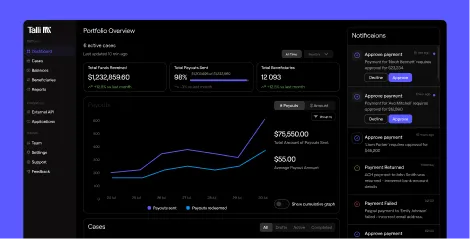
Talli's dashboard provides instant visibility into payment status across all carrier programs. TPAs and carriers can track unresolved payments, payment status, approvals, and reconciliation data, giving compliance teams clearer records for managing dormancy and due diligence requirements. This real-time intelligence enables proactive intervention before payments become reportable.
Reducing the Cost of Compliance
By achieving 95-98% redemption rates through digital delivery, Talli substantially reduces both the volume of property requiring escheatment and the administrative burden of multi-state reporting. Fewer unclaimed payments mean lower remittance obligations, reduced audit exposure, and decreased compliance overhead, freeing resources for core business operations.
Frequently Asked Questions
What is the primary difference between unclaimed property and abandoned property?
The terms "unclaimed property" and "abandoned property" are often used interchangeably in state statutes and compliance guidance. Property generally becomes legally abandoned after the applicable dormancy period and statutory conditions are met, not because the owner intentionally relinquished it. The specific dormancy trigger depends on the property type and applicable state law.
How does the SAFER Act potentially change insurance escheatment requirements?
The SAFER Act (H.R. 8338) introduced in April 2026 proposes federal preemption over state escheatment rules for certain investment-type products. For covered securities, digital assets, and investment accounts owned by individuals, the proposed bill generally would prevent escheatment unless the financial institution has confirmation that the owner died at least three years earlier and other statutory conditions are met. The proposal does not broadly replace state escheatment rules for ordinary life insurance claim payments or annuity benefits.
Can policyholders or beneficiaries reclaim escheated insurance payments?
Yes, escheatment preserves ownership rights indefinitely in most states. Original owners or rightful beneficiaries can file claims with state unclaimed property divisions to recover escheated funds. States typically require identity verification and proof of entitlement (such as policy documents or beneficiary designations). There is generally no statute of limitations on claiming escheated property, though some states may have stopped paying interest on unclaimed funds after a certain period.
What penalties do states impose for escheatment non-compliance?
Penalties vary by jurisdiction but commonly include late filing penalties (Maryland charges 15% of unreported value), interest on late-remitted funds, and civil penalties for willful non-compliance. Most states impose willful non-compliance penalties and late filing penalties. Beyond direct penalties, non-compliant carriers face audit exposure where states can examine 10-15 years of historical records and assess penalties retroactively.
What records must carriers retain and for how long to defend against state audits?
Carriers should maintain payment records, due diligence documentation, filing confirmations, and remittance receipts for a minimum of 10-15 years, matching the typical state audit lookback period. Records should include original payment authorization, evidence of delivery or non-delivery, all owner contact attempts with dates and methods, and state acknowledgments of filed reports. Electronic storage with searchable indexing significantly reduces audit response costs compared to paper archives.