.svg)


.svg)
Paper checks continue to cost shareholder services teams $7-$20 per payment while extending distribution timelines by weeks. Modern shareholder services platforms replace these legacy methods with digital payment rails that reduce costs by up to 94% and compress delivery from weeks to 24-48 hours. For issuers, transfer agents, and shareholder services teams under pressure to improve efficiency, digital payouts also simplify reconciliation, reduce support inquiries, and create a more secure, transparent payment experience for shareholders across every stage of the distribution lifecycle.
Key Takeaways
- Digital payment migration reduces per-transaction costs from $7-$20 to $0.25-$0.70, representing 85-94% savings
- Check-based distributions require 14 days for processing compared to 2-4 days for digital methods
- 26% of B2B payments still use checks in 2025, signaling significant modernization opportunity
- 87-92% digital adoption is achievable within six months with proper shareholder communication
- Uncashed check rates drop from 15% to 2-4% when digital payment options are offered
- Prepaid card options serve 5.6 million unbanked households who cannot receive ACH payments
- Implementation typically requires 6-12 weeks with ROI achieved within 4-7 months
Why Are Digital Payments Critical for Modern Shareholder Services?
Traditional check-based dividend distributions create compounding inefficiencies that drain resources and frustrate shareholders. The shift to digital payments addresses fundamental problems that legacy systems cannot solve.
Escalating processing costs - Paper checks incur printing, postage, envelope, and manual reconciliation expenses that add up to $7-$20 per payment when accounting for all overhead.
Extended distribution timelines - Physical checks require printing, mailing, and bank clearing that extends payment cycles to 14 days or longer versus 2-4 days for digital methods.
High unclaimed fund rates - Approximately 15% of paper dividend checks go uncashed, creating escheatment compliance burdens and lost value for shareholders.
Fraud vulnerability - AFP's 2024 survey found 65% of organizations reported check fraud activity in 2023, making checks the payment method most susceptible to fraud.
Regulatory exposure - Manual processes often lack the documentation required for audits, creating compliance gaps that digital platforms eliminate through automated audit trails.
What Economic Benefits Do Digital Payouts Deliver for Shareholders?
The financial case for digital migration extends beyond operational savings to include improved shareholder outcomes and reduced compliance costs.
- Direct cost reduction - Digital transactions cost $0.25-$0.50 for ACH compared to $7-$20 for paper checks, delivering 85-94% savings per payment.
- Improved redemption rates - Digital platforms achieve 95-98% redemption rates versus 70-80% for traditional paper methods, ensuring more shareholders receive their funds.
- Eliminated reissuance overhead - An estimated 8% of checks require reissuance due to loss or expiration—costs that disappear with digital delivery.
- Reduced skip tracing expenses - Companies spend approximately $150 per uncashed check on tracking and reissuance for failed deliveries, a cost that digital validation largely eliminates.
How Do You Calculate Savings Per Share?
The calculation for digital migration ROI follows a straightforward formula:
- Multiply current shareholder count by check processing cost ($7-$20)
- Subtract digital transaction cost plus platform fees ($0.35-$0.70 average per transaction plus monthly subscription)
- Add savings from reduced uncashed rates and eliminated reissuance
Most organizations achieve break-even within the first two quarters, with full ROI realized within 4-7 months depending on distribution frequency and shareholder count.
How Often Can Shareholders Receive Digital Dividends?
Digital payment infrastructure removes the friction that makes frequent distributions impractical with paper checks. The speed and low cost of electronic transfers enable more flexible payout schedules.
- Quarterly distributions become seamless - Processing that previously required 2-3 weeks of staff time compresses to 2-4 days with automated digital workflows.
- Monthly payments become economically viable - At $0.25-$0.50 per transaction versus $7-$20, companies can offer monthly dividend options without prohibitive costs.
- Same-day execution is possible - Real-time payment rails like FedNow enable instant fund access for shareholders who need immediate availability.
- ACH delivers 1-2 day settlement - Standard ACH direct deposit provides predictable 1-2 business day delivery at the lowest cost tier.
What Is the Impact on Shareholder Liquidity?
Faster payment delivery directly improves shareholder financial flexibility. Instead of waiting weeks for a check to arrive and clear, shareholders can access funds within days—or hours with instant payment options. This acceleration is particularly meaningful for shareholders facing immediate financial needs.
How Do You Establish Digital Shareholder Accounts?
Successful migration requires a structured approach that prioritizes data quality and shareholder communication. The implementation process typically spans 6-12 weeks depending on shareholder count and complexity.
- Week 1-2: Data audit and platform selection - Clean shareholder records, identify outdated addresses and missing contact information, and select a platform based on your shareholder mix and integration needs.
- Week 2-4: Account setup and configuration - Import shareholder data, configure payment accounts with partner banks, brand the shareholder portal, and build communication templates.
- Week 5-6: Testing and pilot launch - Test end-to-end payment flows across all channels, process pilot batch to 20-30% of shareholders, and collect feedback.
- Week 6-10: Full rollout and communication campaign - Launch multi-channel notification campaign, open portal to all shareholders, and set enrollment deadlines.
What Are Best Practices for Shareholder Communication?
Communication strategy determines adoption rates. Companies typically achieve significantly higher enrollment with proper communication cadence versus single-message campaigns.
- Send first notification 45 days before distribution
- Follow with reminders at 30, 14, and 7 days before enrollment deadline
- Use multiple channels: email, postal mail, investor relations website
- Provide video tutorials and step-by-step printed guides for hesitant shareholders
- Offer phone support for assisted enrollment
What Compliance Requirements Apply to Digital Shareholder Disbursements?
Digital platforms must integrate comprehensive compliance infrastructure to meet regulatory obligations. Tax compliance automation eliminates manual verification while ensuring accuracy.
- KYC verification - Identity verification cross-references shareholder information against databases to prevent fraudulent claims and meet anti-money laundering requirements.
- OFAC sanctions screening - Automated screening against U.S. Treasury sanctions lists with documented timestamps ensures compliance with federal requirements.
- W-9 collection - Digital forms with smart reminders achieve 90% completion rates versus 40% without automation.
- 1099 generation - Automated 1099-MISC/NEC generation with IRS e-filing integration eliminates manual tax reporting errors.
- Backup withholding - Platforms automatically calculate 24% backup withholding for missing TIN numbers per IRS requirements.
How Does Fund Segregation Protect Shareholders?
Dedicated FBO (For Benefit Of) account structures keep shareholder funds segregated from operating funds, improving reconciliation and auditability. Complete separation between shareholder funds and operating capital prevents commingling that triggers regulatory violations while simplifying court reporting with matter-level fund tracking.
What Fraud Prevention Measures Are Essential?
AI-powered fraud detection achieves 95% accuracy while identifying suspicious activity 50% faster than manual review. Key capabilities include:
- Device fingerprinting and behavioral analytics
- Duplicate claim detection
- Real-time pattern recognition
- Identity verification cross-referencing
How Do You Transition Shareholders from Legacy Systems to Digital Platforms?
Moving shareholders from established check processes requires careful coordination with existing transfer agents and clear data migration protocols.
- Export shareholder registry data - Names, addresses, share counts, and payment history must be extracted from current systems in compatible formats.
- Validate data quality during import - Expect 10-15% bounce rates on initial contact attempts due to outdated information; plan for cleanup campaigns.
- Configure authentication requirements - Two-factor authentication via SMS or email protects shareholder accounts while maintaining accessibility.
- Establish fallback options - Maintain check capability for documented hardship cases while defaulting non-enrolled shareholders to prepaid cards.
What Data Migration Challenges Should You Anticipate?
Common stumbling points during migration include:
- Invalid banking information - Approximately 10-15% of initial enrollments fail banking validation; implement real-time account/routing verification
- Elderly shareholder resistance - Offer phone-assisted enrollment and printed step-by-step guides
- International payment complexities - Verify platform supports shareholder countries before contracting
Which Digital Payment Channels Work Best for Diverse Shareholder Populations?
Different shareholder segments have distinct payment preferences and banking situations. Multi-channel payment options ensure maximum accessibility across your shareholder base.
- ACH direct deposit - Lowest cost at $0.25-$0.50 per transaction with 1-2 day delivery for banked shareholders.
- Prepaid Mastercard - Virtual cards delivered via SMS/email in 30 seconds, physical cards within 5-7 days; serves unbanked households.
- Digital wallets - PayPal and Venmo integration at $0.50-$1.00 per transaction provides instant access, particularly popular with Millennial and Gen Z shareholders.
- Wire transfers - Same-day option for high-value international payments at $10-$30 per transaction.
- Gift cards - Amazon and Target options for distributions under $100 per shareholder with highest redemption rates for small-value payments.
How Do You Serve Unbanked and Underbanked Shareholders?
Platforms without prepaid card backup signals are not equipped for comprehensive shareholder services. Prepaid cards see higher adoption rates than ACH-only systems because they serve shareholders without traditional bank accounts.
How Do Generational Preferences Affect Channel Selection?
Shareholder demographics should inform your payment channel strategy:
- Baby Boomers - Often prefer ACH direct deposit to existing bank accounts
- Gen X - Split between ACH and digital wallets depending on tech comfort
- Millennials/Gen Z - Strong preference for digital wallets like PayPal and Venmo
- Elderly shareholders - May need phone support and printed guides regardless of channel
How Does Digital Transparency Enhance Shareholder Engagement and Trust?
Real-time visibility into payment status builds confidence and reduces support inquiries.
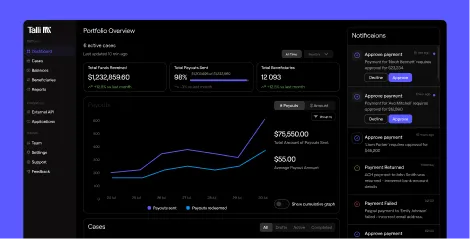
- Live payment dashboards - Monitor completion rates, payment method distribution, geographic concentration, and failure root causes in real time.
- Automated status notifications - SMS and email updates inform shareholders when payments are initiated, processed, and delivered.
- Self-service portals - Shareholders update banking information, select payment preferences, and access tax documents without administrator intervention.
- Court-ready audit trails - Every transaction generates comprehensive documentation for regulatory compliance and board reporting.
What Metrics Should You Track Post-Migration?
Monitor three key performance indicators monthly:
- Enrollment rate - Target 85%+ of shareholders with payment method selected
- Redemption rate - Target 96%+ of payments successfully delivered
- Support inquiry rate - Target fewer than 5 inquiries per 100 shareholders by month six
Why Talli Is the Right Choice for Shareholder Payment Migration
Talli's digital disbursement platform delivers purpose-built capabilities for shareholder services with the compliance infrastructure that generic payment processors lack.
24-48 hour payment cycles - Transform week-long distribution processes into same-day or next-day delivery across all payment channels, giving shareholders faster access to their funds while reducing administrative overhead.
95-98% redemption rates - Multi-channel options and automated reminders ensure shareholders receive their funds versus 70-80% with paper checks, minimizing escheatment obligations and maximizing shareholder satisfaction.
Built-in compliance automation - KYC verification, OFAC screening, W-9 collection with 90% completion rates, and automated 1099 generation eliminate manual compliance work while reducing audit risk.
FDIC-insured fund segregation - Banking services through Patriot Bank, N.A., Member FDIC, with dedicated FBO accounts for complete fund separation and simplified reconciliation.
Scalability from 1,000 to 100,000+ shareholders - Enterprise architecture handles high volumes without performance degradation, supporting growth as your shareholder base expands.
AI-powered fraud detection - Pattern recognition achieves 95% accuracy while reducing fraudulent claims by over 40%, protecting both your organization and legitimate shareholders.
Talli combines specialized shareholder services expertise with modern payment infrastructure, delivering the compliance depth, channel flexibility, and operational efficiency that shareholder services teams need to modernize distribution programs successfully.
Frequently Asked Questions
What happens if a shareholder enters incorrect banking information?
Modern platforms implement real-time account and routing number validation during enrollment to catch errors before payment execution. If a payment fails, the system automatically flags it for follow-up, and shareholders receive notification to update their information through the self-service portal. Administrative teams can then monitor correction status, resend payments quickly, and reduce delays that would otherwise create frustration, support volume, and manual reconciliation work.
How do digital platforms handle deceased shareholders?
Digital systems integrate with estate notification services and enable administrators to flag accounts requiring special handling. Payments can be redirected to estate representatives or held pending legal documentation, with complete audit trails for probate proceedings. This helps organizations avoid unauthorized disbursements, maintain compliance, and document every step needed for auditors, courts, and internal legal review.
What security certifications should a shareholder payment platform have?
Look for SOC 2 Type II (validates security controls), PCI DSS compliance appropriate to processing volume, and adherence to Nacha Operating Rules and strong ACH compliance. Banking partners should be FDIC-insured, and platforms serving international shareholders should demonstrate GDPR compliance. Strong vendor security practices, regular audits, and documented incident response procedures are also important indicators of operational maturity and risk readiness.
How do you handle shareholders who refuse to adopt digital payments?
Maintain a limited check option for documented hardship cases while setting clear timelines for transition. Many companies default non-responders to prepaid cards—which function like checks in that shareholders receive physical cards—rather than forcing immediate full digital adoption. This approach preserves inclusivity, reduces disruption, and gives reluctant shareholders time to become comfortable with newer payment methods.
What is the typical ROI timeline for shareholder payment digitization?
Most organizations achieve positive ROI within the first quarter of operation, with full implementation costs recovered within 4-7 months. Companies with larger shareholder bases or more frequent distributions see payback in as little as 2-4 months. Savings accelerate further when support costs, escheatment exposure, reissuance overhead, and manual reconciliation labor are included in the total return calculation.