.svg)


.svg)
Texas holds billions of dollars in unclaimed property, funds that businesses failed to distribute to rightful owners before state escheatment laws transferred custody to the Texas Comptroller of Public Accounts. For claims administrators, settlement trustees, and fiduciaries managing legal distributions, understanding these rules determines whether settlement funds reach claimants directly or are transferred to state custody as unclaimed property. Digital disbursement platforms that achieve 95-98% redemption rates offer a direct path to reducing escheatment exposure while accelerating payment delivery.
Key Takeaways
- Texas unclaimed property reports and remittances are generally due by July 1 annually, or the following business day when July 1 falls on a weekend or holiday
- Dormancy periods range from 1 year (wages, utility deposits) to 15 years (traveler's checks) depending on property type
- Due diligence notices must be sent no later than 60 days before filing for property valued at more than $250
- Late filing penalties start at 5% of property value for 1-30 days late, increasing to 10% after 31 days
- The Voluntary Disclosure Agreement (VDA) program uses a 10-year lookback, while Texas generally applies a seven-year examination limit to filed reports, subject to important exceptions
- Texas generally requires holders to retain unclaimed property records for at least 10 years after reporting the property
- Digital payment methods achieve 95-98% redemption rates versus 70-80% for paper checks, directly reducing escheatment volume
Understanding Unclaimed Property and Escheatment in Texas
Unclaimed property refers to financial assets held by businesses or institutions when the rightful owner cannot be located or has not claimed them within a specified period. Under Texas Property Code, Title 6, these assets transfer to the Texas Comptroller's custody through Texas's custodial unclaimed-property process, essentially state custody of abandoned property until owners claim it.
What Constitutes Unclaimed Property in Texas?
Texas law covers a broad range of property types that businesses commonly hold:
- Financial accounts: Checking, savings, CDs, and trust holdings
- Insurance proceeds: Uncashed benefit checks, policy dividends, and premium refunds
- Securities: Stocks, bonds, mutual funds, and dividend payments
- Business obligations: Accounts payable, vendor credits, and customer overpayments
- Settlement distributions: Uncashed settlement checks, class action payments, and bankruptcy distributions
- Wages and payroll: Final paychecks, commissions, and expense reimbursements
The critical trigger for escheatment involves dormancy, a period of owner inactivity. When property owners fail to contact holders, cash checks, or respond to communications for the specified dormancy period, that property becomes presumed abandoned under Texas law.
The Role of Escheatment in Texas Law
Escheatment serves as the legal mechanism transferring unclaimed property from private holders to state custody. The Texas Comptroller acts as custodian rather than owner, maintaining funds indefinitely until rightful owners file claims. This process protects consumers from permanent loss while creating compliance obligations for businesses holding their assets.
For organizations managing settlement distributions, escheatment creates particular challenges. Uncashed settlement checks, undelivered class action payments, and unredeemed bankruptcy distributions all fall under these requirements, making proactive payment strategies essential for fiduciary compliance.
Who is a 'Holder' and What are Your Responsibilities?
Under the Texas Unclaimed Property Act, a "holder" is any person or entity in possession of property belonging to another. This definition captures businesses across every industry:
- Financial institutions: Banks, credit unions, and investment firms
- Insurance companies: Life, health, and property insurers
- Corporations: Any business with accounts payable, customer deposits, or vendor credits
- Legal administrators: Claims administrators, settlement trustees, and bankruptcy professionals
- Government agencies: State and local entities with unclaimed refunds or payments
Identifying Reportable Property Types
Holders must annually review their records to identify property meeting dormancy thresholds. The Texas Comptroller's reporting instructions specify property codes for each category, with common types including:
- MS01: Wages, payroll, salary (1-year dormancy)
- UT01: Utility deposits (1-year dormancy)
- CK08: Traveler's checks (15-year dormancy)
- SD01: Safe deposit box contents (5-year dormancy)
- TR02-TR04: Trust distributions and fiduciary accounts (3-year dormancy)
Annual Reporting Deadlines
Texas maintains a fixed reporting calendar with no extensions:
- March 1: Data review date, assess property dormancy as of this date
- May 1: Due diligence deadline, complete required owner notifications
- July 1: Filing and payment deadline, submit reports and remit property
Missing these deadlines triggers automatic penalties and potential audit scrutiny.
Texas Unclaimed Property Reporting Requirements
Compliance requires systematic processes across identification, due diligence, reporting, and remittance. Understanding each step prevents costly errors and reduces regulatory exposure.
Step-by-Step Reporting Guide
Step 1: Identify Dormant Property
Review all accounts and obligations as of March 1 each year. Flag any property where the owner has not initiated contact during the applicable dormancy period.
Dormancy periods vary significantly by property type:
- Wages and payroll: 1 year
- Utility deposits: 1 year
- Accounts payable checks: 3 years
- Gift cards: 3 years
- Securities: 3 years
- Safe deposit contents: 5 years
- Traveler's checks: 15 years
Step 2: Conduct Due Diligence
For property valued at more than $250, send written notice to the owner's last known address no later than 60 days before filing the report. This notification must:
- Identify the property at risk of transfer to the Texas Comptroller
- Specify the amount or description
- Provide a deadline for owner response
- Include holder contact information
Step 3: Prepare and File the Report
Submit reports through approved online reporting methods in required electronic format. Texas requires holders to submit unclaimed property reports electronically through an approved online reporting method or in the required electronic format. Reports must include:
- Holder identification information
- Owner name and last known address
- Social Security Number or Tax ID (if available)
- Property type and code
- Amount or description
- Date of last owner contact
Step 4: Remit Payment
Submit payment concurrent with the report by July 1. Texas allows unclaimed property remittances by check or electronically through TEXNET, subject to the Comptroller's current payment instructions.
Common Reporting Pitfalls to Avoid
- Missing negative reports: While not explicitly required by all statutes, the Texas Comptroller instructs holders with no unclaimed property to file a negative report, as it creates a clear compliance record
- Incomplete due diligence documentation: Maintain proof of all owner contact attempts
- Incorrect property codes: Misclassification affects dormancy calculations
- Format errors: Non-compliant file formats trigger rejection and late penalties
The Cost of Unclaimed Funds: Why Reducing Escheatment Matters
Escheatment creates direct financial burden beyond the property itself. Organizations face compounding costs across tracking, reissuance, penalties, and regulatory exposure.
Financial Impact on Businesses
Paper check-based distributions generate predictable escheatment exposure. Industry data indicates 20-30% of paper checks go unclaimed, requiring costly intervention:
- Tracking costs: Approximately $150 per uncashed check for location and reissuance attempts
- Reissuance fees: Additional printing, postage, and processing for replacement checks
- Administrative burden: Staff time for exception handling and compliance reporting
- Penalty exposure: 5-10% of property value plus 10% annual interest on late remittances
For settlement administrators managing distributions to thousands of claimants, these costs multiply rapidly. A settlement with 10,000 claimants and 25% uncashed checks generates 2,500 exceptions, potentially $375,000 in tracking costs alone before considering penalties.
Reputational Risks of Unclaimed Funds
Beyond direct costs, escheatment creates fiduciary concerns:
- Court scrutiny: Judges increasingly question administrators about post-distribution accounting and redemption rates
- Bar association exposure: Commingling or delayed distribution may trigger disciplinary review
- Client confidence: Low redemption rates reflect poorly on fiduciary competence
- Audit risk: High escheatment volumes attract Comptroller examination attention
Digital Solutions for Minimizing Unclaimed Property and Escheatment Risk
Modern payment technology directly addresses the root cause of escheatment, unclaimed distributions. By offering claimants faster, more convenient payment options, digital platforms dramatically increase redemption rates.
Leveraging Technology for Higher Redemption
Digital disbursement platforms transform settlement distribution economics:
- 95-98% redemption rates versus 70-80% for traditional paper methods
- 24-48 hour payment delivery versus 6-8 weeks for check processing
- Real-time tracking identifies unresolved payments early so administrators can intervene before they become reportable
- Multi-channel options accommodate claimant preferences across ACH, prepaid cards, digital wallets, and gift cards
For unbanked claimants, 5.9 million U.S. households, prepaid Mastercard options provide instant access without bank account requirements.
Streamlining Compliance and Reporting
Digital platforms integrate compliance infrastructure that reduces escheatment-related administrative burden:
- Automated audit trails: Complete documentation of every payment attempt and status change
- KYC verification: Identity confirmation reduces fraud while ensuring accurate owner records
- W-9 collection: Digital forms with smart reminders achieve 90% completion rates versus 40% without automation
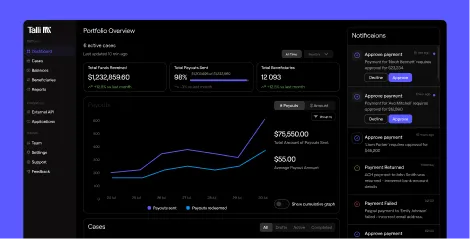
- Real-time dashboards: Live visibility into completion rates, failure causes, and remaining balances
Talli's platform specifically addresses settlement administration requirements, maintaining QSF compliance while reducing the property volume that ultimately requires escheatment reporting.
How to Conduct a Free Unclaimed Money Search in Texas
Individuals and businesses can search for property the state already holds in custody.
Utilizing the Comptroller's Website
The official Texas Comptroller search portal provides free access to unclaimed property records. The process involves:
- Search by name: Enter individual or business name
- Review results: Identify potential matches with property descriptions and amounts
- File a claim: Submit online with required documentation
- Await verification: Comptroller staff review claims and issue payments
Tips for a Successful Search
- Search maiden names and previous business names
- Include common misspellings of your name
- Check for deceased relatives' property
- Review regularly, new property is reported annually
The Texas Comptroller has returned billions in unclaimed property to rightful owners since program inception.
Understanding the Role of the Texas Comptroller of Public Accounts
The Texas Comptroller serves as the state's chief financial officer, with the Unclaimed Property Division administering escheatment programs.
Enforcement and Compliance
The Comptroller maintains broad authority to ensure holder compliance:
- Audit authority: May examine holder records within 7 years of report filing
- Penalty assessment: Imposes statutory penalties and interest on late or non-filers
- Civil enforcement: Pursues holders who fail to report or remit property
- No statute of limitations: If holder acted with intent to avoid delivery, unlimited lookback applies
Public Awareness Initiatives
The Comptroller actively promotes unclaimed property awareness through:
- Media campaigns: Statewide outreach about available claims
- Educational resources: Holder guides and reporting instructions
- Community events: Local claim assistance opportunities
- Annual reports: Transparency on program scale and impact
Contact the Unclaimed Property Division at (800) 321-2274 or unclaimed.property@cpa.texas.gov for compliance questions.
Escheatment Beyond Texas: Key Differences in Other States
Organizations operating across multiple jurisdictions face varying escheatment requirements that complicate compliance.
Variations in Dormancy Periods
While Texas applies 1-15 year dormancy periods depending on property type, other states differ significantly:
- California: Generally 3 years for most property types
- Florida: 5 years for most property, with some exceptions
- Maryland: 3 years for general business property
- Delaware: 5 years for most categories
These variations require careful tracking when distributing to multi-state claimant populations.
Multistate Reporting Challenges
Settlement administrators and corporate issuers face complex jurisdiction rules:
- Owner address rule: Report to owner's state of residence
- Holder state rule: If no owner address known, report to holder's state of incorporation
- Transaction location: Some property types follow transaction location
Talli's platform supports multi-jurisdictional distributions across 190+ countries with 150+ currencies, providing consistent compliance infrastructure regardless of claimant location.
Talli: Your Partner in Reducing Escheatment Risk
For claims administrators, settlement trustees, and corporate fiduciaries managing distributions, escheatment represents avoidable cost, risk, and administrative burden. Traditional paper check methods create predictable failure rates, with 20-30% of checks going unclaimed and triggering the complex reporting obligations outlined throughout this guide.
Talli transforms this equation by addressing escheatment at its source. The platform's 95-98% redemption rates mean fewer uncashed checks, reduced due diligence requirements, lower penalty exposure, and simplified compliance reporting. By delivering payments in 24-48 hours through claimants' preferred methods (ACH, prepaid cards, digital wallets, and gift cards), Talli eliminates the delays and friction that cause funds to go unclaimed.
Beyond redemption performance, Talli provides the compliance infrastructure Texas law demands:
- Complete audit trails documenting every payment attempt and owner contact
- Automated W-9 collection achieving 90% completion rates
- Real-time dashboards showing exactly which payments remain outstanding before dormancy periods expire
- Multi-jurisdictional support for administrators managing distributions across state lines
For organizations facing July 1 reporting deadlines, mounting tracking costs, or court scrutiny over low redemption rates, Talli offers a proven solution that protects fiduciary reputation while returning more money to rightful owners.
Frequently Asked Questions About Texas Escheatment Compliance
What happens if my business misses the July 1 reporting deadline?
Texas imposes automatic penalties of 5% of property value for reports 1-30 days late, increasing to 10% total after 31 days. Additionally, 10% annual interest accrues from the date property should have been delivered until actual payment. The Comptroller may waive penalties if you demonstrate good faith compliance efforts, but interest on collected-but-not-remitted funds cannot be waived. Chronic late filing also triggers audit priority.
Can my company qualify for the Voluntary Disclosure Agreement program if we've never filed Texas unclaimed property reports?
Yes, the VDA program specifically benefits holders who have not previously filed Texas returns. Eligibility requires that you have not received audit notice or Comptroller contact regarding liability. Benefits include limiting lookback to 10 years (versus the standard seven-year examination period for filed reports), penalty waivers, and generally waived interest. You must complete compliance actions within 60 days of VDA execution. Contact the Comptroller at UP.VDA.requests@cpa.texas.gov to initiate the process.
How long must my company retain unclaimed property records?
Texas generally requires holders to retain unclaimed property records for at least 10 years after reporting the property. Records must include original property documentation, owner contact history, due diligence mailing proof, filed reports, and payment receipts. Inadequate records during audit create presumptions of additional unreported property.
What special procedures apply to safe deposit box contents?
Safe deposit boxes require separate reporting from other property types. Contents must be delivered physically, not converted to cash, following the Comptroller's scheduled delivery process. Do not pre-process contents by counting coins or substituting checks. Use traceable courier services (not USPS) and send tracking information to unclaimed.auction@cpa.texas.gov. The Comptroller provides specific delivery addresses after report filing.
How does digital payment technology reduce my organization's escheatment exposure?
Digital disbursement platforms address escheatment at its source by dramatically increasing redemption rates. Traditional paper checks see 20-30% unclaimed, while digital methods achieve 95-98% redemption. Faster delivery (24-48 hours versus weeks), multiple payment options (ACH, prepaid cards, digital wallets), and real-time tracking all contribute to higher completion rates. Every successfully redeemed payment is one fewer property requiring escheatment reporting, due diligence costs, and potential penalties.