Multi-District Litigation (MDL) consolidates thousands of similar federal lawsuits into a single court for efficient pretrial proceedings. When these cases settle, claimants face a complex process to receive their funds. From pharmaceutical injuries to defective products, MDL settlements distribute billions of dollars annually to individuals who suffered similar harms. Understanding how MDL disbursement works empowers claimants to maximize their recovery and receive payments faster through modern digital payment options.
Key Takeaways
- MDL consolidates similar federal cases before one judge for pretrial efficiency while preserving individual claims for trial or settlement
- Global MDL settlements involve negotiated agreements between defendants and plaintiff leadership, followed by court approval and individual claim evaluation
- Claimants must prove eligibility through documentation, medical records, and proof of harm within strict filing deadlines
- Settlement awards depend on tier systems and damages matrices that categorize injuries by severity and causation strength
- Claims administrators handle verification, notification, and payment processing for settlements involving thousands to hundreds of thousands of recipients
- Digital payment methods deliver funds in 24-48 hours compared to 6-8 weeks for paper checks
- Unclaimed funds create escheatment risk, making redemption rate optimization critical for administrators and claimants
Understanding Multi-District Litigation (MDL): The Basics
Multi-District Litigation represents the federal court system's solution for managing mass litigation involving common questions of fact. When hundreds or thousands of plaintiffs file similar lawsuits against the same defendant across different federal district courts, the Judicial Panel on Multidistrict Litigation (JPML) may transfer these cases to a single federal court for coordinated pretrial proceedings.
How MDLs Centralize Complex Lawsuits
The JPML (a specialized panel of seven federal judges) evaluates transfer requests based on whether cases share common factual questions and whether consolidation serves judicial efficiency. Once transferred, cases proceed before a single transferee judge who manages all pretrial matters including:
- Discovery coordination across all plaintiffs and defendants
- Resolution of common legal motions
- Appointment of plaintiff steering committees and lead counsel
- Bellwether trial selection to test liability and damages theories
- Settlement negotiations on behalf of all consolidated plaintiffs
MDL differs fundamentally from class actions. In a class action, one or more named plaintiffs represent an entire class, and the resulting judgment binds all class members. MDL preserves each plaintiff's individual case. Claimants retain separate claims, separate damages, and theoretically separate trials. However, most MDLs resolve through global settlements rather than individual trials.
The Role of the Judicial Panel on MDLs
The JPML meets approximately every two months to consider pending transfer motions. Factors influencing transfer decisions include:
- Number of related cases pending across federal districts
- Geographic distribution of cases and parties
- Complexity of common factual and legal issues
- Efficiency gains from consolidated discovery
- Experience of potential transferee judges with complex litigation
Current MDL dockets include major mass tort litigation involving AFFF firefighting foam (15,200+ pending cases), NEC baby formula, Depo-Provera brain tumors, and hair relaxer cancer claims. These cases demonstrate how MDL handles product liability claims affecting thousands of individuals with similar injuries.
How an MDL Settlement is Reached and Approved
MDL settlements emerge through negotiation between defendant companies and plaintiff leadership committees, followed by judicial approval ensuring fairness to all claimants. This process balances efficiency with protection of individual claimant rights.
Negotiating a Global MDL Settlement
Settlement negotiations in MDL typically begin after bellwether trials establish baseline liability and damages expectations. Plaintiff steering committees (attorneys appointed by the court to lead litigation) negotiate on behalf of all plaintiffs, though individual claimants retain the right to accept or reject settlement terms.
Key negotiation elements include:
- Total settlement fund amount: The aggregate dollars defendants commit to resolve claims
- Allocation methodology: How funds distribute among different injury categories
- Participation thresholds: Minimum claimant participation percentages triggering settlement finalization
- Qualifying criteria: Standards determining which claimants receive awards
- Claims process structure: Procedures for submitting and verifying claims
- Attorney fee provisions: How plaintiff attorneys receive compensation
The Court Approval Process for MDLs
Unlike class action settlements requiring formal fairness hearings under Rule 23, MDL settlements face varied approval requirements depending on structure. When settlements involve Qualified Settlement Funds (QSFs), courts oversee fund establishment and distribution procedures to protect claimant interests.
Court approval processes typically involve review of settlement terms for reasonableness, evaluation of claims administration procedures, assessment of notice adequacy to potential claimants, consideration of objections from participating plaintiffs, approval of attorney fee arrangements, and oversight of fund distribution timelines.
Eligibility and Filing Claims in an MDL Settlement
Determining eligibility and successfully filing claims requires understanding specific settlement criteria and documentation requirements. Each MDL settlement establishes unique qualifying standards based on the injuries and products involved.
Determining Your Eligibility for an MDL Settlement
MDL settlement eligibility depends on factors specific to each case, typically including:
- Product or exposure identification: Proof of product use, medication intake, or exposure experience
- Injury diagnosis: Medical documentation confirming qualifying injuries
- Causation timing: Evidence connecting product exposure to injury onset within relevant timeframes
- Jurisdictional requirements: Meeting geographic or other case-specific requirements
- Statute of limitations compliance: Filing original claims within applicable deadlines
Settlement agreements define tiered eligibility, with different award levels for different injury severities. For example, pharmaceutical MDL settlements might distinguish between mild side effects, moderate injuries requiring medical treatment, and severe permanent disabilities.
Steps to File Your Claim
The claims filing process requires careful attention to deadlines and documentation. Claimants must register with the claims administrator, complete detailed claim forms about exposure and injuries, gather supporting documentation including medical records and prescription history, submit all materials before claims bar dates, respond promptly to deficiency notices, and await eligibility determination.
Missing deadlines or failing to provide adequate documentation can result in claim denial regardless of legitimate injuries. Working with experienced counsel helps ensure complete and timely submissions.
Understanding Your Settlement Award: Factors and Distribution
Settlement awards in MDL cases depend on individualized assessment of each claimant's injuries, damages, and case strength. Understanding how administrators calculate awards helps claimants set realistic expectations.
How Settlement Awards Are Calculated
MDL settlements typically use tiered systems or damages matrices that categorize injuries by type and severity. These systems assign point values or tier levels based on:
- Injury severity: More serious injuries receive higher awards
- Injury type: Specific diagnoses qualify for specific tier placements
- Causation strength: Cases with stronger causation evidence may receive multipliers
- Medical expenses: Documented out-of-pocket costs factor into calculations
- Lost income: Wage loss and diminished earning capacity affect awards
- Duration of harm: Temporary versus permanent injuries affect valuation
For context, a recent AT&T data breach settlement utilized a tiered structure with different estimated payments based on data exposure level. Claimants whose Social Security numbers were exposed received higher estimated payments ($39–$40) than those with less sensitive data compromised (estimated $7.50–$8.10).
What to Expect During Fund Distribution
Once eligibility is confirmed and awards calculated, fund distribution proceeds through the settlement administration process. Common deductions from gross awards include attorney contingency fees (typically 25-40% of individual awards), litigation costs advanced by counsel, medical liens owed to healthcare providers or insurers, and government liens for Medicare, Medicaid, or other program recovery claims.
The remaining net settlement amount represents what claimants actually receive. Modern digital disbursement platforms process these payments across multiple channels, compressing timelines from weeks to hours.
The Role of Claims Administrators in MDL Payouts
Claims administrators serve as neutral third parties responsible for implementing settlement terms and distributing funds fairly to all qualifying claimants. Their role spans the entire lifecycle from initial notification through final payment reconciliation.
Key Responsibilities of an MDL Claims Administrator
Professional claims administrators handle complex operational requirements including claimant notification, claims processing, eligibility determination, award calculation, verification of identity and documentation, payment processing through approved channels, and reporting to courts and parties.
For settlements involving thousands to hundreds of thousands of recipients, administrators require sophisticated technology infrastructure. Platforms supporting phased rollouts enable monitoring and adjustment before full release when settlements exceed 50,000 claimants.
Ensuring Compliance and Accuracy in Payouts
Accurate MDL payouts require robust compliance frameworks addressing fund segregation in dedicated FBO account structures, identity verification, OFAC compliance screening against Treasury sanctions lists, tax documentation including W-9 collection and 1099 generation, backup withholding calculations for missing TIN numbers, QSF compliance preserving tax treatment under IRC Section 104, and trust account rules for attorney-managed funds.
Platform automation can achieve approximately 90% W-9 completion rates through smart reminders versus around 40% without automation, directly impacting how quickly claimants receive funds.
Digital Payment Options for MDL Settlement Claimants
Traditional paper check distribution creates delays, costs, and redemption failures that modern digital payment methods eliminate. Claimants increasingly prefer faster, more convenient payment options.
Advantages of Digital Settlement Disbursements
Digital payment channels offer compelling benefits over paper checks. Funds typically arrive in 24-48 hours versus 6-8 weeks for check processing and mailing. Digital channels achieve approximately 95-98% redemption rates compared to 70-80% for paper checks. Processing costs drop significantly from around $7–$20 per check to $0.25–$0.50 for digital payments. Real-time tracking provides visibility into payment status, eliminating uncertainty.
Approximately 5.6 million U.S. households are unbanked and particularly benefit from prepaid card options that provide instant fund access without traditional banking relationships.
Choosing the Right Payment Method for Your Award
Multiple payment channels accommodate different claimant preferences. ACH Direct Deposit offers the lowest cost at approximately $0.25–$0.50 per transaction with 1-2 day delivery for banked claimants. Prepaid Mastercard provides virtual cards delivered via SMS/email in around 30 seconds, with physical cards within 5-7 days and no activation fees or monthly charges. Digital Wallets including PayPal and Venmo enable instant access on existing platforms. Gift Cards for Amazon and Target work well for smaller settlements under $100. Wire Transfers provide same-day options for high-value or international payments at approximately $10–$30 per transaction. Paper Checks remain available as fallback despite higher costs and slower delivery.
Claimants should consider their banking status, urgency of need, and comfort with technology when selecting payment methods.
Ensuring Security and Compliance in MDL Settlement Distributions
Large-scale settlement distributions attract fraud attempts while requiring strict regulatory compliance. Robust security and compliance infrastructure protects both claimants and settlement integrity.
Protecting Claimants with Robust Compliance
Settlement distributions must satisfy multiple regulatory requirements including KYC verification, OFAC screening with automated compliance checking, tax compliance through W-9 collection and 1099 generation, backup withholding at 24% for missing TIN numbers per IRS requirements under Section 104, QSF compliance preserving tax treatment, and trust account rules for attorney-managed funds.
Combating Fraud in Large-Scale Settlements
Fraud detection becomes critical when settlements attract thousands of claims. AI-powered systems identify suspicious patterns through device fingerprinting, behavioral analytics, identity verification, duplicate claim detection, and address validation. The industry has flagged millions of fraudulent claims in recent years, demonstrating the scale of fraud attempts targeting settlement funds.
Timeline and Expectations for Receiving Your MDL Payment
Understanding realistic payment timelines helps claimants plan appropriately and identify potential issues early. Multiple factors influence when funds actually arrive.
Factors Influencing MDL Payment Timelines
Several variables affect distribution speed including settlement finalization (appeals and objections can delay fund availability), claims volume (processing thousands of claims takes longer), documentation completeness (missing information triggers individual delays), lien resolution requirements, payment method selection (digital options deliver faster than paper checks), and administrator efficiency.
Modern disbursement platforms compress traditional week-long settlement processes into 24-48 hour payment cycles through automated processing and real-time tracking. This represents a dramatic improvement over traditional administration approaches.
What Happens to Unclaimed Settlement Funds
Claimants who fail to claim payments or cash checks create unclaimed fund liability. Traditional paper check distributions see approximately 20-30% of funds go unclaimed, requiring costly tracking at around $150 per uncashed check, reissuance attempts for returned or expired checks, and eventual escheatment to state governments under unclaimed property laws.
Digital payment methods dramatically reduce unclaimed funds by achieving higher redemption rates and eliminating physical delivery failures. This benefits claimants who receive entitled funds and administrators who avoid escheatment complexity.
Challenges and Benefits of MDLs for Claimants
MDL consolidation offers significant advantages while creating certain limitations claimants should understand. Weighing these factors helps set appropriate expectations.
Advantages of Centralized Litigation for Individuals
MDL benefits claimants in several ways. Plaintiff steering committees pool resources for expert witnesses, discovery, and trial preparation. Lead attorneys specialize in complex litigation. Coordinated proceedings avoid duplicative efforts across thousands of cases. Common rulings apply uniformly to all plaintiffs. Aggregate claims create stronger negotiating positions. Litigation expenses spread across many plaintiffs.
Without MDL consolidation, individual plaintiffs facing well-funded corporate defendants would struggle to afford the extensive discovery and expert testimony required for complex product liability cases.
Navigating the Complexities of Large-Scale Settlements
MDL also presents challenges including reduced individual control as plaintiff committees make key litigation decisions, extended timelines as complex MDLs may take years to resolve, settlement pressure as global settlements may not optimize individual case values, communication gaps where individual plaintiffs may feel disconnected from case developments, varied attorney experience levels, and payment processing delays.
Claimants benefit from staying engaged with their individual attorneys, responding promptly to information requests, and selecting digital payment options when available to minimize delays.
Why Talli for MDL Settlement Disbursements
Settlement administrators handling MDL distributions face unique operational and compliance challenges that require specialized infrastructure. Talli's purpose-built platform delivers comprehensive solutions designed specifically for legal settlement payouts at scale.
The platform supports distributions ranging from 1,000 to 100,000+ recipients without performance degradation. Complete QSF compliance is embedded throughout the system, ensuring proper tax treatment and fund segregation. Six payment channels (ACH, prepaid Mastercard, PayPal, Venmo, gift cards, and paper checks as fallback) accommodate diverse claimant preferences and banking statuses.
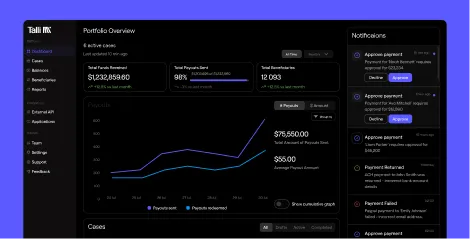
Automated compliance features streamline operations through built-in KYC verification, OFAC screening, W-9 collection, and 1099 generation. Real-time tracking dashboards provide live visibility into completion rates, payment status, and fund flows. Court-ready reporting with automated audit trails and reconciliation documentation satisfies judicial oversight requirements.
Results demonstrate the platform's effectiveness. Settlement administrators using Talli report substantial increases in claimant redemption rates, significant reductions in unresolved exceptions, and 100% fiduciary compliance across all distributions. For MDL settlements involving hundreds of millions of dollars and hundreds of thousands of claimants, these improvements translate to faster payments, better outcomes, and reduced administrative burden.
Frequently Asked Questions
What is the difference between a class action and an MDL settlement?
Class actions involve representative plaintiffs suing on behalf of a defined class, with judgments binding all class members. MDL consolidates individual cases for pretrial efficiency while preserving each plaintiff's separate claim. Class members automatically belong to the class unless they opt out, while MDL plaintiffs actively file individual cases that share common facts. Settlement structures also differ. Class settlements require formal fairness hearings under Rule 23, while MDL settlements may proceed through various approval mechanisms depending on structure.
How long does it typically take to receive money from an MDL settlement?
Timelines vary based on settlement complexity, claims volume, and payment methods. After settlement approval, claims processing typically takes 3-12 months depending on documentation requirements. Traditional paper check distribution adds 6-8 weeks, while digital payment methods can deliver funds within 24-48 hours. Total time from settlement announcement to payment receipt often ranges from 6-18 months, though complex MDLs with extensive claims review may take longer.
Are MDL settlement payments taxable?
Tax treatment depends on the nature of damages received. Physical injury and sickness damages are generally excludable from income under IRC Section 104. However, punitive damages, interest, and some non-physical damages may be taxable. Emotional distress damages not arising from physical injury are typically taxable, though amounts for related medical expenses may be excludable. Claimants should consult tax professionals about their specific situations. Settlement administrators issue 1099 forms for reportable payments.
Can claimants choose how to receive MDL settlement payments?
Most modern settlement distributions offer multiple payment options. Claimants typically select from ACH direct deposit, prepaid debit cards, digital wallet transfers (PayPal, Venmo), or traditional paper checks. Selection usually occurs during claims registration or after award determination. Digital options deliver funds faster and achieve higher redemption rates. Claimants without bank accounts benefit from prepaid card options that require no existing financial relationship. Some settlements may limit options based on payment amounts or claimant locations.
What happens if a claimant misses the MDL settlement deadline?
Missing claims deadlines typically results in permanent forfeiture of settlement rights. Unlike some class action settlements where unclaimed funds redistribute to participating class members, MDL non-participation means losing the opportunity entirely. Claimants who file late may petition for extension, but success depends on settlement terms and good cause shown. Claimed but unpaid funds (such as uncashed checks) may eventually escheat to state governments under unclaimed property laws. Prompt claims filing and selection of digital payment methods protect against these outcomes.