.svg)


.svg)
Paper checks can cost organizations $2.01-$4.00 per transaction to issue, reflecting costs associated with printing, review, approvals, mailing, and other processing, yet 83% of consumers surveyed said they would switch insurance carriers after a poor claims experience. The culprit? Checks take 7-10 days to arrive, delaying car repairs and frustrating injured policyholders waiting for medical reimbursement. Modern digital disbursement platforms eliminate these inefficiencies by routing payments through electronic rails that settle in minutes to hours, transforming a compliance-heavy administrative burden into a streamlined process that improves vendor relationships and customer retention.
Key Takeaways
- Paper checks can cost organizations $2.01-$4.00 per transaction versus $0.50-$2.50 for digital payments like ACH transfers
- Checks remain a major fraud target, with a large share of organizations reporting check fraud
- Broader claims automation can materially reduce processing time, while digital payments remove mailing and check-clearing delays
- 40% of claimants cite payment speed as the single improvement they most want from their insurance carrier
- Virtual cards can deliver payment credentials electronically to participating repair vendors within seconds
- Same Day ACH can settle medical provider payments within hours at approximately $1.00-$5.00 per transaction
The Hidden Costs of Traditional Auto Claim Payouts
The true expense of paper check processing extends far beyond postage. Insurance carriers face compounding costs that erode margins and damage customer relationships with every check mailed to a medical provider or repair shop.
Traditional check costs include:
- Printing and mailing: $1.50-$3.00 per check for materials and postage
- Manual reconciliation: 40+ hours weekly for large carriers tracking payment status
- Fraud losses: Checks remain a major fraud target, with a large share of organizations reporting check fraud
- Stale check reprocessing: $2,000+ monthly handling uncashed or returned checks
- Vendor relationship damage: Repair shops delay work while waiting for payment confirmation
The average claim cycle can span 44 days from first notice of loss to final payment delivery. Medical providers and auto body shops absorb this delay through strained cash flow, often threatening to drop carriers from preferred networks. When 83% of consumers would switch carriers after a poor claims experience, payment speed becomes a retention issue, not just an operational one.
Streamlining Vendor Payments with Electronic Solutions
Digital claims payment platforms replace fragmented check workflows by orchestrating electronic payments through multiple rails: ACH, virtual cards, same-day transfers, and instant deposit. All are managed through unified APIs that integrate with existing claims management systems.
Core Platform Capabilities
Modern payment infrastructure provides:
- Multi-rail orchestration: Single integration supports ACH, same-day ACH, virtual cards, push-to-debit, and digital checks
- Pre-enrolled vendor networks: Leading platforms connect to over 1.3 million vendor-providers for immediate payment capability
- Automated compliance screening: Built-in AML/KYC checks and sanctions screening run before fund release
- Smart payment routing: Automatically selects optimal rail based on claim amount, urgency, and cost parameters
Implementation typically requires 4-12 weeks for basic integration, with platforms providing API documentation and sandbox environments for testing. The payoff is substantial: broader claims automation can materially reduce processing time, while digital payments remove mailing and check-clearing delays that frustrate vendors and claimants.
Accelerating Payments to Medical Providers via Digital Channels
Medical-provider reimbursement timelines vary by claim complexity, jurisdiction, documentation, and carrier workflow. Once payment is approved, electronic disbursement can remove additional mailing and deposit delays associated with paper checks.
Choosing the Right Payment Method for Healthcare Providers
Medical providers typically prefer predictable, reconcilable payments. The optimal methods include:
ACH Direct Deposit: Most cost-effective at approximately $0.50-$2.00 per transaction with 1-3 business day settlement. Providers can easily reconcile against their billing systems.
Same-Day ACH: Eligible Same Day ACH payments can be submitted through processing windows extending to 4:45 p.m. ET, subject to the originating financial institution's cutoff times, settling same business day at approximately $1.00-$5.00 per transaction. Ideal for urgent treatment authorizations or providers requiring faster cash flow.
Push-to-Debit (Instant): Funds arrive within minutes at around 1-2% of transaction value. Best reserved for emergency situations given higher costs.
Providers enrolled in digital payment networks receive email notifications immediately upon payment initiation, with funds accessible far faster than traditional check clearing. This transforms the payment experience while enabling carriers to demonstrate responsiveness during stressful claim situations.
Efficiently Paying Repair Vendors Without Checks
Auto repair shops operate differently than medical providers. Body shops and glass installers need immediate payment confirmation to order parts and begin work. Every day a vehicle sits unrepaired represents customer frustration and potential carrier switching.
Virtual Cards for Instant Repair Payments
Virtual cards can deliver unique 16-digit card numbers via email within seconds of claim approval. Repair shops charge the card immediately and begin work without waiting for check delivery.
Key advantages for repair vendor payments:
- Instant delivery: Card details arrive via secure email moments after adjuster approval
- Single-use security: Each card number works only for the specified claim amount
- Merchant controls: Cards can be restricted to specific vendor categories
- Potential rebate revenue: Some programs may provide negotiated rebates based on transaction volume and program terms
For auto glass claims averaging $200-$800, virtual cards reduce repair start time from 7-10 days to the same day. The growing adoption of virtual card payments across the insurance industry reflects this operational advantage.
Wire Transfers for High-Value Claims
Total loss claims or extensive collision repairs exceeding $10,000 warrant different treatment. Same-day wire transfers cost approximately $10-$30 per transaction but provide guaranteed same-day settlement with complete audit trails. For high-value payments, this cost represents a fraction of check processing overhead while dramatically improving vendor satisfaction.
Automating Compliance and Fraud Detection in Auto Claim Payouts
Checks remain a major fraud target in insurance payments. Digital platforms address this vulnerability through automated screening and verification at payment initiation.
Built-In Security Protocols
Modern fraud prevention systems include:
- KYC verification: Automated identity checks against government databases before first payment
- Sanctions screening: Real-time OFAC compliance checking with documented timestamps
- Device fingerprinting: Pattern recognition identifying suspicious claim origins
- Behavioral analytics: AI systems flagging anomalous payment patterns
These controls can automate initial screening and route exceptions for review, reducing routine manual work while maintaining documented compliance workflows. Platforms with a SOC 2 Type II report can provide independently assessed evidence about the design and operating effectiveness of controls within the report's scope, satisfying regulatory requirements.
Regulatory Compliance Automation
Insurance payment compliance extends beyond fraud detection:
- State money transmitter requirements: Platforms must hold appropriate licenses for fund movement
- NAIC model law adherence: Data security and consumer protection standards
- State-specific regulations: California CCPA, New York 23 NYCRR 500 cybersecurity requirements
- Tax documentation: 1099 generation for applicable payments
Automated compliance reduces the risk of regulatory penalties while freeing claims operations staff from manual verification tasks.
Multi-Channel Payment Options for Diverse Recipients
Different recipients require different payment methods. The unbanked population cannot receive ACH transfers, while digitally-native claimants expect instant access through familiar platforms.
Payment Rail Options
Comprehensive platforms support multiple payment channels. Standard ACH costs approximately $0.50-$2.00 per transaction and settles in 1-3 days, making it ideal for high-volume, low-urgency payments. Same-Day ACH costs around $1.00-$5.00 and settles same day for moderate urgency needs. Virtual cards typically charge 2-3% of transaction value with potential rebates and provide instant delivery, working well for repair vendors. Push-to-debit costs approximately 1-2% and delivers funds within minutes for emergency advances. Digital wallets cost around $0.50-$1.00 per transaction with instant settlement based on claimant preference.
Intelligent routing rules automatically select the optimal method based on claim type, urgency, amount, and recipient preferences. A glass claim routes to virtual card for instant shop payment, while medical reimbursement flows through cost-effective ACH.
Real-Time Visibility and Reporting for Claims Administrators
Manual reconciliation consumes 40+ hours weekly at large carriers tracking check status, stop payments, and reissuances. Digital platforms eliminate this overhead through automated tracking and real-time dashboards.
Dashboard Capabilities
Modern platforms provide live visibility into:
- Payment status tracking: Initiated, pending, cleared, failed with real-time updates
- Completion rate monitoring: Percentage of successful payouts by method and vendor type
- Exception flagging: Automatic alerts for failed payments requiring intervention
- Compliance documentation: Audit-ready records of all verification steps
- Cost analytics: Transaction-level and aggregate fee analysis
API webhooks push status updates to claims management systems automatically, eliminating manual status checks. When payments fail, systems generate automated retry attempts or route to alternative payment methods without adjuster intervention.
Cost Savings and Increased Redemption Rates with Digital Payouts
The financial case for digital payments extends beyond transaction fee reduction. Carriers eliminating check-based workflows report comprehensive savings across operations.
Total Cost of Ownership Analysis
Actual savings depend on payment mix, bank and platform pricing, check volume, exception rates, reconciliation workload, and vendor acceptance. AFP's benchmark provides a defensible starting point: issuing a paper check has an estimated cost of $2.01-$4.00, compared with approximately $0.26-$0.50 to initiate an ACH transaction.
The cost reduction in processing expenses compounds with retention improvements. When 40% of claimants prioritize payment speed above other claim experience factors, faster disbursement directly impacts renewal rates.
Secure and Compliant Fund Management for Auto Claims
Claims fund structures should follow the carrier's applicable legal, regulatory, banking, accounting, and contractual requirements, with controls that provide traceability from payment authorization through settlement.
Fund Management Architecture
Best practices for claims fund management include:
- Dedicated disbursement accounts: Separate accounts for claims payments prevent commingling with operational funds
- Funding controls: Maintain sufficient funds under the carrier's banking, treasury, and payment-provider arrangements to support scheduled disbursements
- Automated replenishment: Treasury systems trigger funding when account balances drop below thresholds
- Court-ready documentation: Complete audit trails proving fund source and disposition
FDIC-insured banking partnerships provide institutional-grade security for fund custody, while platforms with SOC 2 Type II reports demonstrate independently assessed security controls within defined scope.
Why Talli Transforms Claims Disbursement Operations
While numerous payment platforms exist for insurance carriers, Talli delivers purpose-built disbursement infrastructure designed for compliance-critical, high-volume payment operations: the exact requirements of auto claims administration.
Talli's digital disbursement platform provides capabilities directly applicable to auto claims operations:
- Multi-channel payment distribution: ACH, prepaid Mastercard, digital wallets, and wire transfers through a single integration enable optimal routing for both medical providers and repair vendors
- Automated compliance infrastructure: Built-in KYC verification, OFAC screening, and fraud detection running automatically without manual configuration
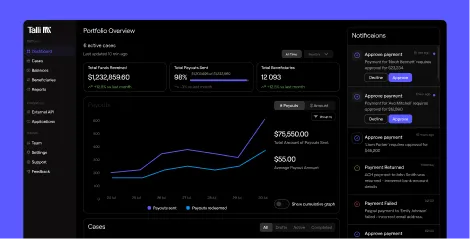
- Real-time tracking and reporting: Live dashboards showing payment status, completion rates, and fund flows with audit-ready documentation
- AI-powered fraud detection: Pattern recognition achieving 95% accuracy while identifying suspicious activity 50% faster than manual review
- Fund segregation architecture: Dedicated FBO account structures with FDIC-insured banking through Patriot Bank, N.A.
Unlike generic payment processors requiring extensive customization, Talli's platform handles the compliance complexity inherent in regulated disbursements. The same compliance-focused infrastructure Talli uses for high-volume settlement distributions can support claims organizations evaluating digital payout workflows and seeking court-defensible audit trails with regulatory adherence.
For carriers serious about eliminating check-based inefficiencies while maintaining compliance integrity, Talli's trust center documents the security certifications and compliance frameworks that satisfy regulatory scrutiny.
Frequently Asked Questions
What are the main disadvantages of paying auto claims with paper checks?
Paper checks create multiple operational problems: processing costs of approximately $2.01-$4.00 per transaction including printing, mailing, and reconciliation; 7-10 day delivery delays frustrating claimants and vendors; check fraud affecting a large share of organizations; and 40+ hours weekly in manual reconciliation labor. The average claim cycle can damage customer relationships and vendor partnerships.
How quickly can digital payment platforms settle claims to medical providers?
Settlement speed depends on payment method selected. Standard ACH transfers settle in 1-3 business days at approximately $0.50-$2.00 per transaction. Same Day ACH can settle within hours when submitted through processing windows extending to 4:45 p.m. ET, subject to financial institution cutoffs, at approximately $1.00-$5.00 per transaction. Push-to-debit delivers funds within minutes for emergency situations. Virtual cards deliver instantly via email for repair shop payments.
What security measures protect digital claims payments from fraud?
Digital platforms incorporate multiple security layers: automated KYC verification against identity databases, real-time OFAC sanctions screening, device fingerprinting for suspicious pattern detection, and AI-powered behavioral analytics. Virtual cards provide additional protection through single-use numbers and merchant category restrictions. Platforms with SOC 2 Type II reports demonstrate independently assessed security controls.
Can digital payment solutions handle both medical providers and repair vendors?
Yes. Modern platforms support multi-channel payment distribution enabling different methods for different vendor types. Medical providers typically prefer ACH for easy reconciliation with billing systems. Repair shops prefer virtual cards for instant payment confirmation. Intelligent routing rules automatically select optimal methods based on vendor type, claim amount, and urgency without manual intervention.
How long does it take to implement a digital claims payment platform?
Implementation timelines range from 4-12 weeks for basic integration to 3-6 months for full enterprise deployment. Key phases include platform selection (2-4 weeks), API integration with claims systems (4-8 weeks), vendor onboarding (6-16 weeks running parallel), and pilot testing (4-6 weeks). Carriers with modern claims management systems using standard APIs complete integration faster than those with legacy systems requiring middleware.