.svg)


.svg)
Payment choice can improve settlement distribution by giving claimants more accessible ways to receive funds. When offered a choice, 94% of class action payees select digital payments, while FTC research found weighted mean check-cashing rates of 55% in direct-payment cases and 77% in cases where consumers had already filed claims. Offering multiple payment methods can reduce barriers associated with check-only distributions and help administrators improve overall redemption. Modern digital disbursement platforms automate compliance requirements while cutting transaction costs from around $7-20 per check to under $1 for digital payments.
Key Takeaways
- 94% of claimants select digital payments over paper checks when given payment method choice
- Traditional paper checks achieve only 55-77% cash rates, leaving 23-45% of funds unredeemed
- Digital platforms deliver payment success rates as high as 98% with multi-channel payment options
- Paper check processing costs around $7.78 to $20+ per payment versus under $1 for digital transactions
- Claims showing signs of fraud declined by more than 40% in 2024 following the deployment of new fraud-prevention technologies by Digital Disbursements, ClaimScore, and participating settlement administrators
- Digital adoption in settlements grew 182% year-over-year from 2023 to 2024
- 4.2% of U.S. households, about 5.6 million households, were unbanked in 2023, representing households that may benefit from payment options that do not require a traditional bank account
Understanding Unclaimed Class Action Settlements and the Cost of Inefficiency
The chronic problem of unclaimed settlement funds creates significant financial and compliance burdens for fiduciaries, trustees, and claims administrators. FTC research examining 149 settlements found median claims rates of just 9% for cases requiring a claims process, with weighted mean rates dropping to 4%.
Why Do So Many Class Action Funds Go Unclaimed?
Paper check distribution produces systematic failures across multiple dimensions:
- Undeliverable addresses: Around 12-15% returned mail rates due to claimant mobility
- Banking access barriers: 4.2% of U.S. households, about 5.6 million households, were unbanked in 2023
- Small-dollar psychology: Payments under $50 often aren't worth the effort to deposit
- Legitimacy confusion: Recipients mistake settlement checks for scams
- Stale-dating issues: Banks aren't obligated to honor checks presented after 6 months
These structural failures explain why paper-first strategies consistently leave 23-45% of payments unredeemed, creating escheatment liability and extending settlement timelines.
The Hidden Costs of Traditional Paper Payouts
Each unresolved check triggers a cascade of administrative costs:
- Reissuance cycles: Address research, due diligence mailings, and manual processing
- Extended timelines: 6-12 month delays waiting for uncashed check resolution
- Escheatment compliance: Multi-state reporting with penalties for late filings
- Court reporting burden: Explaining low redemption rates to judges
States collectively hold tens of billions of dollars in unclaimed property from many sources, including uncashed checks and other dormant financial assets. Unredeemed settlement payments can contribute to this broader unclaimed-property burden.
The Digital Shift: Boosting Redemption with Modern Payment Methods
Settlement distribution has undergone dramatic transformation. Digital payment adoption grew from 17 settlements in 2020 to 558 in 2024, a 33-fold increase demonstrating sustained momentum rather than temporary shift.
Beyond Checks: A Spectrum of Payout Choices
Modern multi-channel payment platforms offer 4-6 payment methods:
- ACH Direct Deposit: Selected by 9% of claimants, lowest cost at $0.25-$0.50 per transaction
- Push-to-Debit: Around 28% selection rate, instant delivery to existing debit cards
- Prepaid Cards: Around 23% of payments, serves unbanked populations
- Digital Wallets: Around 22% selection for PayPal and Venmo users
- Paper Checks: Maintained as fallback despite higher costs
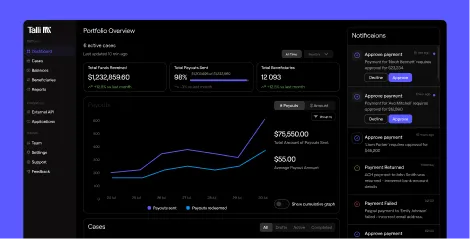
This diversity gives claimants more ways to receive funds, while modern digital disbursement platforms report payment success rates as high as 98%.
How Digital Options Drive Higher Take-Up Rates
Survey data from actual class action claimants confirms the preference gap. Around 80% of claimants say digital payouts would be more convenient than checks. Yet over half of class members receiving settlement payouts did not get to choose their preferred payment method.
When administrators offer payment choice, claimant satisfaction improves while support costs decline. The combination of faster delivery, real-time tracking, and method flexibility directly addresses the abandonment factors that plague paper distributions.
Reaching the Unbanked: Prepaid Cards as a Solution for Financial Inclusion
No single payment method works for all recipients. ACH requires banking relationships that 5.6 million unbanked households lack. Digital wallets require smartphones and technical literacy. Paper checks assume stable addresses and branch access.
Bridging the Gap: Serving All Claimants with Flexible Payouts
Prepaid cards address financial inclusion directly:
- Virtual card delivery: SMS/email delivery in 30 seconds
- Physical cards: Mailed within 5-7 days
- No activation fees: Removes friction for low-value payments
- ATM access: Cash withdrawal without bank accounts
- Retail acceptance: Broad acceptance at merchants that accept Mastercard
For settlements involving unbanked claimants, prepaid cards often achieve the highest redemption rates for small-value distributions. The method eliminates banking-access barriers that can make traditional payment methods less convenient for unbanked claimants.
Instant Access: The Popularity of Digital Wallets for Class Action Payouts
Digital wallet adoption has exploded to around 4.5 billion global users, representing 54.9% of the world's population. Transaction values exceeded $10 trillion in 2024, fundamentally shifting payment expectations.
Meeting Claimants Where They Are
PayPal and Venmo integration provides distinct advantages:
- Instant access: Funds available immediately upon delivery
- Existing infrastructure: No new accounts or apps required
- Familiar interface: Reduced confusion and abandonment
- Mobile-first experience: Aligns with modern payment expectations
- Transaction costs: $0.50-$1.00 per payment, far below check processing
Around 69% of US adults used digital wallets within the past 30 days. For Millennials and Gen Z claimants, digital wallets represent the default payment expectation rather than an alternative option.
Cost-Effective and Efficient: ACH Direct Deposit for Settlement Funds
ACH direct deposit offers the lowest per-transaction costs for banked claimants, with fees around $0.25-$0.50 compared to $7-20+ for paper checks.
Maximizing Fund Delivery Through Direct Deposit
ACH advantages include:
- 1-2 day delivery: Predictable settlement timelines
- No physical handling: Eliminates mail delays and lost check issues
- Automated reconciliation: Instant confirmation of successful deposits
- Batch processing: Handle thousands of payments simultaneously
- Cost reduction: Around 80% savings versus paper
For high-volume class action distributions, ACH provides the foundation for efficient payout operations while maintaining complete audit trails.
Compliance and Fraud Detection in Modern Payouts
Claims with significant indications of fraud across class action and mass tort distributions increased from approximately 400,000 in 2021 to more than 80 million in 2023, a roughly 19,000% increase that intensified pressure on settlement fraud controls. However, claims showing signs of fraud declined by more than 40% in 2024 after new fraud-prevention technologies were deployed across participating settlement programs.
Securing Settlements: The Role of Automated Compliance
Digital platforms integrate compliance infrastructure automatically:
- KYC verification: Identity validation before payment release
- OFAC screening: Real-time sanctions list checking
- Device fingerprinting: Pattern recognition across submissions
- IP analysis: Geographic anomaly detection
- W-9 collection: Around 90% completion rates with automated reminders versus 40% without
These controls can also be performed before issuing paper checks, but digital platforms can integrate and automate them directly within the payment workflow, reducing manual compliance work and creating clearer audit trails. For fiduciaries managing settlement funds, fraud prevention represents core fiduciary duty, not optional enhancement.
Real-Time Transparency: Monitoring and Reporting Settlement Distributions
Settlement recipients increasingly expect instant payment experiences based on consumer fintech tools. When settlement checks take 7-14 days to arrive with no tracking, recipients assume payments failed or aren't coming.
Keeping Courts and Claimants Informed
Modern dashboards provide live visibility into:
- Completion rates: Percentage of successful payouts by method
- Payment method distribution: ACH versus cards versus wallets
- Geographic concentration: Regional redemption patterns
- Failure root cause analysis: Why specific payments failed
- Remaining fund balances: Real-time settlement fund status
Automated reporting generates court-required accounting without manual spreadsheet preparation. Stakeholder portals provide controlled access for courts, trustees, and legal teams while maintaining security.
Case Study Success: How Digital Payouts Transform Class Action Outcomes
AB Data, a leading U.S. claims administrator managing settlements worth hundreds of millions of dollars, implemented digital disbursement infrastructure with measurable results:
- 30% increase in claimant redemption rates across check-issued populations
- 60% reduction in unresolved exceptions and manual reissuance overhead
- 100% fiduciary compliance record maintained across all distribution cycles
- Faster time to funds while lowering distribution costs
Thomas R Glenn, President & CEO of AB Data, described the transformation: "We don't think of digital disbursement as a feature; we think of it as infrastructure. Talli gave us the regulated payout rails we needed to move faster, reduce unclaimed funds, and give courts full confidence in how settlement money is being distributed."
From Weeks to Hours: The Speed Advantage of Automated Legal Payouts
Digital payments process in 24-48 hours versus 7-14 days for paper checks. This compression fundamentally changes settlement administration economics.
Accelerating Justice: How Digital Systems Compress Timelines
Speed improvements cascade across operations:
- Reduced support burden: Real-time tracking cuts "where's my payment?" calls by 30-40%
- Automated reminders: Email/SMS recovery of 30-40% of abandoned claims
- Three-way reconciliation: Around 90% auto-match rates reduce monthly closing from 15 hours to 4.5 hours
- Court deadline compliance: Flexibility for tight distribution requirements
- Earlier case closure: 6-9 month timeline reduction for complex settlements
For mass tort distributions handling thousands of claimants with varying award amounts, speed translates directly to operational efficiency and claimant satisfaction.
Maximizing Recovery: Tailoring Payout Choices for Specific Settlement Types
Different settlement characteristics require different payment strategies:
Consumer Privacy Settlements (10,000 claimants, $50 average):
- Gift cards achieve highest redemption for small-dollar amounts
- Digital wallets appeal to tech-savvy affected populations
- Paper check fallback for recipients without digital access
Mass Tort Distributions (50,000 claims, $2,000 average):
- ACH primary for cost efficiency at scale
- Prepaid cards for unbanked claimant populations
- Wire transfers for high-value international recipients
Bankruptcy Distributions (5,000 creditors, variable amounts):
- Multi-currency support for international creditors
- Institutional payment rails for corporate recipients
- Individual payment choice for consumer creditors
Data Breach Settlements (100,000+ affected):
- Digital-first for fast response to affected consumers
- Multiple methods addressing diverse victim demographics
- Automated compliance for tiered payment structures
Strategic payment method selection based on settlement characteristics maximizes redemption while minimizing administrative burden.
Why Talli Delivers Superior Settlement Distribution Results
Talli provides comprehensive solutions specifically designed for fiduciaries managing legal settlement distributions. The platform addresses the core challenges of settlement administration with purpose-built infrastructure that improves redemption rates, reduces costs, and ensures full compliance.
Talli's integrated approach delivers measurable improvements:
- Six Payment Methods: ACH, prepaid Mastercard, PayPal, Venmo, gift cards, and paper check fallback ensure every claimant can receive funds through their preferred method
- Automated Compliance: Integrated KYC verification, OFAC screening, W-9 collection with 90% completion rates, and 1099 generation eliminate manual compliance work
- AI-Powered Fraud Detection: Pattern recognition achieving 95% accuracy while identifying fraud 50% faster than manual review protects settlement fund integrity
- QSF Fund Segregation: Dedicated settlement account structures that support fund segregation and matter-level tracking for Qualified Settlement Fund distributions structured under IRC Section 468B
- Real-Time Dashboard: Live visibility into completion rates, fund flows, and court-ready audit trails provides complete transparency for all stakeholders
Unlike generic payment processors requiring extensive customization, Talli provides end-to-end settlement distribution from claimant notification through final reconciliation. The platform handles batch uploads of claimant data with automated validation against court-approved distribution plans, eliminating manual data entry errors.
For administrators managing settlements from 1,000 to 100,000+ recipients, Talli's infrastructure scales without performance degradation while maintaining SOC 2 Type I and PCI DSS 4.0.1 compliance. Banking services provided by Patriot Bank, N.A., Member FDIC ensure institutional-grade security.
Frequently Asked Questions
How do digital payment options increase class action settlement redemption rates?
Digital payment options increase redemption by addressing the structural failures of paper checks. When claimants can choose from ACH, prepaid cards, digital wallets, and other methods, 94% select digital over paper. Payment choice can reduce barriers such as outdated addresses and limited access to check-cashing services. FTC research found weighted mean check-cashing rates of 55% in direct-payment cases and 77% in claims-requiring cases, while modern digital platforms report payment success rates as high as 98%.
What are the primary challenges of using traditional paper checks for legal payouts?
Paper checks face multiple structural challenges: around 12-15% undeliverable rates due to address changes, banking access barriers for 4.2% of U.S. households that were unbanked in 2023, stale-dating issues after 6 months, confusion about legitimacy leading to ignored checks, and small-dollar amounts not worth depositing. Processing costs reach around $7-20+ per payment including printing, postage, reconciliation, and reissuance.
Can digital payment platforms handle large-scale class action settlements with thousands of claimants?
Yes. Modern platforms process settlements ranging from 1,000 to 100,000+ recipients through batch payment processing, automated validation, and phased rollouts. The industry saw 558 settlements use digital distribution in 2024 versus just 17 in 2020, demonstrating proven scalability. Platforms support multiple payment rails simultaneously, automated three-way reconciliation, and real-time status tracking across all claimants.
What role does compliance play in ensuring secure digital disbursements?
Compliance infrastructure is essential for secure disbursements. Digital platforms integrate KYC identity verification, OFAC sanctions screening, device fingerprinting, and behavioral analytics to prevent fraud. Western Alliance reported that claims showing signs of fraud declined by more than 40% in 2024 after new fraud-prevention technologies were deployed by Digital Disbursements, ClaimScore, and participating settlement administrators. Automated W-9 collection achieves around 90% completion rates while generating IRS-compliant 1099 forms.
Are digital payment methods suitable for reaching claimants who are unbanked?
Absolutely. Prepaid cards specifically address the 5.6 million unbanked U.S. households that cannot easily cash paper checks. Virtual cards deliver via SMS/email in 30 seconds, while physical cards arrive within 5-7 days. These cards require no activation fees, work at retailers that accept Mastercard, and provide ATM access for cash withdrawal, eliminating banking access barriers entirely.