.svg)


.svg)
Check fraud continues to devastate dividend disbursement operations, with 63% of organizations reporting attempted or actual check fraud in 2024 and mail theft-related check fraud reports averaging $44,774 in reported suspicious activity per BSA report. For fiduciaries and trustees managing shareholder dividend distributions, these incidents represent more than financial damage. They can create reconciliation problems, replacement-payment work, shareholder complaints, and fiduciary control questions. Positive Pay systems offer issuers a practical defense mechanism, flagging mismatched checks before payment decisions are finalized and shifting fraud detection from reactive cleanup to proactive review.
Key Takeaways
- Positive Pay verifies outbound checks against an authorized issue file before clearing, helping detect counterfeit checks, altered amounts, and unauthorized items.
- Payee Positive Pay adds name verification to help catch check washing, where fraudsters alter payee names on stolen checks.
- Positive Pay pricing varies by bank. One published bank schedule lists Check Positive Pay with Payee Match at $60 per month per account and ACH Positive Pay at $25 per month per account.
- Bank deadlines vary, but exception review windows are often same-day and may close by late morning or early afternoon.
- Implementation depends on clean data, consistent payee names, timely void updates, and trained backup reviewers.
- Break-even can occur with one prevented fraud incident, but ROI should be framed as avoided loss, stronger controls, and cleaner audit documentation.
Understanding Positive Pay: A Foundation for Secure Dividend Payments
Positive Pay functions as an automated verification layer between your dividend disbursement account and the checks presented against it. When your organization issues dividend checks, you submit a file containing payment details to your bank. Before a check clears, the bank compares the presented payment against your authorized list. Mismatches trigger exceptions requiring review.
The verification process typically examines critical payment elements:
- Check number matching against the issued sequence
- Payment amount comparing to authorized figures
- Issue date verifying against submission records
- Payee name with Payee Positive Pay
- Account number validating the proper fund source
For dividend disbursement accounts, this protection addresses a clear vulnerability. Dividend checks travel through mail systems, sit in mailboxes, and pass through multiple hands before deposit. Each touchpoint creates fraud opportunities, including stolen checks, altered amounts, washed payees, and counterfeits. Without Positive Pay, the first sign of fraud may appear during reconciliation, after funds have already left the account.
The check washing threat is especially important for issuers. Criminals may intercept legitimate checks, remove or alter the original payee name, and substitute another recipient. Standard Positive Pay can catch amount and check-number mismatches, but it may miss payee changes if payee matching is not enabled. Payee Positive Pay adds a critical review layer, though it still depends on accurate issue files, bank matching rules, and timely exception decisions.
Types of Positive Pay Protection for Dividend Accounts
Check Positive Pay
The foundational service verifies check number, amount, and issue date against your submitted file. When mismatches occur, your bank holds the payment or flags it for exception review. You review the check image through the bank portal and approve or reject the item within the specified window.
This basic protection catches many counterfeit checks and amount alterations, but it has a blind spot: it does not always verify payee names. For large-scale distributions to thousands of shareholders, that gap can create exposure to check washing schemes.
Payee Positive Pay
Payee Positive Pay adds payee-name verification. Your issue file includes the payee name as printed on the check, and the bank compares the presented check against those records. Any material discrepancy can trigger an exception.
Implementation requires standardizing payee names in your accounting or shareholder system. “John Smith” in the issue file but “John Q. Smith” on the check can create false positives. The same problem can happen with “ABC Corporation” versus “ABC Corp.” Strong setup starts with clean payee data and consistent check-printing rules.
ACH Positive Pay
ACH Positive Pay monitors incoming ACH debits against approved originators or rules. This helps block unauthorized electronic withdrawals from a dividend account when criminals obtain account details and attempt fraudulent debits.
ACH Positive Pay is different from sending shareholder payments by ACH credit. It protects the account from unauthorized pulls, while outbound ACH distribution requires separate controls for identity verification, payment authorization, returns, and reconciliation.
Reverse Positive Pay
Reverse Positive Pay inverts the standard model. Your bank sends a daily report of presented checks, and your team reviews items for approval. This can work for smaller operations with limited check volume, but it becomes impractical for high-volume dividend distributions because every presented item requires manual review.
Step-by-Step Implementation Process
Week 1: Bank Enrollment
Contact your treasury management officer to request Positive Pay enrollment. Confirm which dividend accounts need protection, whether Payee Positive Pay is available, what default decision rule applies when exceptions are not reviewed, and whether ACH Positive Pay is appropriate.
The default decision rule is important. If no one responds by the cutoff, the bank may either pay or return the item depending on the agreement. For fiduciary accounts, that setting should be reviewed carefully.
Week 1-2: File Format Configuration
Obtain the bank’s required file format, usually CSV, fixed-width, or a proprietary template. Configure your accounting or disbursement system to export issued checks with required fields:
- Account number
- Check number
- Issue date
- Payment amount
- Payee name, if using Payee Positive Pay
- Void or stop-payment indicator, if supported
Generate test files and confirm successful loading with the bank before production. This step catches formatting issues before they affect real dividend checks.
Week 2: Daily Workflow Setup
Assign primary and backup staff for file submission and exception review. Bank deadlines vary, so do not assume a universal 12 p.m. or 2 p.m. cutoff. Some banks require exception decisions by late morning, while others use different windows. The safe practice is to review exceptions every business day before the bank’s stated deadline.
If your system supports payment automation, generate the file directly from approved payment data instead of rebuilding it manually in a spreadsheet.
Week 2-3: Exception Review Training
Train designated staff on the bank portal and document decision rules for common scenarios:
- Reject unknown check numbers
- Reject unauthorized amount changes
- Escalate material payee mismatches
- Confirm minor name-format differences against the shareholder record
- Document the reason for every decision
Exception windows are strict. Backup coverage matters during vacations, holidays, and high-volume distribution periods.
Week 3-4: Go-Live and Monitoring
Activate Positive Pay on the production account and submit the first live issue file. Monitor exceptions closely for two to four weeks. Expect some early false positives from payee-name formats, void timing, or file mapping. If exception volume remains high, fix the underlying data issue rather than relying on repeated manual overrides.
Integration with Accounting and Disbursement Systems
Seamless integration reduces manual file handling and improves control quality. Positive Pay should operate from the same approved data used to issue checks.
A practical workflow looks like this:
- Approve the shareholder payment file
- Issue checks from the disbursement system
- Generate the Positive Pay issue file from the same data
- Upload the file to the bank or transmit it through a secure channel
- Review exceptions before the cutoff
- Retain files and decisions with the distribution record
For organizations maintaining audit trails for distributions, copies of issue files, bank confirmations, exception images, and reviewer decisions should be stored with reconciliation records. This documentation helps show that payment controls were applied consistently.
Most banks still rely on batch file submission rather than real-time API calls for Positive Pay. That makes timing discipline important. A check issued after the file deadline may appear as an exception, even if it is legitimate.
Cost Analysis and ROI Calculation
Direct Cost Structure
Positive Pay pricing varies by bank, account type, and service level. Published examples show different ranges. Fremont Bank lists Check Positive Pay with Payee Match at $60 per month per account and ACH Positive Pay at $25 per month per account, with setup fees possibly applying. Other banks may charge different monthly, setup, item, or exception fees.
Issuers should request a written fee schedule covering:
- Monthly account fees
- Payee Positive Pay fees
- ACH Positive Pay fees
- Setup charges
- Per-item or exception charges
- Treasury platform fees
Operational Costs
Staff time is part of the real cost. Even with automation, someone must confirm file submission, review exceptions, resolve false positives, and maintain void or stop-payment updates. Manual workflows cost more because they increase reformatting work and error risk.
ROI Analysis
The ROI case should be framed around avoided loss and stronger control evidence, not guaranteed savings. FinCEN’s mail theft-related check fraud analysis shows that reported suspicious activity tied to these incidents can be significant. Preventing one fraudulent check can offset years of service fees, especially for high-value dividend accounts.
Additional benefits include:
- Less time spent investigating suspicious checks
- Better documentation for fiduciary and audit review
- Faster reconciliation of exception decisions
- Fewer replacement-check problems
- Stronger account controls for mailed dividend checks
Positive Pay is not a complete fraud program. It should be paired with dual approvals, segregation of duties, secure check stock, restricted account access, and routine reconciliation.
Common Challenges and How to Overcome Them
Payee Name Mismatches
False positives often occur when file names do not match printed checks. “ABC Corporation” versus “ABC Corp.” may trigger a review even when the payment is legitimate.
Solution: Create standardized payee-name rules and use the same source data for check printing and Positive Pay files.
Missed Submission Deadlines
Checks issued after a file deadline may appear as exceptions or create unnecessary review work.
Solution: Align check runs with the bank’s cutoff and confirm file acceptance before checks enter the mail stream.
Voided Checks Not Updated
Voiding a check internally without updating the bank file can leave stale authorization data in place.
Solution: Train staff to submit void and stop-payment updates as part of the same workflow used for check issuance.
Weekend and Holiday Gaps
Checks presented around weekends or bank holidays may have different decision timing.
Solution: Maintain a bank processing calendar and assign backup reviewers before long weekends.
Exception Fatigue
High exception rates can cause rushed approvals and missed fraud signals.
Solution: Track exception reasons and fix recurring data issues in the payment system or shareholder register.
Why Talli Strengthens Dividend Disbursement Security
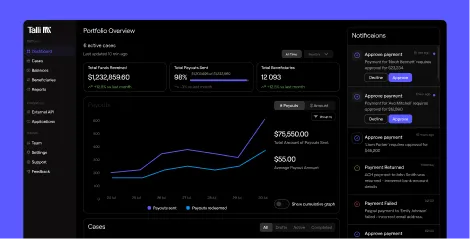
Positive Pay protects checks that still need to be issued. Talli helps reduce the need for check-first distributions by supporting digital payment options and real-time tracking through a purpose-built legal payment platform.
For dividend issuers and shareholder services teams, Talli supports multiple payment channels, including ACH direct deposit, prepaid Mastercard, PayPal, Venmo, and check fallback when needed. Reducing mailed checks lowers exposure to mail theft while giving recipients more flexible ways to receive funds.
Talli also adds operational controls that complement bank-side Positive Pay:
- Fraud mitigation and identity verification
- OFAC screening and compliance workflows
- Real-time payment dashboards
- Dedicated account structures for fund segregation
- Reconciliation support
- Court-ready audit documentation
For trustees and administrators managing high-volume distributions, this layered approach is stronger than relying on checks alone. Use Positive Pay for remaining paper checks, but shift eligible recipients toward digital methods where possible. That reduces fraud exposure at the source while preserving documentation for every payment path.
Talli Conclusion
Dividend disbursement security works best when it is layered. Positive Pay gives issuers an important checkpoint before questionable checks are clear. Payee Positive Pay improves detection of altered payees, and ACH Positive Pay helps control unauthorized debits. These tools are valuable for accounts that still issue checks.
But the larger goal is to reduce the number of checks exposed to mail theft and manual reconciliation. Talli helps shareholder services teams move toward digital-first distribution while maintaining fraud controls, account segregation, payment visibility, and audit-ready records. For issuers, the practical strategy is clear: protect the checks that remain, digitize where possible, and keep every payment decision traceable.
Frequently Asked Questions
What is the difference between Positive Pay and Payee Positive Pay?
Standard Positive Pay verifies check number, amount, and issue date. Payee Positive Pay adds payee-name verification, which helps detect check washing where the payee name is altered.
How quickly must I respond to Positive Pay exceptions?
It depends on the bank. Many exception decisions are due the same business day, sometimes by late morning or early afternoon. Missing the cutoff means the bank will apply the default decision in your agreement.
Can Positive Pay integrate with my accounting software?
Yes, but integration varies. Some systems export bank-ready files, while others require custom reports or secure file transmission setup. The key is generating the issue file from approved payment data.
Does Positive Pay protect against all check fraud?
No. It helps detect counterfeit checks, altered amounts, and altered payees when Payee Positive Pay is enabled. It does not prevent social engineering, internal approval failures, or legitimate checks issued to fraudulent recipients.
What happens if my file format does not match the bank’s requirements?
The bank may reject the file or generate unnecessary exceptions. Test sample files before go-live and confirm field order, date format, amount format, and payee-name rules.