.svg)


.svg)
The FTX bankruptcy estate has distributed $7.1 billion to creditors through multiple rounds, with the next major payout scheduled for March 31, 2026. This settlement represents one of the largest cryptocurrency bankruptcy resolutions in history, with creditors receiving 118-119% of their claim values—a recovery rate that exceeds initial expectations following the exchange's November 2022 collapse. For claims administrators and legal professionals managing similar high-volume settlement disbursements, the FTX case offers critical lessons in compliance, fund management, and efficient distribution infrastructure.
Key Takeaways
- FTX creditors will receive the next distribution of $1.7 billion on March 31, 2026, with a record date of February 14, 2026
- Total estate value reaches approximately $16-17 billion, with around 42-44% already distributed across three major rounds
- Recovery rates of 118-119% include principal plus accrued interest, calculated using November 2022 petition date valuations
- Creditors must complete KYC/AML verification and submit tax forms through authorized distribution providers: BitGo, Kraken, or Payoneer
- Claims under $50,000 (Convenience Class) received priority treatment in earlier distributions, with larger claims addressed in subsequent rounds
- International creditors across 190+ countries can receive distributions, following the withdrawal of proposed geographic restrictions
- Sophisticated fraud prevention measures are essential—the crypto industry saw approximately 80 billion fraudulent claims flagged in 2023 alone
FTX Settlement Overview: Where Things Stand in 2026
The FTX estate has completed three major distribution rounds since bankruptcy proceedings began, systematically returning funds to creditors who lost access to their assets during the exchange's sudden collapse. According to official estate announcements, the next distribution targets claims over $50,000 and will release approximately $1.7 billion to eligible creditors.
Distribution Timeline Completed
The FTX estate has executed four major distribution phases:
First Distribution (February 18, 2025): The estate distributed $454 million to creditors with claims under $50,000, prioritizing smaller claimants through the Convenience Class model. This initial phase demonstrated the estate's commitment to providing closure to the maximum number of affected individuals quickly.
Second Distribution (May 30, 2025): The largest single distribution totaling $5 billion reached both categories of creditors—those with claims under and over $50,000. This substantial payout represented the majority of recovered assets and provided significant relief to the creditor community.
Third Distribution (September 30, 2025): An additional $1.6 billion reached eligible creditors in both claim categories, further reducing the estate's outstanding obligations and bringing total distributions to $7.1 billion.
Fourth Distribution (March 31, 2026 - Pending): The upcoming distribution will provide $1.7 billion primarily to creditors with claims exceeding $50,000, representing one of the final major payouts before estate closure.
The estate's "Convenience Class" model prioritized smaller claimants first, allowing the maximum number of creditors to receive closure quickly while larger claims underwent more complex verification processes.
Who Qualifies for the March 2026 Distribution
Eligibility for the upcoming distribution requires creditors to have:
- An allowed claim exceeding $50,000 on the claims register
- Completed KYC/AML verification with an authorized distribution provider
- Submitted required tax documentation (W-9 or W-8BEN forms)
- Selected a distribution provider (BitGo, Kraken, or Payoneer) by the record date
The February 14, 2026 record date serves as the cutoff—creditors must have all requirements completed by this deadline to participate in the March distribution.
Understanding the 118-119% Recovery Rate
One of the most notable aspects of the FTX settlement is its above-100% recovery rate. Creditors receive not just their principal but accumulated interest from the petition date—a better outcome than many cryptocurrency bankruptcies achieve.
How Recovery Amounts Are Calculated
The estate uses petition date valuation, meaning cryptocurrency holdings are valued at their November 11, 2022 prices rather than current market values. This creates a fixed dollar baseline that:
- Provides legal certainty for distribution planning
- Prevents manipulation based on market timing
- Follows established bankruptcy court standards
- Adds interest accrual from the petition date forward
For example, a creditor with 1 Bitcoin on the platform receives payment based on Bitcoin's approximately $17,000 value in November 2022, plus interest—not the asset's value at distribution time.
The Valuation Controversy
This methodology has generated significant debate. Creditor representatives argue that since cryptocurrency values have recovered substantially since 2022, creditors miss potential gains of 300-500% on certain assets. The counterargument from the estate and courts emphasizes:
- Legal precedent requires consistent valuation dates
- Speculating on crypto prices introduces uncertainty
- Cash distributions provide immediate liquidity
- Interest payments partially compensate for opportunity costs
This debate highlights the complexity of managing digital asset distributions where underlying assets experience extreme volatility during multi-year proceedings.
The FTX Claims Process: Step-by-Step
Creditors receiving distributions must navigate a multi-step verification process. Understanding each requirement prevents delays and ensures timely payment.
Step 1: Verify Claim Status
Access the official FTX customer portal or Kroll restructuring site to confirm your claim appears on the approved register. Claims must show "allowed" status—disputed or unliquidated claims require additional resolution before distribution eligibility.
Step 2: Complete KYC/AML Verification
All creditors must undergo identity verification meeting regulatory requirements. This includes:
- Government-issued photo identification
- Proof of address documentation
- Source of funds verification for large claims
- Sanctions screening against OFAC requirements
The KYC process for digital distributions typically involves uploading documents through your selected distribution provider's portal, with verification taking 2-7 business days.
Step 3: Submit Tax Documentation
Tax compliance requires submitting:
- U.S. persons: W-9 form with Taxpayer Identification Number (TIN)
- Non-U.S. persons: W-8BEN or W-8BEN-E form certifying foreign status
- Missing TIN: Results in 24% backup withholding per IRS requirements
Digital platforms have achieved around 90% completion rates on tax form collection through automated reminders—significantly higher than traditional paper processes.
Step 4: Select Distribution Provider
FTX creditors choose from three authorized providers:
BitGo: Specializes in crypto custody with global coverage, ideal for institutional creditors requiring secure digital asset management.
Kraken: Offers exchange credit with global reach (some restrictions apply), best suited for active traders planning to reinvest distributions.
Payoneer: Provides bank transfers and card options across 190+ countries, optimal for creditors preferring cash distributions.
Selection must occur before the record date to receive distributions on schedule.
Step 5: Await Distribution
After completing all requirements, funds disburse automatically on the scheduled date. Creditors receive confirmation through their chosen provider, with most payments settling within 1-3 business days after the distribution date.
Asset Recovery: How FTX Exceeded Expectations
The estate's ability to achieve 118-119% recovery stems from aggressive asset recovery efforts and fortunate timing. Initial estimates suggested creditors might receive 20-30 cents on the dollar—the final outcome vastly exceeded those projections.
Sources of Recovered Assets
According to forensic accounting analysis, the estimated $16-17 billion estate comprises:
- Anthropic AI holdings: Approximately $8 billion from strategic investment sale during AI market surge
- Cryptocurrency holdings: An estimated $2-3 billion from remaining digital assets
- Real estate liquidation: Around $300 million from Bahamas properties
- Political donation clawbacks: Approximately $300 million recovered from campaign contributions
- Robinhood stock and equity: Around $600 million from various holdings
- Marketing/sponsorship recoveries: Estimated $200 million from partnership agreements
- Other assets: Approximately $4-5 billion from miscellaneous sources
The Anthropic sale timing proved particularly fortunate—AI company valuations peaked during 2025, maximizing recovery for creditors.
What This Means for Future Crypto Bankruptcies
The FTX recovery demonstrates that cryptocurrency bankruptcies can achieve meaningful creditor recoveries when:
- Assets are diversified beyond trading positions
- Estate administrators act quickly to secure holdings
- Legal frameworks enable aggressive clawback actions
- Market timing works in creditors' favor
However, this outcome should not set unrealistic expectations. Mt. Gox creditors, by comparison, waited over a decade for partial distributions, and many crypto bankruptcies result in significantly lower recoveries.
Global Reach: International Creditor Considerations
FTX's global customer base created significant distribution challenges. The estate initially proposed restricting payouts to approximately 50 countries due to regulatory uncertainty, but withdrew this motion following creditor objections.
Current International Access
Creditors across virtually all jurisdictions can now receive distributions, though requirements vary:
- Currency conversion: Payments convert to local currency or stablecoin equivalent
- Tax withholding: Varies by treaty status with the United States
- Documentation: Non-U.S. forms (W-8BEN) required for foreign creditors
- Provider availability: Payoneer offers broadest geographic reach
For settlement administrators handling cross-border distributions, the FTX case demonstrates the need for payment infrastructure supporting 150+ currencies across 300+ payment rails.
Jurisdiction-Specific Challenges
Certain regions present heightened complexity:
- Sanctioned countries: OFAC restrictions may block distributions entirely
- Developing crypto frameworks: Some nations lack clear guidance on receiving crypto-linked payments
- Banking infrastructure gaps: Unbanked regions require alternative payment methods
Multi-language support becomes essential—approximately 40+ languages may be needed to serve global claimant populations effectively.
Fraud Prevention and Security Measures
The FTX settlement has attracted significant scam activity, making security awareness critical for creditors.
Common Scam Tactics
Fraudsters exploit settlement distributions through:
- Phishing emails: Fake communications requesting wallet connections or personal information
- Impersonation: Fraudulent websites mimicking official FTX portals
- Social engineering: Calls or messages claiming to assist with claim processing
- Fake distribution providers: Unauthorized platforms promising faster payouts
The crypto industry experienced estimated 19,000% increases in fraudulent claims between 2021 and 2023, making sophisticated detection essential.
How to Verify Legitimate Communications
Protect yourself by:
- Using only official portals: Access claims.ftx.com directly—never through email links
- Verifying sender addresses: Official communications come from verified estate domains
- Never connecting wallets: Legitimate distribution providers don't require wallet connections for cash payouts
- Confirming with providers: Contact BitGo, Kraken, or Payoneer directly through their official support channels
Estate Security Protocols
The FTX estate employs multiple protection layers:
- AI-powered fraud detection screening claims
- Device fingerprinting and behavioral analytics
- Identity verification cross-referencing
- Real-time monitoring for suspicious activity
These measures align with industry best practices for securing large-scale digital disbursements.
Tax Implications for Settlement Recipients
Creditors must understand their tax obligations before receiving distributions.
U.S. Tax Treatment
For U.S. creditors, FTX distributions typically constitute:
- Recovery of capital: No tax if distribution equals or is less than original investment basis
- Capital gain/loss: If distribution exceeds or falls short of basis
- Interest income: Accrued interest portion may be taxable as ordinary income
The estate generates 1099 forms for applicable payments, with copies filed directly with the IRS.
International Tax Considerations
Non-U.S. creditors face:
- Withholding requirements: Up to 30% withholding without proper W-8 documentation
- Treaty benefits: Reduced rates available under U.S. tax treaties
- Local reporting: Distributions may trigger reporting obligations in creditor's home jurisdiction
Consult with tax professionals familiar with cryptocurrency and cross-border transactions to ensure compliance.
Real-Time Tracking and Transparency
The FTX settlement demonstrates the importance of transparent distribution monitoring.
What Creditors Can Track
Through official portals, creditors access:
- Claim status and allowed amounts
- Verification completion status
- Distribution schedule and dates
- Payment confirmation and method
This transparency builds trust in the distribution process and reduces creditor anxiety during extended bankruptcy proceedings.
Court Reporting Requirements
The estate provides regular court filings documenting:
- Total distributions by phase
- Reserve amounts for disputed claims
- Administrative expenses
- Remaining asset balances
These audit-ready trails ensure accountability throughout the settlement lifecycle.
Lessons for Future Settlement Administration
The FTX bankruptcy offers valuable insights for claims administrators, law firms, and fintech platforms managing large-scale distributions.
What Worked Well
- Convenience Class prioritization: Resolving smaller claims first reduced administrative burden
- Multiple distribution providers: Offering choice accommodated diverse creditor preferences
- Digital-first infrastructure: Electronic verification and disbursement accelerated timelines
- Aggressive asset recovery: Proactive clawback efforts maximized creditor returns
Areas for Improvement
- Valuation methodology communication: Better explaining petition date pricing would reduce creditor frustration
- Geographic restriction clarity: Earlier resolution of jurisdictional questions would prevent confusion
- Processing speed: Multi-year timelines remain slower than modern digital payment capabilities allow
For organizations managing settlement disbursements, platforms achieving 24-48 hour payment cycles with 95-98% redemption rates represent the emerging standard for efficient distribution.
How Talli Streamlines Settlement Distribution
The FTX bankruptcy highlights the critical importance of robust claims administration infrastructure capable of handling complex, high-volume distributions across global jurisdictions. Modern settlement administrators face unprecedented challenges: managing international KYC verification, coordinating multi-provider payment systems, ensuring regulatory compliance across hundreds of jurisdictions, and preventing sophisticated fraud attempts—all while maintaining transparency and efficiency.
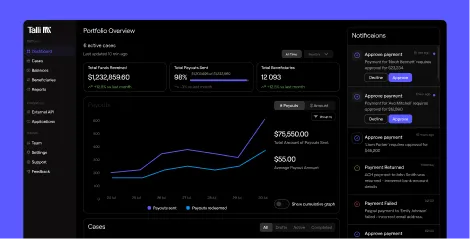
Talli's settlement distribution platform addresses these challenges through purpose-built technology designed for the complexity of modern class action and bankruptcy settlements. The platform provides automated compliance workflows that streamline KYC/AML verification, tax documentation collection, and OFAC screening requirements, reducing manual processing time by up to 80% compared to traditional methods.
For administrators managing distributions similar to FTX's scale, Talli offers:
- Global payment infrastructure: Support for 190+ countries with automated currency conversion and local payment method optimization
- Real-time tracking: Providing claimants with transparent status updates that reduce administrative inquiries by an estimated 60%
- Fraud prevention: AI-powered detection systems that identify suspicious patterns before disbursement
- Regulatory compliance: Built-in frameworks supporting evolving cryptocurrency and digital asset regulations
- Multi-provider coordination: Seamless integration with payment providers, custodians, and financial institutions
The platform's audit trail capabilities ensure complete documentation of every transaction, verification step, and compliance checkpoint—essential for court oversight and fiduciary accountability in high-stakes bankruptcy proceedings. By automating routine verification tasks while maintaining rigorous security protocols, claims administrators can focus on complex case-specific challenges rather than manual processing bottlenecks.
Frequently Asked Questions
Can I still file a claim if I missed the original deadline?
The bar date for FTX claims has passed, making new claim submissions extremely limited. Late claims may be considered under specific circumstances—such as creditors who could not reasonably have known about their claims—but require court approval. Contact the estate's claims administrator through the official Kroll portal to discuss any potential late filing options. Most creditors without approved claims on the register will not receive distributions from the current settlement process.
What happens to my distribution if I have a transferred or purchased claim?
Transferred claims face a 21-day notice period requirement. If you purchased FTX claims from original creditors, ensure the transfer was properly recorded with the estate before the February 14, 2026 record date. The original claim holder must have completed KYC requirements, or the new holder must complete verification under their own identity. Distributions go to the registered holder as of the record date, so confirm your transfer documentation is current with the claims administrator.
Will there be additional distributions after March 2026?
The estate has indicated that additional distributions may occur as remaining assets are liquidated and disputed claims are resolved. However, the March 31, 2026 distribution represents one of the final major payouts. Any subsequent distributions will likely be smaller and target remaining disputed claims or newly recovered assets. Final closure of the bankruptcy estate is expected in Q2-Q3 2026, after which no further distributions will occur.
How do I change my distribution provider after already selecting one?
Provider changes must be completed before the record date for each distribution round. Access the official FTX customer portal and navigate to your distribution preferences to modify your selection. Changes requested after the record date will not take effect until subsequent distribution rounds, if any occur. Contact your current provider's support team if you encounter technical difficulties making the change.
What currency will I receive my distribution in?
Distributions are denominated in U.S. dollars, with conversion handled by your selected distribution provider. BitGo and Kraken may offer stablecoin options (USDC or USDT) for creditors preferring digital assets. Payoneer converts to your local currency based on exchange rates at the time of distribution. Specify your preference during the provider selection process—currency options vary by provider and your jurisdiction.