.svg)


.svg)
Health insurers are estimated to distribute $759 million in MLR rebates in 2026, yet traditional paper check processes waste millions on printing, postage, and escheatment compliance. As consumers increasingly expect digital healthcare payment experiences and digital disbursements can reduce processing costs substantially, healthcare payers face a clear mandate: modernize reimbursement operations or lose money with every envelope. Digital disbursement platforms built for regulated payouts can cut weeks from payment cycles while providing real-time tracking, auditable payment records, and compliance-focused controls.
Key Takeaways
- Health insurers are estimated to issue $759 million in MLR rebates for 2026, while paper check distribution creates additional costs from uncashed checks, reissuance, and escheatment administration
- Digital payouts can reduce processing costs by eliminating much of the printing, postage, reconciliation, return handling, and reissuance associated with paper checks
- Digital payment options can give members faster alternatives to waiting for mailed checks
- Select Health reported a 150% increase in automated recurring premium payments and 37% decrease in staffing ratio after modernizing its premium payment operations
- Real-time payment status can reduce avoidable member inquiries by giving recipients clearer visibility into when and how payments are delivered
- Implementation timelines vary based on core-system integration, security review, payment workflows, testing requirements, and deployment scope
- Multi-channel options (ACH, virtual cards, PayPal, Venmo) reach unbanked members that paper checks often fail to serve
Understanding Medical Loss Ratio (MLR) Rebates in 2026
The Affordable Care Act requires health insurers to spend a minimum percentage of premium revenue on actual healthcare services. When payers fall short of these thresholds, they must return the difference to policyholders as MLR rebates, creating predictable, high-volume disbursement events that test operational efficiency.
What Are MLR Rebates?
MLR rebates represent refunds owed to policyholders when insurers spend too much on administrative costs and profits relative to medical claims. The ACA mandates specific spending ratios:
- 80% threshold for individual and small group markets (80/20 rule)
- 85% threshold for large group markets
- Calculation based on three-year rolling average
- Rebates due by September 30 following the calculation year
For 2026, insurers estimate rebates will total about $759 million, funds that must reach millions of individual policyholders, employers, and group plan administrators. Traditional check distribution for this volume generates substantial waste through printing costs, postage, address errors, and uncashed check management.
Regulatory Landscape for 2026 MLR Rebates
Payers face multiple compliance requirements when distributing rebates:
- Individual market members: Receive rebates directly via check or premium credit
- Employer-sponsored plans: Rebates are generally sent to the group policyholder, often the employer, with the applicable portion used for the benefit of plan participants according to the plan structure and governing rules
- Documentation requirements: Detailed notice explaining rebate calculation, amount, and distribution method
- Escheatment obligations: Unclaimed rebates eventually transfer to state unclaimed property funds
The escheatment process creates ongoing liability for payers, tracking uncashed checks, conducting due diligence outreach, and filing reports with multiple state agencies. Digital disbursements with higher redemption rates substantially reduce this administrative burden.
Navigating Tax Credits and Overpayment Refunds for Health Insurance Premiums
Beyond MLR rebates, healthcare payers regularly process premium refunds from multiple sources, each requiring efficient, compliant disbursement processes.
Processing Premium Overpayment Refunds
Common overpayment scenarios requiring payer refunds:
- Duplicate payments: Member autopay plus manual payment in same period
- Employer contribution errors: Group premium miscalculations requiring retroactive adjustment
- Disenrollment refunds: Coverage termination with advance premium already collected
- Rate correction refunds: Premium adjustments applied retroactively
Traditional check processing for these refunds takes 2-3 weeks, generating member complaints and tying up finance resources in exception handling. Digital disbursements compress this timeline to 1-2 days while reducing manual intervention.
Understanding Premium Tax Credit Reconciliation
Premium tax credits through ACA Marketplaces require annual reconciliation through the federal tax system. If advance premium tax credits exceed the credit ultimately allowed, the excess generally increases the taxpayer's tax liability. If the allowable credit exceeds advance payments, the difference can increase the taxpayer's tax refund. Separate payer refund scenarios can arise from policy cancellations, duplicate premium payments, and other billing adjustments.
Insurance premium refund laws vary by state, with specific timeframes for return and penalties for delays. Automated payment processing systems help payers meet these deadlines consistently while maintaining audit trails for regulatory review.
The Shift to Digital: Modernizing Healthcare Reimbursement with Online Payments
The economics of digital disbursements create compelling business cases for healthcare payers managing high-volume reimbursements.
Benefits of Digital Reimbursement for Payers and Members
Digital payment platforms deliver measurable improvements across operational metrics:
Cost Reduction:
- Digital disbursements eliminate much of the printing, postage, return handling, and reissuance required by checks
- Paper checks carry additional costs for mailing, reconciliation, exceptions, and stale payments
- Actual savings vary by payment rail, volume, and exception rate
Speed Improvements:
- Digital delivery: 1-2 days to member access
- Check mail time: 7-10 days minimum
- Member wait reduction: 80%+ faster fund availability
Operational Efficiency:
- 150% increase in automated recurring premium payments
- 32% decrease in overall paper statements
- 30% decrease in individual member inquiry call volume
- 37% decrease in staffing ratio for individual plan membership
Key Features of Online Payment Processing for Healthcare
Effective healthcare payment platforms require specific capabilities:
- Multi-channel disbursement: ACH, virtual cards, digital wallets (PayPal, Venmo), real-time payments
- Member preference storage: Reuse payment methods from premium collections for outbound disbursements
- Appropriate security and privacy controls: Protect member and payment data with access controls, audit documentation, and any HIPAA safeguards required for the specific workflow
- Core system integration: Connect to claims administration, enrollment, and billing platforms
- Automated reconciliation: Single posting files, real-time status updates, exception management
- Escheatment management: Reduce unclaimed payment burden through higher redemption rates
The digital transformation represents more than technology upgrade, it fundamentally changes the member payment experience while reducing payer operational costs.
Optimizing Payouts: Delivering Healthcare Rebates Online
Large health plans process millions of member disbursements annually, making digital delivery strategies essential for cost management and member satisfaction.
Digital Rebate Delivery Strategies
Successful digital rebate programs share common characteristics:
Member Communication Excellence:
- Email and SMS notification: "Your rebate is ready, choose how you want it"
- Clear explanation of rebate amount and calculation
- Simple selection interface for payment method
- Mobile-optimized experience for on-the-go access
Payment Method Flexibility:
- ACH direct deposit to existing bank accounts
- Virtual prepaid cards for instant access
- Digital wallet delivery (PayPal, Venmo) for younger demographics
- Paper check fallback for members preferring traditional methods
Leveraging Existing Relationships: When members already pay premiums via autopay, payers have bank account or card information on file. Using these stored payment preferences for outbound disbursements dramatically improves adoption, members trust payment methods they already use.
Strategies for Enhancing Rebate Redemption
Increasing redemption rates reduces escheatment liability and improves member satisfaction:
- Immediate notification: Alert members the moment funds are available
- Multiple reminder sequences: Follow-up communications for unclaimed payments
- Payment method choice: Let members select preferred receipt method
- Real-time tracking: Provide status visibility without phone calls
- Extended availability: Keep digital payment options active longer than check validity periods
Talli reports 95-98% redemption rates across digital disbursement programs compared with 70-80% for traditional paper methods, illustrating how multi-channel payment choice can reduce unclaimed payment exposure.
Enhancing Efficiency: Digital Solutions for Medical Loss Ratio Rebate Checks
MLR rebate distribution represents an ideal use case for digital payment platforms: predictable annual timing, large member populations, defined amounts, and clear ROI measurement.
Streamlining MLR Rebate Distribution
The digital disbursement process replaces manual check workflows:
Traditional Process:
- Calculate rebate amounts per member (weeks)
- Generate check print files
- Mail checks (7-10 days delivery)
- Process returned mail (address errors)
- Reissue returned checks
- Track uncashed checks (6+ months)
- Conduct due diligence outreach
- File escheatment reports
Digital Process:
- Calculate rebate amounts per member
- Pull member payment preferences from existing data
- Send notification with payment method selection
- Execute digital disbursement (1-2 days)
- Automated reconciliation and reporting
- Minimal escheatment due to high redemption
ROI Modeling for Digital Rebate Programs
ROI Example (100,000 MLR rebates):
- Model current all-in check costs, including printing, postage, reconciliation, returns, and reissues
- Compare those costs with the actual mix of ACH, cards, wallets, and check fallback
- Apply expected digital adoption and payment-failure rates to calculate projected savings
- Include reduced exception handling and unclaimed-property administration where historical data supports the estimate
Choosing the Right Digital Payments Partner
Evaluating disbursement vendors requires assessing healthcare-specific requirements:
- Compliance: Business Associate Agreement (BAA) execution where required
- Payment method breadth: Coverage for banked and unbanked members
- Core system integration: APIs connecting to existing claims and enrollment platforms
- Escheatment management: Automated compliance for unclaimed property reporting
- Scalability: Handle millions of transactions without performance degradation
- Implementation support: Vendor-assisted setup with defined timelines
Platforms purpose-built for insurance carriers and claims administrators offer multi-party workflow capabilities that coordinate approvals across providers, vendors, and claimants, maintaining audit trails throughout the payment lifecycle.
Driving Member Satisfaction: The Power of Digital Medical Reimbursement Accounts
Beyond one-time rebates, healthcare payers manage ongoing member reimbursements through HSA, FSA, and HRA accounts, each benefiting from digital payment infrastructure.
Features of a Modern Medical Reimbursement Account
Digital-first reimbursement accounts provide:
- Instant claim adjudication: Real-time eligibility verification and approval
- Immediate fund access: Same-day or next-day payment to member accounts
- Mobile submission: Photo-based receipt upload from smartphones
- Payment choice: ACH, virtual cards, or integration with digital wallets
- Real-time balance visibility: Current available funds and pending claims
- Automated documentation: Digital records for tax reporting and audit
The member experience shifts from waiting weeks for reimbursement checks to near-instant fund availability, a significant satisfaction driver.
Impact on Member Engagement and Retention
Digital reimbursement capabilities influence member perception and loyalty:
- Reduced friction: Faster payments remove common complaint sources
- Increased utilization: Easy access encourages appropriate healthcare spending
- Competitive differentiation: Modern payment experience distinguishes plans
- Lower support burden: Self-service reduces call center volume
When members receive healthcare reimbursements through the same digital channels they use for everyday payments, the payer relationship feels more responsive and consumer-friendly. This perception matters during enrollment decisions.
Ensuring Compliance and Security in Digital Payouts for Healthcare
Healthcare payment operations face strict regulatory requirements that digital platforms must address through purpose-built compliance infrastructure.
Regulatory Requirements for Healthcare Payments
Key compliance frameworks affecting payer disbursements:
HIPAA Privacy and Security Rules:
- Protected Health Information (PHI) safeguards for member demographics
- Payment amounts linked to medical claims require encryption
- Administrative, physical, and technical safeguards for electronic PHI
- Audit controls and access logging
Financial Regulations:
- NACHA rules for ACH payment processing
- State money transmitter requirements
- Escheatment and unclaimed property laws (vary by state)
- IRS reporting for certain payment types
ACA Compliance:
- MLR calculation methodology requirements
- Member notification content and timing
- Rebate distribution documentation
Implementing Robust Security Measures for Digital Disbursements
Enterprise-grade security and compliance requires:
Security and Compliance Controls:
- SOC 2 controls
- OFAC screening against sanctions lists
- BSA/AML controls
- Bank-grade payment infrastructure
- Configurable approval workflows
- Real-time payment tracking and reconciliation
- Complete audit trails across the payment lifecycle
- Fraud detection through pattern analysis
Platforms handling PHI on behalf of healthcare payers may need to operate as HIPAA business associates and execute BAAs, depending on the services performed and data involved.
Choosing Your Digital Payout Partner: What Healthcare Payers Need to Know
Selecting the right disbursement platform requires systematic vendor evaluation against healthcare-specific criteria.
Key Considerations for Digital Payout Platforms
Essential evaluation criteria for healthcare payers:
Integration Capabilities:
- API connectivity to core administration systems (Epic, Oracle Health, proprietary)
- File-based integration options for legacy systems
- Webhook support for real-time status updates
- CRM synchronization for member service
Payment Method Coverage:
- ACH direct deposit (lowest cost option)
- Virtual prepaid cards (instant delivery)
- Digital wallets (PayPal, Venmo for younger demographics)
- Real-time payment rails (immediate fund availability)
- Paper check fallback (compliance with member preferences)
Scalability Requirements:
- Handle millions of annual transactions
- Support catastrophe events requiring mass disbursements
- Maintain performance during peak periods
- Geographic coverage across all operating states
Implementation Timeline:
- Deployment timing depends on integration complexity and existing payer infrastructure
- Discovery defines payment workflows, data requirements, and controls
- Technical integration may use APIs or file-based connections
- Testing validates payment routing, reconciliation, security, and exception handling
- Rollout can be phased before broader production deployment
Evaluating Potential Partners for Healthcare Reimbursements
Due diligence questions for vendor selection:
- Compliance: Do you execute HIPAA BAAs where required? Provide SOC 2 reports?
- Experience: What healthcare payer clients do you currently serve?
- Integration: How do you connect to core administrative systems?
- Support: What implementation assistance and ongoing support is included?
- Pricing: What is the per-transaction cost by payment method?
- Escheatment: How do you handle unclaimed payment compliance?
Red flags during evaluation:
- Vendor unable or unwilling to sign HIPAA BAA when required (potentially disqualifying)
- Unrealistic timeline promises without understanding integration complexity
- Claims of very high digital adoption without member education investment
- Limited payment method options restricting member choice
- No healthcare-specific customer references
Why Choose Talli for Healthcare Payouts
Talli's digital disbursement platform addresses healthcare payer requirements through purpose-built capabilities:
- Multi-channel payment options: ACH, virtual prepaid cards via Patriot Bank N.A., digital wallets (PayPal, Venmo), and paper check fallback
- Compliance automation: Integrated KYC verification, OFAC screening, and audit-ready documentation
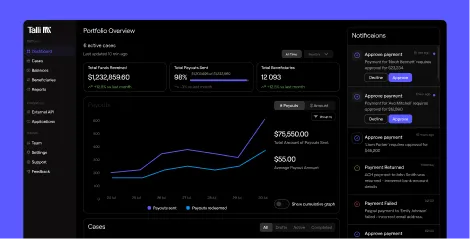
- Real-time tracking: Live visibility into payment status, completion rates, and fund flows
- Scalable infrastructure: Handles high-volume daily claims payments and catastrophe events
- Fast implementation: No-code dashboard with low-code API integration
- Bank-grade security: SOC 2, OFAC controls, BSA/AML compliance
For healthcare payers seeking to modernize premium rebate and reimbursement processes, Talli provides the regulated payment infrastructure that connects all parties, maintaining auditable payment status, ownership, and approvals across the entire payment lifecycle.
Frequently Asked Questions
What happens to MLR rebates when members have moved or addresses are incorrect?
Incorrect addresses represent a primary failure point for paper check distribution. Returned mail triggers additional tracking, outreach, and reissuance costs for payers. After multiple failed attempts, checks remain uncashed and eventually escheat to state unclaimed property funds. Digital disbursements bypass address issues entirely, email and SMS delivery reach members regardless of physical address changes, and stored payment preferences (bank accounts, digital wallet accounts) persist through address transitions.
How do healthcare payers handle MLR rebates for employer-sponsored group plans?
Group plan rebates follow different distribution paths than individual market rebates. Payers send rebates to employers (plan sponsors), who then must determine the applicable portion that constitutes plan assets and use it for participant benefit, either through employee refunds, reduced future premium contributions, or plan benefit improvements. This multi-tier distribution adds complexity, digital platforms can automate both the payer-to-employer disbursement and provide tools for employer-to-employee distribution, maintaining documentation throughout the chain for compliance verification.
Can digital payout platforms integrate with legacy core administrative systems?
Yes, but the integration approach varies by system architecture. Modern platforms offer both API-based real-time integration and file-based batch processing via SFTP. Legacy systems without documented APIs typically use file-based integration as the primary connection method, with manual file uploads during pilot phases transitioning to automated scheduled transfers. Integration timelines range from 4-6 weeks for modern systems to 8-12 weeks for complex legacy environments, vendor technical teams assist throughout.
How do digital rebates work for members without bank accounts or smartphones?
Digital platforms address unbanked populations through prepaid debit cards delivered via mail or made available for pickup at retail locations. Virtual cards can be sent via email for members with internet access but no bank accounts. Gift card options through retail networks (Amazon, Target) provide additional flexibility for small-value disbursements. Paper check fallback remains available for members who explicitly prefer traditional methods. The goal is maximum redemption through payment choice rather than forcing single-channel distribution.
What metrics should healthcare payers track when implementing digital disbursements?
Key performance indicators for digital disbursement programs include: digital adoption rate (target 60-75% in year one), payment failure rate (target under 5%), member support inquiries related to payments (measure reduction from baseline), time to payment completion (target 1-2 days versus previous check cycle), escheatment rate (measure reduction from historical levels), cost per transaction (compare digital versus paper), and member satisfaction scores related to payment experience. Monthly reporting dashboards should track these metrics with trend analysis over time.