.svg)


.svg)
Transfer agents serve as the official recordkeepers for companies that issue securities, maintaining the shareholder registry that supports ownership changes, dividend payments, proxy distribution, tax reporting, and corporate actions. SEC transfer agent data shows 324 registered transfer agents for fiscal year 2025, and any transfer agent performing functions for qualifying securities must be registered with the SEC or the appropriate bank regulator. For companies managing complex shareholder services, bankruptcy distributions, settlement payments, or high-volume dividend programs, understanding how transfer agents operate, and how modern payment technology integrates with their functions, is essential for optimizing shareholder experience while maintaining regulatory compliance.
Key Takeaways
- Transfer agents maintain the official shareholder registry, process transfers, issue and cancel certificates, support dividend payments, and help administer corporate actions.
- Transfer agents performing functions for qualifying securities must be registered with the SEC or the appropriate bank regulator.
- SEC transfer agent data shows 324 registered transfer agents for fiscal year 2025.
- SEC Rule 17Ad-2 generally requires registered transfer agents to turn around at least 90% of routine transfer items within three business days.
- The 2024 Regulation S-P amendments add incident response, customer notification, service provider oversight, and recordkeeping requirements for covered transfer agents.
- Transfer agents and custodians serve different roles: transfer agents maintain issuer records, while custodians safeguard assets for investors.
- Modern shareholder servicing increasingly depends on digital identity verification, electronic payment options, real-time tracking, and audit-ready reporting.
Understanding the Role of a Transfer Agent
A transfer agent is a financial services provider, bank, trust company, or registered entity that works on behalf of an issuer to maintain shareholder records and process changes in ownership. The transfer agent is the system of record for registered shareholders, meaning investors who hold shares directly on the issuer’s books rather than through a broker or nominee.
For issuers, this role is foundational. The shareholder registry determines who receives dividends, proxy materials, tax forms, corporate action notices, and account statements. If the registry is inaccurate, the issuer may send money to the wrong person, miss required communications, or create reconciliation problems during mergers, stock splits, tender offers, or bankruptcy-related distributions.
A transfer agent’s responsibilities typically include:
- Maintaining the master shareholder file
- Recording names, addresses, tax identification information, and holdings
- Processing ownership transfers
- Issuing and canceling certificates or book-entry positions
- Supporting dividend and interest payments
- Mailing or electronically delivering proxy and investor communications
- Managing lost shareholder searches and escheatment workflows
- Preparing tax records and transaction statements
The transfer agent also supports investor confidence. Shareholders need a reliable point of contact when they change addresses, update tax forms, replace lost certificates, transfer shares to heirs, or confirm dividend status. A strong transfer agent reduces friction for shareholders while giving issuers a cleaner, more defensible operating record.
What Transfer Agents Actually Do
Transfer agents perform several connected functions that together form the backbone of shareholder servicing.
Recordkeeping: The transfer agent maintains the issuer’s registered shareholder list, including ownership positions, contact details, tax documentation, and transaction history. This record supports dividends, proxy voting, regulatory reporting, and corporate actions.
Issuance, transfer, and cancellation: Transfer agents issue new shares, cancel surrendered shares, process transfers between owners, and update book-entry positions. In modern programs, most shares are held electronically rather than through physical stock certificates.
Dividend payment support: Transfer agents often act as paying agents for registered shareholders, distributing cash dividends or stock dividends based on the issuer’s instructions. For beneficial shareholders holding through brokers, payments typically move through depositories and intermediaries before reaching the investor.
Shareholder communication: Transfer agents help distribute annual reports, proxy materials, account statements, dividend notices, and corporate action instructions. They also support shareholder inquiries through call centers, portals, mail, and email.
Compliance and reporting: Transfer agents support SEC transfer agent rules, IRS reporting, cost-basis records, withholding workflows, and shareholder documentation. For issuers with complex distributions, tax compliance becomes a major operational dependency.
Escheatment management: Transfer agents help identify lost, dormant, or unresponsive shareholders and support abandoned property workflows under state law. This includes outreach, returned-mail tracking, dormancy monitoring, and reporting.
Transfer Agent vs. Custodian: Why the Difference Matters
Transfer agents and custodians both support securities ownership, but they serve different parties and perform different functions.
A transfer agent works for the issuer. Its job is to maintain the official record of registered owners and process changes on the issuer’s books. A custodian works for investors or institutions. Its job is to hold and safeguard securities or other assets for beneficial owners.
The distinction matters because many investors do not appear by name on the issuer’s registered shareholder list. Instead, they hold shares through brokerage accounts. In those cases, the issuer’s transfer agent may see a nominee or depository position, while the broker or custodian maintains the beneficial owner’s customer-level account record.
For registered shareholders, the transfer agent is usually the primary service contact. For beneficial shareholders, the broker or custodian is usually the first point of contact. This affects how dividends are delivered, how proxy materials move, and how shareholder questions are resolved.
Core SEC Requirements for Transfer Agents
Transfer agents that perform functions for qualifying securities must register with the SEC or the appropriate bank regulatory agency. The SEC’s transfer agent rules are designed to protect investors, improve settlement efficiency, and support accurate ownership records.
One of the most important operating standards is SEC Rule 17Ad-2, which generally requires every registered transfer agent, except when acting as an outside registrar, to turn around at least 90% of routine transfer items within three business days during a month. This rule matters because slow or inaccurate transfers can delay secondary trades, corporate actions, and shareholder access to funds.
Transfer agents are also subject to rules covering recordkeeping, safeguarding of securities and funds, annual reporting, lost or stolen certificates, and written procedures. These obligations are especially important for issuers with large shareholder populations or complex ownership events.
The 2024 Regulation S-P amendments add another layer of responsibility. Covered transfer agents must maintain written incident response programs, address unauthorized access to customer information, oversee service providers, keep required records, and notify affected individuals within the required timeframe when sensitive customer information is involved. Larger entities had a December 3, 2025 compliance date, while smaller entities have until June 3, 2026.
For issuers, the practical takeaway is simple: transfer agent selection is not just an administrative decision. It affects cybersecurity readiness, shareholder experience, compliance evidence, and payment execution.
Choosing a Transfer Agent Provider
Selecting a transfer agent requires more than comparing account maintenance fees. Issuers should evaluate the provider’s ability to handle the full shareholder lifecycle, including routine transfers, high-volume transactions, corporate actions, dividend payments, lost shareholder outreach, tax reporting, and digital account servicing.
Key selection criteria include:
- Experience: The provider should understand IPOs, direct listings, SPAC transactions, Regulation A offerings, mergers, stock splits, tender offers, dividend programs, and private-to-public transitions.
- Accuracy: Shareholder records must be updated cleanly and supported by documented procedures.
- Responsiveness: Shareholders need timely help with account access, tax documents, address updates, transfers, and lost certificate issues.
- Technology: Modern portals, API connectivity, digital forms, identity verification, and automated reporting reduce manual workload.
- Security: Data protection, access controls, audit reporting, encryption, vendor oversight, and incident response planning are now core requirements.
- Payment readiness: Dividend and distribution programs should support multiple payment methods, status tracking, and exception management.
Private companies may not need a transfer agent in the same way public companies do, but many still use one as they grow. Institutional investors, crowdfunding campaigns, tender offers, secondary liquidity programs, and IPO planning can all make professional shareholder recordkeeping more valuable.
Major Transfer Agent and Proxy Service Models
The transfer agent market includes large specialist providers, bank-affiliated providers, and niche firms that focus on smaller issuers or private markets. Issuers should avoid choosing based only on brand familiarity. Provider ownership, technology platforms, service levels, and integration options can change over time.
EQ Shareowner Services is a major transfer agent provider in the U.S. market. It became Equiniti Trust Company d/b/a EQ Shareowner Services after Equiniti acquired Wells Fargo Shareowner Services in 2018. That acquisition is a useful reminder for issuers: legacy provider names can remain familiar long after the underlying business has changed.
Broadridge is widely known for investor communications, proxy distribution, and vote processing. It plays a major role in the beneficial shareholder communication ecosystem, where materials often need to move through brokers and intermediaries before reaching the end investor.
Bank-affiliated providers can offer advantages when issuers need escrow, paying agent, corporate trust, or banking services alongside shareholder servicing. However, issuers should confirm the actual transfer agent entity, regulatory registration, service model, and technology stack before assuming that a bank relationship automatically covers shareholder servicing needs.
Traditional vs. Modern Stock Issuance
Stock issuance has moved steadily away from paper certificates toward electronic book-entry systems. The Direct Registration System allows shareholders to hold securities directly on the issuer’s books in book-entry form, reducing the operational risk associated with physical certificates.
Book-entry ownership offers several advantages:
- Faster transfer processing
- Lower risk of lost or stolen certificates
- Lower replacement and mailing costs
- Easier corporate action administration
- Cleaner audit trails
- Better digital shareholder access
Physical certificates still create operational complexity. If a certificate is lost, stolen, or destroyed, the shareholder usually must contact the transfer agent, request a stop transfer, complete an affidavit, provide required identification, and obtain any required indemnity bond or Medallion Signature Guarantee. These steps protect issuers and shareholders from fraudulent transfers, but they also add time and cost.
Modern issuance workflows increasingly pair transfer agent records with compliance automation, digital onboarding, and electronic payment options. This reduces manual handling while improving the speed and defensibility of shareholder servicing.
Technology in Shareholder Servicing
Technology is reshaping transfer agent operations across identity verification, account servicing, corporate actions, payment delivery, and reporting. The goal is not to remove human judgment from every workflow. The goal is to automate routine tasks while preserving expert review for exceptions, disputes, estates, fraud flags, and complex corporate actions.
Modern shareholder servicing platforms often include:
- Self-service portals for shareholders
- Digital tax form collection
- Electronic delivery preferences
- Automated address validation
- Fraud monitoring and identity checks
- Real-time payment status
- Exception queues for failed payments or missing documents
- API integrations with issuer systems
- Audit-ready activity logs
For issuers, these tools reduce call volume, improve shareholder satisfaction, and provide better visibility into unresolved issues. For transfer agents, automation helps manage scale without sacrificing controls.
Digital disbursement infrastructure is especially important when money must move to large, fragmented shareholder populations. Paper checks create returned mail, stale-dated payments, stop payments, reissuance work, and escheatment exposure. Digital options can reduce these problems when paired with clear communication, identity verification, and fallback payment paths.
Corporate Governance and Shareholder Servicing
Transfer agents support corporate governance by maintaining accurate records and helping shareholders exercise their rights. Proxy voting, annual meeting notices, consent solicitations, dividend notices, and corporate action instructions all depend on clean ownership data and reliable communication channels.
Strong shareholder servicing supports governance in five practical ways:
- Accurate shareholder analytics for boards and management
- Timely distribution of proxy and annual meeting materials
- Transparent vote tabulation and reporting
- Complete records for corporate actions
- Clear evidence of communications, payments, and exceptions
Poor servicing creates governance risk. Returned mail, outdated records, incomplete tax documentation, unresolved payment failures, and inconsistent proxy distribution can all undermine confidence in the issuer’s processes.
This is why many issuers now evaluate transfer agents alongside payment infrastructure, cybersecurity controls, and reporting tools. Shareholder servicing is no longer a back-office recordkeeping function only. It is part of issuer compliance, investor relations, and operational resilience.
Why Talli for Shareholder Distributions
Transfer agents maintain ownership records, but many issuers, claims administrators, trustees, and settlement teams also need reliable payment infrastructure for dividends, bankruptcy distributions, settlement payouts, and other high-volume disbursements. This is where Talli fits into the shareholder servicing workflow.
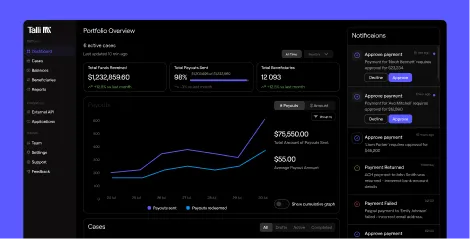
Talli is an AI-driven digital payments platform built for compliance-critical legal and shareholder distributions. It helps teams launch, fund, and track disbursement campaigns through a single dashboard while maintaining fund segregation, compliance checks, and court-ready reporting.
Talli supports multi-channel payouts, including ACH direct deposit, prepaid Mastercard, PayPal, Venmo, gift cards, and check fallback when needed. This flexibility helps reach shareholders or claimants who may not respond to paper checks alone.
The platform also includes built-in KYC verification, OFAC screening, W-9 collection, fraud mitigation, and audit trails. Dedicated FBO account structures help preserve Qualified Settlement Fund ownership and support FDIC-compliant payouts where applicable.
For shareholder services teams, the operational value is visibility. Administrators can track payment status, completion rates, failed payments, claimant engagement, and fund balances in real time. Instead of waiting for check-clearing reports or manual reconciliation, teams can identify exceptions early and resolve them before deadlines create compliance pressure.
Talli’s role is not to replace the transfer agent’s registry function. It complements that function by improving the distribution layer, especially when issuers or administrators need faster payments, better reporting, and stronger controls across large recipient populations.
Talli Conclusion
Transfer agents remain essential to accurate shareholder ownership records, corporate actions, dividends, proxy delivery, and investor servicing. But the shareholder experience increasingly depends on more than recordkeeping. Issuers also need payment flexibility, automated compliance, real-time reporting, and defensible audit trails.
For teams managing complex shareholder distributions, Talli helps close the gap between accurate records and successful payment delivery. By combining digital payment options, compliance automation, fund segregation, and real-time tracking, Talli gives issuers and administrators a more controlled way to move money while reducing the operational drag of paper checks and manual reconciliation.
Frequently Asked Questions
What is the main role of a transfer agent?
A transfer agent maintains the official shareholder registry for an issuer. It records ownership changes, processes transfers, issues and cancels certificates or book-entry positions, distributes dividends, supports proxy communications, and helps manage shareholder inquiries.
Is every public company required to use a registered transfer agent?
Any transfer agent performing functions for qualifying securities must be registered with the SEC or the appropriate bank regulator. Most public companies use a professional registered transfer agent, although some companies may act as their own transfer agent if they meet applicable requirements.
What is the difference between a transfer agent and a custodian?
A transfer agent works for the issuer and maintains registered ownership records. A custodian works for investors or institutions and safeguards assets for beneficial owners. Registered shareholders usually work directly with the transfer agent, while beneficial shareholders usually work through their broker or custodian.
Do transfer agents handle dividend payments?
Yes, many transfer agents act as paying agents for registered shareholders. They may distribute dividends directly to registered holders and coordinate with depositories or intermediaries for beneficial shareholders who hold through brokers.
Where does Talli fit into shareholder servicing?
Talli supports the distribution layer. While the transfer agent maintains ownership records, Talli helps administrators deliver funds through digital payment options, automate compliance checks, track payment status, and maintain audit-ready reporting for shareholder distributions, bankruptcy payouts, and settlement payments.