.svg)


.svg)
California's Client Trust Account Protection Program (CTAPP) requires attorneys handling client funds to maintain strict compliance with trust accounting regulations, with up to 800 attorneys selected annually for CTAPP compliance reviews. Although many law firms refer to these reviews as CTAPP trust account audits, California formally treats them as compliance reviews that test whether client funds were properly held, reconciled, documented, and disbursed. These reviews evaluate trust accounting accuracy, recordkeeping completeness, and client notification practices, with most review costs ranging from $5,000 to $10,000, though poor recordkeeping, slow document production, or unclear communications can increase the cost. Modern digital disbursement platforms can automate compliance documentation and fund segregation workflows, turning audit preparation from a scramble into a repeatable process that protects both your license and your clients' funds.
Key Takeaways
- CTAPP trust account audits are formally compliance reviews, but they function like a detailed test of trust accounting controls, records, and disbursement documentation
- CTAPP reviews generally cost $5,000 to $10,000 for standard reviews, with higher costs possible when records are incomplete or difficult to review
- Most review findings stem from missing documentation, incomplete ledgers, weak reconciliation records, or inadequate attorney oversight
- Monthly three-way reconciliation is a core trust accounting control for matching bank statements, trust account journals, and individual client ledgers
- Solo practitioners and small firms with gross receipts of $150,000 or less can apply for a free State Bar CPA review exemption
- Purpose-built disbursement infrastructure helps law firms preserve fund segregation, document payment activity, and produce audit-ready reports faster
Understanding CTAPP Trust Accounts: What Is an IOLTA Account?
The Client Trust Account Protection Program represents California's proactive approach to safeguarding client and third-party funds held by attorneys. Rather than relying only on discipline after misconduct occurs, CTAPP adds preventative compliance monitoring through annual trust account registration, self-assessments, certifications, and structured compliance reviews.
An Interest on Lawyers Trust Account, commonly called an IOLTA account, is used when an attorney holds client or third-party funds that are nominal in amount or held for a short period of time. The interest generated on pooled IOLTA funds supports legal aid programs, while the principal remains protected for the client or third party entitled to it.
California attorneys who handle client funds must understand that an IOLTA account is not a business convenience account. It is a fiduciary account. That distinction affects every deposit, disbursement, ledger entry, reconciliation, and communication tied to the funds.
The Purpose of IOLTA Accounts in Legal Practice
Rule 1.15 of the California Rules of Professional Conduct requires funds held for the benefit of clients or other persons to be deposited into one or more identifiable trust accounts. These accounts must be labeled as trust accounts or use words of similar import, and attorneys must maintain the records needed to show where the funds came from, who owns them, and how they were disbursed.
IOLTA accounts commonly hold:
- Settlement proceeds awaiting distribution
- Retainer deposits before fees are earned
- Estate funds during probate administration
- Real estate escrow deposits
- Court-ordered funds awaiting supervised distribution
- Third-party lien or reimbursement amounts
The purpose is simple: client and third-party money must remain separate from law firm operating capital. That separation protects clients, reduces disputes, and gives regulators a clear accounting record if questions arise.
Key Differences: Operating vs. Trust Accounts
Operating and trust accounts serve fundamentally different purposes. Treating them as interchangeable is one of the fastest ways to create a compliance problem.
Trust accounts:
- Hold client or third-party funds
- Require detailed per-client or per-matter ledgers
- Are subject to Rule 1.15 recordkeeping duties
- Must be reconciled against bank records and internal ledgers
- Require attorney oversight even when staff handle bookkeeping tasks
Operating accounts:
- Hold earned firm revenue
- Pay firm expenses, payroll, rent, taxes, and vendors
- Do not hold unearned client funds or third-party funds
- Can be managed with standard business accounting processes
Even temporary mixing of these funds, such as paying a firm expense from trust because the operating account is short, can constitute commingling. Intent may affect discipline, but it does not erase the violation. The safest approach is to build workflows where the wrong payment path is difficult to trigger in the first place.
Essential Rules for Passing a CTAPP Trust Account Audit
Core IOLTA Account Rules and Best Practices
California's trust accounting requirements go beyond basic bookkeeping. Attorneys must register reportable client trust accounts, complete the required self-assessment, certify compliance, maintain records, and ensure that the accounting system can support a CTAPP review if selected.
The CTAPP self-assessment and firm review tools focus on the core compliance areas every attorney handling client funds must address:
Client notification and distribution
- Promptly notify clients or third parties when funds are received on their behalf
- Distribute undisputed funds once entitlement is established
- Keep written records of notices, authorizations, and disputed amounts
- Avoid delaying disbursements because internal records are incomplete
Reconciliation and accounting
- Complete monthly three-way reconciliation
- Match the bank statement, trust account journal, and client ledgers
- Maintain running balances for each client or matter
- Investigate discrepancies before they compound
Record retention and oversight
- Keep trust account records for at least five years
- Retain bank statements, canceled checks, deposit records, journals, ledgers, and reconciliation worksheets
- Document attorney review of staff work
- Maintain policies and procedures that explain who can approve, initiate, and review trust transactions
A strong CTAPP process is not just a binder of forms. It is a system of controls that proves funds were held, reconciled, and disbursed properly.
Avoiding Common Client Trust Accounting Pitfalls
The most common CTAPP audit problems do not always start with theft or mathematical errors. Many begin with ordinary operational gaps that grow into regulatory risk because nobody notices them early enough.
Five areas deserve particular attention:
- Missing client ledgers: Every client or matter with trust funds should have an individual ledger showing deposits, disbursements, and running balance.
- Incomplete reconciliation records: A monthly reconciliation is not complete unless it compares all three required components and explains outstanding items.
- Weak client notification documentation: If a client or third party must be notified, the firm should be able to prove when and how notice occurred.
- Insufficient attorney oversight: Delegating bookkeeping is allowed, but delegating responsibility is not. Attorneys must supervise and review the process.
- Commingling incidents: Any mixing of trust and operating funds creates risk, even if the funds are later corrected.
Firms using audit trail systems can demonstrate compliance through organized, time-stamped records instead of reconstructing payment history from emails, spreadsheets, and bank downloads.
Implementing Robust Legal Accounting Software
Features of Effective Legal Accounting Software
Manual spreadsheet-based trust accounting becomes risky as case volume grows. Spreadsheets can work for very simple trust activity, but they depend heavily on manual entry, consistent naming conventions, and disciplined version control. Once a firm handles multiple matters, multiple staff users, settlement distributions, liens, or reissued payments, the chance of missed entries and reconciliation mismatches rises quickly.
Effective legal accounting software should support:
- Automated three-way reconciliation workflows
- Individual client ledger generation with running balances
- Trust account journal tracking
- Transaction-level audit history
- Client notification tracking
- Attorney review and approval documentation
- Role-based access controls
- Exportable records for CPA and State Bar review
The software should also help the firm preserve supporting documents. A transaction record is more useful when it connects to the settlement statement, deposit confirmation, payment authorization, claimant record, or court approval behind it.
Integration Requirements That Matter
Trust accounting software should not operate in isolation. When it is disconnected from banking, payment, and document systems, staff often end up maintaining parallel records, which is where errors appear.
Helpful integrations include:
- Bank feed connections for transaction import
- Document management for supporting records
- Calendar reminders for reconciliation deadlines
- Payment status data for disbursement tracking
- Export tools for CPA review packages
- Internal approval workflows for high-risk payments
Software does not remove the attorney's duty to supervise trust accounting. It does, however, make that supervision easier to prove. A CTAPP reviewer should be able to see who entered a transaction, who approved it, when reconciliation was completed, and whether any discrepancy was resolved.
Trust Accounting Example: The Three-Way Reconciliation Process
Three-way reconciliation is the central control in trust accounting. It compares three separate views of the same money:
- The bank statement
- The trust account journal
- The individual client or matter ledgers
The process usually starts with the bank balance at month-end. The firm adjusts for outstanding checks, deposits in transit, bank fees, or other timing items. Then it compares the adjusted bank balance to the trust account journal. Finally, the total of all individual client ledger balances must match the trust account journal.
When all three match, the reconciliation is complete. When they do not match, the discrepancy must be researched and documented. A difference of even a few dollars can signal a posting error, duplicate entry, missing client ledger transaction, or unauthorized trust account charge.
For CTAPP audit readiness, the goal is not just to reconcile. The goal is to keep evidence that reconciliation happened. Each month should produce a retained reconciliation package showing the bank statement, journal balance, client ledger total, outstanding items, corrections, and attorney review.
Ensuring Fiduciary Compliance with Fund Segregation Architecture
The Importance of Account Segregation for QSFs
Qualified Settlement Funds, or QSFs, are often used in complex settlements because they provide a structured way to hold and distribute settlement funds after court or governmental approval. Under QSF regulations, a QSF must satisfy specific federal tax requirements, including establishment by an order of, or approval by, a governmental authority and use to resolve or satisfy claims.
QSF administration is not identical to ordinary IOLTA trust accounting, but both require disciplined fund segregation and recordkeeping. Settlement funds should remain separate from law firm operating funds, claimant-level records should be complete, and disbursement authority should be traceable to the governing settlement documents.
Proper fund segregation helps law firms and administrators:
- Preserve intended QSF tax treatment
- Reduce commingling risk
- Simplify court reporting
- Maintain matter-level fund visibility
- Support claimant-level distribution records
- Reduce reconciliation complexity
For firms managing settlement distributions, dedicated For Benefit Of account structures can support the segregation and matter-level tracking CTAPP compliance depends on. These structures are especially useful when a settlement involves large claimant populations, multiple payment methods, lien resolution, tax documentation, or court reporting deadlines.
How Dedicated FBO Accounts Simplify Audit Preparation
Dedicated account architecture turns compliance documentation from a manual reconstruction exercise into an operational reporting function. Each settlement or matter can maintain its own fund tracking, reducing the risk that one distribution is confused with another.
Benefits for CTAPP and settlement administration include:
- Balance visibility: Current fund balances are easier to verify by matter
- Transaction history: Deposits and disbursements are tied to specific settlements
- Court-ready reporting: Reports can be generated without rebuilding records manually
- Matter-level segregation: Multiple settlements can be managed without cross-contamination
- Cleaner reconciliation: Exceptions are easier to identify and resolve
Law firms handling class action or mass tort settlements benefit from platforms that embed this architecture instead of forcing teams to configure generic banking tools around specialized legal compliance needs.
Automating Compliance with KYC, OFAC, and Tax Documentation
Streamlining Claimant Verification for Audit Readiness
Trust account disbursements carry verification considerations beyond basic bookkeeping. While U.S. law firms are not generally subject to full BSA-style KYC program requirements, payment providers and financial institutions often perform identity checks, and OFAC sanctions screening helps prevent funds from reaching prohibited parties.
Manual verification processes create bottlenecks and documentation gaps. Automated systems can integrate these checks into the disbursement workflow so the firm can retain proof that verification occurred before funds moved.
KYC verification can support:
- Identity confirmation against verified databases
- Address verification for physical disbursements
- Duplicate claimant detection
- Completion timestamps for review records
OFAC screening can support:
- Screening against U.S. Treasury sanctions lists
- Documentation of screening results
- Alert generation for possible matches
- Escalation workflows for legal review
Tax documentation can support:
- Digital W-9 collection
- TIN validation workflows
- 1099-MISC or 1099-NEC preparation where applicable
- Backup withholding calculations when required
- Year-end reporting records
Platforms that improve W-9 completion through smart reminders reduce the manual follow-up that consumes staff time and creates compliance gaps. They also help create a single record showing who was paid, how they were verified, what tax documentation was collected, and what exceptions remain open.
The Role of AI in Preventing Fraud and Ensuring Compliance
Settlement fraud has increased dramatically, and adjacent payment-heavy sectors show the scale of the risk: insurance fraud alone is estimated to cost the United States $308.6 billion annually. For settlement administrators, the more practical concern is not the industry-wide number. It is whether the firm can detect duplicate, synthetic, ineligible, or suspicious claims before money leaves the account.
AI-assisted fraud detection can support:
- Pattern recognition across claim submissions
- Device and behavioral analysis
- Duplicate identity detection
- Anomaly flags for unusual activity
- Review queues for staff escalation
- Documented fraud review trails
For trust account compliance, these systems create auditable evidence that funds were distributed to verified recipients through approved processes. That documentation matters when a reviewer asks how the firm controlled payment eligibility, prevented unauthorized disbursements, and resolved exceptions.
Real-Time Reporting and Audit-Ready Records
Generating Court-Ready Accounting Reports Automatically
CTAPP trust account audits require comprehensive documentation. When selected, attorneys must act quickly, and weak records can make the process more expensive and stressful. The firm should not have to rebuild a year of trust activity from bank downloads and email threads.
Automated reporting and reconciliation systems can generate:
- Payment status reports by matter
- Fund balance summaries
- Disbursement histories
- Failed or returned payment reports
- Claimant verification logs
- OFAC screening records
- W-9 completion reports
- Three-way reconciliation support
- Court accounting packages
The value is not just speed. The value is consistency. When records are standardized, reviewers can follow the chain from settlement approval to funding, payment authorization, disbursement, claimant receipt, and final reconciliation.
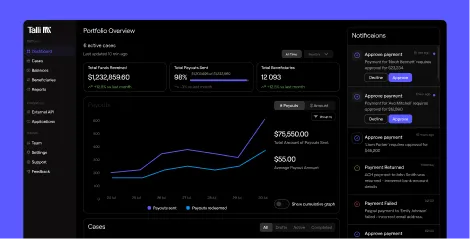
Leveraging Dashboards for Continuous Trust Account Monitoring
Real-time visibility enables proactive compliance management. Instead of waiting until month-end to discover problems, firms can monitor exceptions as they happen.
Key metrics to track include:
- Current trust account balances by matter
- Outstanding disbursements awaiting processing
- Failed or returned payments
- Verification status for pending payments
- Reconciliation completion status
- Unresolved exception flags
- Dormant or unclaimed funds
Attorneys using real-time tracking can resolve discrepancies faster because the issue is still fresh. A payment failure discovered today is easier to fix than one discovered six months later during a review.
Dashboards also help with supervision. A partner or responsible attorney can review pending approvals, exception reports, and reconciliation status without relying solely on staff summaries.
Optimizing Trust Account Management: Cost Reduction and Efficiency
The Economic Benefits of Digital Disbursement Platforms
Traditional paper check disbursements carry hidden costs that go beyond printing and postage. They require check stock controls, mailing, address correction, stale check tracking, stop payments, reissuance, reconciliation, and eventual unclaimed property workflows.
Paper check costs often include:
- Printing and postage
- Manual processing time
- Bank reconciliation labor
- Stop payment and reissuance work
- Returned mail handling
- Unclaimed funds tracking
- Escheatment reporting
Digital payment workflows can reduce:
- Manual data entry
- Payment delivery delays
- Reconciliation burden
- Returned mail volume
- Reissuance requests
- Staff follow-up time
For high-volume settlement distributions, the difference can be material. Digital disbursement can reduce costs while improving documentation quality, especially when the system links payment activity to claimant records and matter-level accounting.
Platforms designed around digital disbursement statistics often show the strongest value in large claimant populations, where small improvements in redemption, reissuance, and reconciliation multiply across thousands of payments.
Reducing Unclaimed Funds and Escheatment Liabilities
Unclaimed settlement funds create ongoing compliance burdens. A paper check may be issued, but that does not mean the claimant actually received and deposited the funds. Lost mail, outdated addresses, stale checks, unbanked claimants, and confusing instructions all increase abandonment risk.
Digital disbursement platforms can improve claims redemption rates through:
- Multiple payment method options
- Faster delivery
- Automated reminders
- Mobile-friendly claimant flows
- Simplified payment selection
- Real-time payment status tracking
Higher redemption rates reduce the population of unresolved payments. That means fewer stale checks, fewer reissuance requests, fewer dormant records, and less pressure on staff to manage unclaimed funds long after the distribution should have been closed.
Multi-Channel Payment Distribution Options
Modern disbursement platforms offer multiple payment channels, each with different cost, speed, and claimant experience characteristics.
Common options include:
- ACH direct deposit: Cost-effective for claimants with bank accounts, typically delivered in one to two business days
- Prepaid Mastercard: Useful for unbanked claimants or claimants who prefer card access, with virtual and physical card options
- Digital wallets: Familiar for claimants who already use PayPal or Venmo
- Gift cards: Useful in some low-value distributions where permitted by the settlement structure
- Wire transfers: Appropriate for certain high-value or international payments
- Paper checks: A necessary fallback for claimants who cannot or will not use digital methods
The best distribution strategy does not force every claimant into one channel. It starts with digital-first options and preserves alternatives for accessibility, claimant preference, and settlement-specific requirements.
A multi-channel payouts strategy supports both operational efficiency and claimant access. For CTAPP audit readiness, the important point is that every payment method should still produce a clear record showing who was paid, when, how, under what authorization, and whether the payment was completed.
Preparing for Your CTAPP Trust Account Audit: A Practical Checklist
Key Documents to Prepare for a CTAPP Trust Account Audit
When selected for a CTAPP review, the firm should be ready to produce records quickly. Organizing these materials before selection reduces cost, stress, and the likelihood of findings caused by missing documentation.
Core trust account records:
- Bank statements for all trust accounts
- Account journals with complete transaction histories
- Individual client or matter ledgers
- Monthly three-way reconciliation worksheets
- Outstanding check and deposit records
- Deposit slips and wire confirmations
- Canceled checks or check images where available
Client and matter support:
- Settlement statements
- Client notification records
- Payment authorization documents
- Disbursement instructions
- Lien or third-party payment records
- Records of disputed funds
- Written client communications
Oversight and policy documents:
- Trust accounting policies and procedures
- Staff training records
- Attorney review documentation
- Access control records
- Corrective action records
- Prior review findings and remediation steps, if any
A strong file should let the reviewer trace funds from receipt to final disbursement without relying on oral explanations. If the attorney has to explain where the records are, the system is already showing strain.
Conducting an Internal Audit Before the External Review
A practical internal audit is to pick one large matter and answer five questions from the records:
- What was the opening trust balance for the matter?
- What deposits were received, and from whom?
- What disbursements were made, and why?
- What is the current balance?
- What client or third-party notices were sent?
If the firm can answer those questions quickly from a single organized record set, it is in better shape. If staff must pull data from the bank portal, emails, spreadsheets, PDFs, and handwritten notes, the system needs attention before a compliance review occurs.
A 90-Day Preparation Roadmap
Month 1: Audit the current state
- Complete three-way reconciliation for all trust accounts
- Identify missing client ledgers
- Confirm every matter has a running balance
- Review outstanding checks and dormant balances
- Download and organize bank records
Month 2: Implement missing controls
- Create a standard reconciliation package
- Establish attorney review sign-off procedures
- Document client notification workflows
- Clean up access permissions
- Train staff on trust accounting procedures
Month 3: Test the review package
- Run a mock document request
- Time how long it takes to produce records
- Review a sample matter from deposit to disbursement
- Resolve open exceptions
- Store materials in a controlled review folder
This preparation does not guarantee a clean CTAPP review, but it lowers the risk that preventable documentation gaps become formal findings.
Why Talli Simplifies CTAPP Trust Account Audit Readiness
Talli delivers settlement disbursement infrastructure for law firms, claims administrators, bankruptcy trustees, and settlement teams managing high-volume legal distributions. The platform is built for environments where funds must move quickly without losing control over compliance, claimant experience, or audit documentation.
Fund segregation architecture
Talli supports dedicated FBO account structures for settlement matters, helping teams maintain clean separation between settlement funds and operating capital. Matter-level tracking supports QSF administration, court reporting, and trust accounting oversight.
Integrated compliance automation
Built-in KYC verification, OFAC screening, W-9 collection, fraud mitigation, and audit logs help administrators document every major control point in the disbursement process. Instead of managing verification, tax documentation, and payment records in separate systems, teams can keep the workflow tied to a single operating record.
Real-time reporting and reconciliation
Talli provides dashboards and reporting tools that show payment status, completion rates, exceptions, and fund activity in real time. That visibility helps teams respond to failed payments, unresolved claimant issues, and reconciliation questions before they turn into review problems.
Multi-channel payment distribution
Talli supports ACH, prepaid cards, digital wallets, gift cards, wire transfers, and paper checks as fallback options. This flexibility improves claimant access while maintaining the documentation needed for legal and fiduciary reporting.
For California law firms facing CTAPP requirements, the biggest compliance risk is often not one dramatic mistake. It is a slow accumulation of missing ledgers, unclear approvals, stale payment records, and incomplete reconciliation support. Talli helps reduce that burden by giving legal teams purpose-built infrastructure for compliant settlement disbursements, complete fund tracking, and audit-ready documentation.
Frequently Asked Questions
What is the primary purpose of CTAPP?
CTAPP is California's Client Trust Account Protection Program. Its purpose is to protect client and third-party funds by requiring attorneys to register trust accounts, complete self-assessments, certify compliance, and maintain proper trust accounting records. The program is designed to identify and prevent trust accounting problems before they become disciplinary matters.
Is a CTAPP trust account audit the same as a formal audit?
No. Many law firms refer to the process as a CTAPP trust account audit, but California formally treats it as a compliance review. It is a structured review of trust accounting practices and records, usually performed by a State Bar-approved CPA firm or, in approved exemption cases, a State Bar-employed CPA. Serious problems can lead to further review, investigation, or disciplinary referral.
How much does a CTAPP trust account review cost?
The State Bar states that compliance reviews generally range from $5,000 to $10,000. Costs can rise when records are incomplete, the firm is slow to provide documentation, or the CPA must spend additional time understanding the firm's trust accounting system.
How often should a law firm reconcile an IOLTA account?
A law firm should complete monthly three-way reconciliation. This process compares the bank statement, the trust account journal, and the individual client or matter ledgers. The reconciliation package should be retained and reviewed by the responsible attorney.
What are the most common CTAPP audit problems?
Common problems include missing client ledgers, incomplete reconciliation records, weak documentation of client notifications, inadequate attorney supervision, unresolved discrepancies, and commingling between trust and operating funds. Many findings are preventable with consistent monthly controls.
Do law firms need dedicated FBO accounts for CTAPP compliance?
CTAPP does not specifically require dedicated FBO accounts. However, dedicated FBO structures can support fund segregation, matter-level tracking, and audit-ready reporting for settlement distributions. They are especially useful in class action, mass tort, bankruptcy, and other high-volume legal payment contexts.
What happens if a firm fails a CTAPP trust account audit?
The outcome depends on the severity of the findings. Minor deficiencies may require corrective action. More serious issues can lead to a second review, additional costs, investigative audit, referral to the Office of Chief Trial Counsel, inactive enrollment for non-compliance, or potential discipline. Proactive preparation is far less expensive than remediation after findings.