Bankruptcy trustees face a dual compliance burden that many underestimate until it creates serious problems: screening every claimant against federal sanctions lists while simultaneously verifying their identity. The Office of Foreign Assets Control (OFAC) prohibits transactions with sanctioned individuals and entities, while Know Your Customer (KYC) requirements demand verification that claimants are who they claim to be. Failing either obligation exposes trustees to federal penalties, fiduciary liability, and potential criminal prosecution. Modern digital disbursement platforms with integrated compliance automation transform these obligations from manual burdens into streamlined workflows, but trustees must first understand exactly what the law requires.
Key Takeaways
- OFAC screening is mandatory for all bankruptcy distributions regardless of payment amount or claimant type
- KYC verification prevents fraudulent claims and protects trustees from fiduciary liability
- Manual screening processes create documentation gaps that fail regulatory audits
- Automated compliance platforms achieve 90% W-9 completion rates versus 40% for manual collection
- Fund segregation through FBO accounts preserves Qualified Settlement Fund tax treatment under IRC Section 468B
- Digital disbursement reduces distribution timelines from weeks to 24-48 hours while maintaining compliance
- Court-ready audit trails require timestamped documentation of every screening decision
Understanding OFAC Compliance for Bankruptcy Trustees
The Office of Foreign Assets Control administers and enforces economic sanctions programs targeting foreign countries, terrorists, international narcotics traffickers, and entities engaged in weapons proliferation. For bankruptcy trustees, this means screening every potential payment recipient against multiple sanctions lists before releasing funds.
The Role of OFAC in Financial Distributions
OFAC maintains several critical lists that trustees must screen against:
- Specially Designated Nationals (SDN) List: Individuals and companies owned or controlled by targeted countries, plus designated terrorists and narcotics traffickers
- Sectoral Sanctions Identifications (SSI) List: Persons operating in specific sectors of the Russian economy
- Foreign Sanctions Evaders (FSE) List: Foreign individuals and entities determined to have violated U.S. sanctions
- Non-SDN Palestinian Legislative Council List: Members of the Palestinian Legislative Council who are Hamas members
Trustees cannot process payments to any individual or entity appearing on these OFAC lists without specific OFAC authorization. This prohibition applies regardless of payment size. Even small claims require screening.
Consequences of Non-Compliance
OFAC violations carry severe penalties that can devastate trustees personally and professionally:
- Civil penalties: Up to $356,579 per violation for transactions involving SDN list parties
- Criminal penalties: Up to $1 million in fines and 20 years imprisonment for willful violations
- Strict liability standard: Intent is not required for civil violations
- Personal liability: Trustees face individual exposure, not just institutional
The strict liability standard means trustees cannot claim ignorance as a defense. A distribution to a sanctioned party, even one buried in a list of thousands of legitimate claimants, constitutes a violation regardless of whether the trustee knew about the sanctions status.
Key OFAC Lists to Monitor
Effective OFAC screening requires checking against current list versions, as OFAC updates these lists frequently:
- Weekly updates to the SDN list
- Regular additions based on new designations
- Removal of parties when sanctions are lifted
- Name variations and aliases that require fuzzy matching
Manual screening against these constantly-changing lists is impractical for high-volume distributions. Trustees handling hundreds or thousands of claimants need automated screening that runs against current list versions with documented timestamps proving when each check occurred.
KYC Obligations: Verifying Claimants in Bankruptcy
While OFAC screening confirms claimants aren't prohibited parties, KYC verification confirms they are who they claim to be. This dual requirement (negative screening and positive identification) forms the foundation of compliant bankruptcy distributions.
Why KYC is Critical in Bankruptcy
Bankruptcy proceedings present attractive fraud opportunities because:
- Public notice requirements alert fraudsters to potential payment distributions
- Large claimant populations make manual verification impractical
- Deceased individuals' identities can be exploited
- Duplicate claims using slight name variations slip through basic checks
AI systems flagged 80 million fraudulent claims industry-wide in 2023, a 19,000% increase since 2021. This explosion in fraud attempts makes robust identity verification essential rather than optional.
Essential Steps for KYC Verification
Comprehensive KYC for bankruptcy distributions includes:
- Identity Document Collection: Government-issued ID verification
- Address Verification: Matching provided addresses against identity databases
- Beneficial Ownership: Identifying controlling parties for entity claimants
- Watchlist Screening: Beyond OFAC to include other relevant databases
- Ongoing Monitoring: Continued verification through the distribution lifecycle
The Customer Identification Program (CIP) requirements under the Patriot Act and FinCEN regulations establish minimum standards, but trustees should implement verification exceeding these minimums given the current fraud environment.
Balancing Privacy and Due Diligence
Trustees must collect sufficient information for verification while respecting claimant privacy:
- Request only information necessary for identification
- Implement data security measures meeting industry standards
- Establish retention policies limiting how long claimant data is stored
- Provide clear disclosure about how information will be used
SOC 2 Type II and PCI DSS Level 1 compliance standards provide frameworks for protecting collected claimant information while maintaining verification capabilities.
The Intersection of OFAC, KYC, and Bankruptcy Law
Bankruptcy trustees operate under multiple overlapping regulatory frameworks. Understanding how OFAC and KYC requirements interact with bankruptcy code obligations prevents compliance conflicts.
Legal Framework for Trustee Compliance
Federal bankruptcy law imposes fiduciary duties that intersect with sanctions compliance:
- 11 U.S.C. § 704: Trustees must be accountable for all property received
- 11 U.S.C. § 345: Requirements for depositories and investment of estate funds
- 31 C.F.R. Part 501: OFAC regulations applicable to all U.S. persons
- FinCEN AML Requirements: Anti-money laundering obligations for financial transactions
Trustees cannot argue that bankruptcy duties override OFAC prohibitions. Federal sanctions take precedence, meaning trustees must block distributions to sanctioned parties even when those parties hold valid bankruptcy claims.
Navigating Conflicting Requirements
Situations where compliance frameworks appear to conflict require careful analysis:
- Sanctioned creditors with valid claims: Must be blocked; seek OFAC guidance for specific license
- Claimants in sanctioned countries: Require additional screening for comprehensive sanctions
- Partial matches: Investigate thoroughly before processing or blocking
When genuine conflicts arise, trustees should document their analysis and seek legal counsel. The fiduciary duty to creditors does not extend to facilitating transactions that violate federal law.
Best Practices for Integrated Screening
Effective compliance programs integrate OFAC and KYC screening into unified workflows:
- Screen at claim filing to identify issues early
- Re-screen before distribution to catch new designations
- Document all screening with timestamps and results
- Maintain records showing disposition of flagged claimants
- Implement escalation procedures for potential matches
Handling OFAC-flagged claimants requires documented procedures that demonstrate good-faith compliance efforts regardless of outcome.
Practical Implementation: Tools and Strategies for Trustees
Moving from compliance theory to operational practice requires appropriate technology, procedures, and training. Trustees managing significant distributions cannot rely on manual processes.
Choosing the Right Compliance Technology
Effective compliance platforms for bankruptcy distributions should provide:
- Automated OFAC Screening: Real-time checks against current sanctions lists
- KYC Integration: Identity verification cross-referencing multiple databases
- Fuzzy Matching: Algorithms catching name variations, aliases, and transliterations
- Documented Timestamps: Proof of when each screening occurred
- Exception Workflows: Procedures for investigating potential matches
Platforms purpose-built for legal settlement compliance, rather than generic payment processors requiring extensive customization, embed these capabilities natively.
Streamlining Your Screening Process
Operational efficiency comes from automation that eliminates manual bottlenecks:
- Batch Processing: Screen entire claimant populations simultaneously
- API Integration: Connect screening tools to case management systems
- Automatic Disposition: Clear passes proceed without manual review
- Escalation Queuing: Potential matches routed to trained reviewers
- Audit Trail Generation: Automatic documentation of all decisions
Automated screening achieving over 90% accuracy frees human reviewers to investigate cases requiring judgment.
Training and Internal Controls
Technology alone doesn't ensure compliance without proper implementation:
- Reviewer Training: Staff must understand OFAC requirements and screening procedures
- Escalation Protocols: Clear guidance on when to escalate potential matches
- Documentation Standards: Consistent recording of review decisions and rationale
- Periodic Audits: Regular verification that procedures are followed
- Update Procedures: Processes for incorporating regulatory changes
Internal controls should include role-based access ensuring only authorized personnel can override screening flags or approve distributions to potential matches.
Mitigating Risks: Fraud Detection and Unclaimed Funds
OFAC and KYC compliance intersect with broader risk management concerns that trustees must address throughout the distribution lifecycle.
The Role of Technology in Risk Management
Modern AI-powered fraud detection identifies suspicious patterns that manual review misses:
- Device Fingerprinting: Identifying claims submitted from the same device
- Behavioral Analytics: Detecting abnormal submission patterns
- Velocity Checks: Flagging rapid multiple submissions
- Cross-Case Analysis: Identifying claimants appearing across unrelated bankruptcies
- Document Verification: Detecting manipulated supporting documentation
These capabilities significantly reduce fraudulent claims compared to manual review while identifying fraud faster.
Preventing Fraudulent Claims
Beyond sanctions screening, trustees should implement:
- Duplicate Detection: Algorithms catching multiple claims from same individual
- Deceased Person Screening: Cross-referencing against death registries
- Address Validation: Confirming provided addresses exist and match claimant
- Claim Amount Reasonableness: Flagging statistically unusual claim values
Identity verification risk scorecards help prioritize review resources on highest-risk claims rather than spreading attention uniformly.
Minimizing Unclaimed Distributions
Unclaimed funds create compliance problems:
- Escheatment Obligations: State unclaimed property laws require reporting
- Continued Monitoring: Unclaimed amounts require ongoing tracking
- Administrative Burden: Reissuance efforts consume resources
- Court Reporting: Explaining unclaimed percentages to supervising courts
Digital payment options including ACH, prepaid cards, and digital wallets achieve significantly higher redemption rates compared to paper checks, reducing unclaimed funds and associated compliance obligations.
The Benefits of Digital Disbursement for Trustee Compliance
Paper-based distribution processes create compliance vulnerabilities that digital platforms address systematically.
Transforming Traditional Processes
Digital disbursement platforms compress distribution timelines from weeks to 24-48 hours while strengthening compliance:
- Automated Screening: Every distribution automatically screened before processing
- Documentation by Default: Systems capture audit data without manual effort
- Error Reduction: Automated validation eliminates data entry mistakes
- Scalability: Same compliance rigor for 100 or 100,000 claimants
Traditional paper processes require manual screening steps that often get skipped under time pressure. Digital platforms make compliance automatic rather than optional.
Enhancing Transparency and Accountability
Real-time tracking provides visibility that paper processes cannot match:
- Payment Status: Know exactly where each distribution stands
- Screening Documentation: Access timestamped compliance records instantly
- Exception Resolution: Track how flagged claimants were dispositioned
- Court Reporting: Generate required reports without manual compilation
This transparency protects trustees by demonstrating compliance efforts to courts, creditors, and regulators.
Achieving Higher Redemption Rates
Multi-channel payment options improve claimant experience while maintaining compliance:
- ACH Direct Deposit: Lowest cost among payment options
- Prepaid Mastercard: Virtual cards delivered quickly via SMS/email
- Digital Wallets: PayPal and Venmo for claimants preferring existing platforms
- Gift Cards: High redemption rates for small-value distributions
- Paper Checks: Maintained as fallback option
Giving claimants payment choice reduces unclaimed fund liability while accelerating distribution completion.
Maintaining Audit Trails and Reporting for Regulators
Documentation separates defensible compliance programs from vulnerable ones. When regulators or courts examine trustee conduct, contemporaneous records matter more than after-the-fact explanations.
Essential Elements of a Strong Audit Trail
Comprehensive audit trails for bankruptcy distributions should capture:
- Screening Timestamps: Exact date and time of each OFAC and KYC check
- List Versions Used: Which sanctions list version was current when screened
- Match Disposition: How potential matches were investigated and resolved
- Authorization Records: Who approved each distribution and when
- Payment Confirmation: Proof of delivery to intended recipient
These records must be tamper-evident, preventing after-the-fact alteration that could disguise compliance failures.
Automating Compliance Reporting
Manual report generation consumes resources and introduces errors. Automated reporting provides:
- Court-Ready Documentation: Reports meeting judicial accounting requirements
- Regulatory Submissions: Formatted for required filings
- Stakeholder Portals: Controlled access for courts, trustees, and legal teams
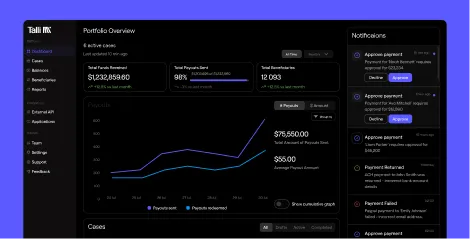
- Real-Time Dashboards: Current status without manual compilation
Reporting should require minimal manual effort when underlying data is captured systematically.
Ensuring Fiduciary Accountability
Fund segregation architecture demonstrates fiduciary responsibility:
- FBO Account Structures: Dedicated accounts for each bankruptcy estate
- Commingling Prevention: Complete separation from operating funds
- Matter-Level Tracking: Fund flows attributable to specific cases
- QSF Compliance: Preserving Qualified Settlement Fund tax treatment under IRC Section 468B
Three-way trust reconciliation matching bank records, case records, and individual claimant records provides definitive proof of proper fund handling.
W-9 Collection and 1099 Generation for Tax Compliance
OFAC and KYC screening address sanctions and identity verification, but trustees face parallel tax compliance obligations that require additional claimant information.
Automating Tax Documentation
W-9 collection challenges trustees managing large claimant populations:
- Completion Rates: Manual collection achieves roughly 40% completion
- Automated Collection: Digital forms with smart reminders achieve 90% completion rates
- TIN Validation: Verifying taxpayer identification numbers against IRS databases
- Backup Withholding: 24% withholding required for missing TINs per IRS requirements
Integrating W-9 collection into the claimant intake process, rather than treating it as a separate step, dramatically improves completion rates.
Preventing Common Tax Reporting Errors
1099 reporting errors create liability for trustees:
- Incorrect TINs: Penalties for mismatched names and numbers
- Missing Forms: Failure to issue required 1099s
- Incorrect Amounts: Discrepancies between reported and actual payments
- Wrong Form Type: Using 1099-MISC when 1099-NEC is required
Automated systems that capture payment information and generate 1099s from the same data source eliminate transcription errors that plague manual processes.
The Role of Digital Solutions in Tax Compliance
Integrated tax compliance automation addresses the full reporting lifecycle:
- W-9 Collection: Digital forms with DocuSign integration
- TIN Matching: IRS database verification
- 1099 Generation: Automated 1099-MISC and 1099-NEC creation
- E-Filing: Direct IRS submission
- Recipient Delivery: Distribution of required copies to claimants
This integration ensures tax compliance receives the same automated rigor as OFAC and KYC screening.
Why Talli Delivers Complete Compliance Solutions
Bankruptcy trustees need more than basic payment processing. They need an integrated platform that makes OFAC screening, KYC verification, tax compliance, and audit documentation automatic rather than burdensome. Talli's purpose-built disbursement platform addresses every compliance requirement trustees face:
Automated Compliance at Scale: Talli screens every claimant against current OFAC lists with documented timestamps, performs comprehensive identity verification, and maintains tamper-evident audit trails without manual intervention. This automation achieves 90% W-9 completion rates and processes distributions in 24-48 hours while maintaining full regulatory compliance.
Built for Fiduciary Responsibility: FBO account structures, three-way trust reconciliation, and matter-level fund tracking ensure complete separation of estate funds. SOC 2 Type II and PCI DSS Level 1 certifications protect claimant data while QS-compliant architecture preserves tax treatment.
Court-Ready Documentation: Real-time dashboards, automated regulatory reporting, and stakeholder portals provide the transparency courts expect. Every screening decision, payment authorization, and fund movement is captured with immutable timestamps that satisfy the most rigorous audits.
Trustees who choose Talli gain a compliance partner that understands bankruptcy-specific requirements, not a generic payment vendor requiring extensive customization. The platform transforms regulatory obligations from sources of liability into streamlined workflows that protect trustees while serving claimants efficiently.
Frequently Asked Questions
What happens if a bankruptcy trustee inadvertently pays a sanctioned party?
Inadvertent payments to sanctioned parties still constitute OFAC violations under the strict liability standard. Trustees should immediately freeze any remaining related transactions, consult legal counsel, and consider voluntary self-disclosure to OFAC. Self-disclosure can significantly reduce penalties. OFAC views it favorably as evidence of good faith compliance efforts. The trustee should also document what screening procedures were in place and why they failed to catch the sanctioned party, as this analysis informs both the penalty determination and necessary process improvements.
How often should bankruptcy trustees re-screen claimants against OFAC lists?
Best practice requires screening at minimum twice: once when claims are filed and again immediately before distribution. However, for distributions spanning extended timeframes, additional periodic screening catches newly designated parties added to sanctions lists after initial screening. OFAC updates its lists weekly, meaning months can pass between initial screening and distribution during which a claimant could be added to sanctions lists. Automated platforms that screen in real-time before each payment eliminate timing gaps that manual processes create.
Can trustees delegate OFAC and KYC screening to third-party vendors?
Trustees can use third-party vendors for screening services, but cannot delegate ultimate compliance responsibility. The trustee remains liable for violations even when using vendor screening tools. This makes vendor selection critical. Trustees should verify vendors screen against current list versions, provide documented timestamps, and maintain appropriate certifications. Contracts should include indemnification provisions, though practical recourse against vendors rarely makes trustees whole after regulatory penalties. Due diligence on vendor capabilities matters more than contractual protections.
What documentation should trustees retain for OFAC compliance audits?
Retain documentation proving: what screening was performed, when it was performed, what list version was used, what the results were, and how any potential matches were resolved. For each claimant, records should show the screening timestamp, the sanctions list version current at that time, whether matches were found, and if so, the investigation and disposition decision. Retention periods should extend at least five years beyond case closure, though some trustees retain indefinitely given the severity of potential liability.
How do international claimants affect OFAC and KYC compliance obligations?
International claimants increase compliance complexity significantly. OFAC's comprehensive sanctions programs prohibit most transactions with certain countries entirely, while sectoral sanctions prohibit specific transaction types with other countries. KYC verification is more difficult when claimants lack U.S. identification documents. Paying international claimants requires additional screening for country-based sanctions, verification against non-U.S. identity databases, and consideration of foreign privacy laws affecting what information can be collected. Trustees should implement enhanced due diligence procedures for non-U.S. claimants.