.svg)


.svg)
Return premium compliance has become a significant regulatory priority as states intensify enforcement of refund timelines and unclaimed property laws. When insurers or insurance agencies fail to return unused premiums within applicable state deadlines, undelivered funds can eventually trigger unclaimed property reporting, escheatment obligations, and audit exposure spanning multiple years. For organizations managing high-volume refunds, digital disbursement technology can improve payment delivery, tracking, and auditability, while state-specific insurance and unclaimed property compliance must still be managed according to the applicable jurisdiction.
Key Takeaways
- Washington requires agencies handling agency-bill policies to refund the full return premium within one operating cycle or 30 days after receiving the return-premium funds or credit
- California imposes 12% annual interest on unreported unclaimed property, with potential fines reaching $50,000 for willful non-compliance
- Paper checks can create materially higher non-redemption rates than digital payment methods, directly increasing the number of payments that may require escheatment reporting
- States collectively hold over $70 billion in unclaimed property, with enforcement actions reaching $7.7 million in single settlements
- Dormancy periods range from 1 to 15 years depending on property type and jurisdiction, creating complex multi-state tracking requirements
- Digital-first disbursement can reduce escheatment exposure while cutting processing costs compared to traditional paper check methods
- Unclaimed property deadlines vary significantly by state and holder type, including Delaware's December 20 deadline for insurance companies and Pennsylvania's April 15 general holder deadline
Understanding Return Premium and Unearned Premium in Insurance
Return premium represents the portion of an insurance premium refunded to policyholders when coverage ends before the policy term expires. This occurs through policy cancellations, coverage reductions, or premium overpayments requiring adjustment. The unearned premium reserve (funds collected but not yet "earned" through coverage provided) forms the basis for calculating refund amounts.
Refund calculations typically follow two methods:
- Pro-rata refunds: Full proportional return of unearned premium based on remaining policy days
- Short-rate refunds: Reduced refund amount that includes a cancellation penalty, typically 10-15% of the pro-rata amount
When policyholders cancel coverage, insurers must calculate the unearned portion and initiate refund processing within state-mandated timeframes. The Washington Insurance Commissioner specifically requires that agencies refund return premiums within "a one-month operating cycle or 30 days" after receiving funds from insurers or brokers.
The distinction between gross return premium and unearned commission matters for agency compliance. Gross return premiums must be held in separate premium accounts until refunded; agencies cannot deposit checks payable to insureds into operating accounts. This segregation requirement mirrors Qualified Settlement Fund structures in legal disbursements.
State Regulations Governing Car Insurance Refunds and Overpayments
Each state maintains independent authority over insurance refund requirements, creating a complex regulatory landscape for multi-state insurers. The National Association of Insurance Commissioners (NAIC) provides model frameworks, but implementation varies significantly across jurisdictions.
Primary Refund Triggers
Insurance refunds become mandatory when:
- Policyholders cancel coverage mid-term
- Duplicate coverage results in overpayment
- Premium adjustments reduce amounts owed
- Insurers cancel policies (subject to stricter requirements)
- Policy endorsements reduce coverage levels
State-Specific Requirements
Spring filing states and other jurisdictions impose varying deadlines for reporting unclaimed refunds. Delaware requires insurance companies to report by December 20, while most other holder types report by March 1. Delaware's dormancy periods vary by property type. New York requires insurance companies to file by September 10, with dormancy periods that vary by property type. Connecticut requires reporting by March 30 with a three-year dormancy period. Pennsylvania imposes an April 15 deadline with three years for general property. Florida requires April 30 reporting with five-year dormancy, and Illinois follows the same April 30 deadline with a five-year period.
California generally requires most holders to submit their Notice Report before November 1, while life insurance companies follow a separate deadline before May 1. Most states follow fall reporting schedules. Organizations operating nationally must track 55+ distinct jurisdictional requirements.
Navigating State Deadlines for Policyholder Refunds
Refund timing requirements operate on two levels: the initial obligation to issue payment, and the subsequent dormancy period before escheatment reporting becomes mandatory.
Initial Refund Timelines
Washington's 30-day requirement for agencies handling agency-bill accounts represents one of the more specific identified standards. Most states require refunds within 30-90 days of the triggering event, though specific timelines often depend on:
- Whether the policyholder or insurer initiated cancellation
- The premium amount involved
- Whether proper cancellation notice was provided
- State-specific regulatory requirements
Dormancy Period Variations
Once refunds remain unclaimed, dormancy periods determine when funds must be reported to state treasuries:
- General property: 3-5 years in most states
- Insurance policy proceeds: 3 years in California after becoming due and payable
- Wages and payroll: Often just 1 year
- Traveler's checks: Up to 15 years
- Money orders: Typically 7 years
Due Diligence Requirements
Before reporting unclaimed refunds, insurers must conduct outreach to locate recipients. States commonly require written notice 60-120 days before reporting, with response timeframes varying by jurisdiction. Documentation of these efforts becomes critical during audits.
Penalties and Consequences for Non-Compliance with Refund Timelines
States have dramatically increased enforcement of unclaimed property laws, treating them as revenue sources worth pursuing aggressively. The penalty structures vary but consistently impose significant financial consequences.
California's Penalty Framework
The California State Controller's Office imposes substantial penalties:
- 12% annual interest on unreported property from the date it should have been reported
- $100 per day fines for each day a report is withheld (maximum $10,000)
- $5,000-$50,000 fines for willful refusal to pay or deliver escheated property
A September 2024 California enforcement action resulted in a $7.7 million settlement with U.S. Healthworks over allegations that it retained and failed to report unclaimed patient credit balances, illustrating the broader enforcement risk surrounding unclaimed property.
Other State Penalties
- Delaware: Up to $25,000 penalties plus 25% of unreported property value for willful failures
- Texas: 5% penalty of property value for late delivery, additional 5% after 30 days, plus 10% annual interest
- Iowa: 10% annual interest and potential 25% civil penalty for willful failures
Audit Exposure
Perhaps most concerning, states conduct audits with lookback periods that can extend many years, creating significant retroactive exposure. For an insurer with $2.5 million in reportable unclaimed refunds, California's 12% annual interest would equal $300,000 for one year of delay, absent an applicable reasonable-cause exception.
Ensuring DMV Insurance Compliance: Beyond Refunds
While return premium compliance focuses on refund obligations, insurers must also maintain compliance with broader DMV and state insurance requirements that affect policyholders.
Proof of Insurance Requirements
States require insurers to verify coverage through electronic reporting systems. Connecticut's DMV insurance compliance system mandates real-time verification of minimum coverage levels. Lapses in coverage can trigger:
- Vehicle registration suspensions
- Driver's license implications
- Reinstatement fees for policyholders
- Reporting obligations for insurers
Minimum Coverage Verification
Insurers must accurately track and report coverage levels to state DMVs. This intersects with refund compliance primarily when policy cancellations or coverage changes require both accurate premium accounting and timely updates to state insurance-verification systems.
Maintaining accurate records through comprehensive reporting systems helps insurers meet both refund and DMV compliance obligations simultaneously.
The Role of Regulatory Bodies in Insurance Compliance and Oversight
Understanding the regulatory landscape helps insurers prioritize compliance efforts and anticipate enforcement trends.
State Insurance Commissioners
Each state's Department of Insurance maintains primary regulatory authority over:
- Refund timeline requirements
- Premium account segregation rules
- Consumer complaint investigation
- Market conduct examinations
- Enforcement actions and penalties
State Controllers and Treasurers
Unclaimed property divisions (typically housed within State Controller or Treasurer offices) handle:
- Escheatment reporting requirements
- Dormancy period enforcement
- Audit programs and lookback investigations
- Penalty assessment and collection
National Association of Insurance Commissioners (NAIC)
The NAIC provides model laws and coordination, though implementation varies. Their frameworks address:
- Standard refund calculation methods
- Consumer protection guidelines
- Interstate coordination on compliance
- Best practice recommendations
Enforcement Trends
Research indicates that a majority of companies face challenges maintaining full compliance with unclaimed property requirements. States increasingly use third-party audit contractors with contingency fees, creating incentives for aggressive enforcement.
Streamlining Refund Processes: Technology's Impact on Compliance
Modern disbursement technology directly addresses the root causes of refund compliance failures. Rather than managing the consequences of non-compliance, digital platforms can help prevent problems from occurring.
Payment Speed Comparison
Insurance disbursement timelines vary dramatically by method. Paper checks typically require 10-14 days for settlement. Standard ACH transfers complete in 2-3 business days, while same-day ACH settles the same day. Real-time payment networks can process transactions in under 30 seconds, and SWIFT wire transfers typically take 3-7 days internationally.
Redemption Rate Improvements
Paper checks can create materially higher non-redemption rates than digital payment methods, increasing the number of outstanding payments that require follow-up and may eventually become subject to unclaimed property rules. Digital-first distribution can reduce this exposure by making payments easier to receive and track.
Consumer Payment Preferences
Industry research shows clear preferences among payment recipients. Approximately 45% prefer direct deposit to bank accounts, around 28% want real-time payment options, roughly 15% prefer digital wallets, and only about 12% prefer traditional paper checks.
Digital Platform Capabilities
Modern disbursement platforms offer integrated compliance features:
- Multi-channel distribution: ACH, prepaid cards, digital wallets, and paper check fallback
- Automated KYC verification: Identity confirmation before disbursement
- OFAC sanctions screening: Automated compliance with documented timestamps
- Real-time tracking: Live visibility into payment status and delivery confirmation
- Audit trail generation: Documentation ready for regulatory reviews
For insurers processing high volumes of return premiums, these capabilities can help transform compliance from manual tracking to more automated processes.
Best Practices for Insurance Companies to Ensure Return Premium Compliance
Effective compliance programs combine proactive policies, appropriate technology, and ongoing monitoring.
Internal Controls
Establish clear procedures for:
- Calculating refund amounts within 24-48 hours of triggering events
- Initiating disbursement within state-mandated timeframes
- Documenting all refund decisions and amounts
- Maintaining separate premium accounts per regulatory requirements
Payment Method Optimization
Reduce escheatment exposure by:
- Offering multiple payment options (ACH, cards, digital wallets)
- Defaulting to digital methods with paper check fallback
- Collecting updated contact information at policy inception
- Implementing automated reminders for unclaimed payments
Address Verification
Failed deliveries drive non-redemption. Best practices include:
- NCOA (National Change of Address) verification before disbursement
- Commercial database searches for updated information
- Multiple contact attempts through different channels
- Address standardization using USPS tools
Record Retention
Record-retention requirements vary by jurisdiction and property type, so insurers and agencies should maintain records for the period required under the applicable insurance and unclaimed property rules. Maintain:
- Original obligation documentation
- Policyholder contact information including TINs
- Reporting details and confirmations
- Proof of remittance
- All outreach documentation
Compliance Calendar Management
Track all 55+ jurisdictional deadlines including:
- State-specific filing dates, including Delaware's December 20 insurance-company deadline and New York's September 10 insurance-company deadline
- Fall filing dates (California November 1 for most holders)
- Due diligence notice periods (60-180 days before reporting)
- Dormancy period variations by property type
Vendor Selection
When evaluating disbursement vendors, prioritize:
- Multi-channel payment capabilities
- Integrated compliance automation
- Real-time tracking capabilities
- Persistent data architecture for long-term retention
- Demonstrated experience with regulatory requirements
Organizations that leverage technology to streamline return premium compliance consistently achieve better outcomes while reducing administrative burden.
How Talli Supports Return Premium Compliance
For insurance companies managing complex refund compliance requirements, modern disbursement technology can provide support across several important areas. Talli's platform offers multi-channel payment distribution that lets insurers provide recipients with multiple payment options, including:
- ACH
- Prepaid cards
- Digital wallets
- Paper checks as a fallback
This flexibility can help improve payment acceptance and reduce the volume of unclaimed funds that may eventually require escheatment reporting.
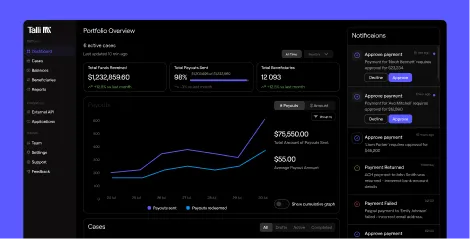
Talli's automated tracking and documentation capabilities also create audit trails that support compliance efforts. Real-time payment status visibility helps teams identify and address delivery issues earlier, rather than discovering unclaimed payments only after dormancy periods have passed. Built-in OFAC screening and identity verification further support regulatory requirements without adding unnecessary processing friction.
While Talli specializes in legal settlement and class action disbursements, its core capabilities around multi-channel distribution, real-time tracking, and compliance documentation can also support organizations handling high-volume refund obligations. By reducing friction in payment delivery and acceptance, digital disbursement approaches help address the underlying causes of escheatment exposure rather than simply managing the consequences.
Frequently Asked Questions
What is the difference between pro-rata and short-rate refund calculations?
Pro-rata refunds return the full proportional share of unearned premium based on remaining policy days. If a policyholder cancels halfway through a one-year policy, they receive approximately 50% of the annual premium back. Short-rate refunds include a cancellation penalty, typically 10-15% of the pro-rata amount, resulting in a smaller refund. State regulations often dictate which method applies: insurer-initiated cancellations typically require pro-rata refunds, while policyholder-initiated cancellations may allow short-rate calculations depending on jurisdiction and policy terms.
Who should I contact if I believe my insurance refund is late or incorrect?
Start by contacting your insurance company's customer service department with your policy number and cancellation documentation. If the insurer doesn't resolve the issue within 30 days, file a complaint with your state's Department of Insurance, which investigates consumer complaints and can compel refund processing. For refunds that may have already escheated, check your state's unclaimed property database. Most states maintain searchable online portals where you can claim funds. The National Association of Unclaimed Property Administrators (NAUPA) provides links to all state unclaimed property programs.
How do escheatment laws affect unclaimed return premiums?
Unclaimed return premiums become subject to escheatment after state-specific dormancy periods expire, typically 3-5 years, though some states apply shorter windows. Before reporting, insurers must conduct due diligence outreach (usually 60-120 days of documented attempts to locate the policyholder). Once escheated, funds transfer to the state treasury where original owners can still claim them. Insurers receive liability relief after proper escheatment but face penalties for late reporting including interest, fines, and audit exposure.
Are property insurance refunds handled differently than auto insurance refunds?
While the fundamental refund calculation principles remain consistent, property insurance may involve additional complexities. Homeowners policies often include escrow arrangements where premium refunds route through mortgage servicers rather than directly to policyholders. Commercial property policies may have different dormancy classifications for escheatment purposes. Additionally, property insurance involving claims payments intersects with return premium calculations when coverage adjustments occur mid-term. State regulations generally apply the same refund timelines regardless of insurance type, but the disbursement pathway and verification requirements may differ.
What documentation should insurers maintain for compliance audits?
State auditors conducting lookback examinations expect comprehensive documentation including: original policy and cancellation records, refund calculation worksheets showing methodology, payment issuance records with dates and amounts, delivery confirmation or returned mail documentation, all due diligence outreach attempts with dates and methods, escheatment reporting confirmations and remittance proof, and policyholder contact information including last known addresses and TINs. Missing documentation can void liability protection even after proper escheatment, exposing insurers to policyholder claims and state penalties. Digital platforms with persistent data simplify compliance by maintaining complete audit trails automatically.