.svg)


.svg)
Insurance carriers processing thousands of premium refunds annually face a costly reality: paper checks can cost $7–$20 per payment when factoring in printing, postage, reconciliation labor, and reissuance overhead, while traditional paper-based programs can see 20-30% of payments go unredeemed, triggering escheatment liability and administrative burden. Modern digital disbursement platforms compress refund delivery from 5–10 business days to 24-48 hours while cutting costs by 40-70%, transforming policyholder refunds from an operational drain into a competitive advantage that boosts retention and satisfaction.
Key Takeaways
- Paper check refunds can cost carriers $7–$20 per payment including printing, postage, reconciliation, and reissuance fees
- Digital disbursements reduce per-payment costs to $0.50-$6 depending on payment method, delivering 40-70% savings
- ACH direct deposits settle in 1-2 business days versus 7-10 days for mailed checks
- 75% of consumers prefer faster payment options, with real-time disbursements improving policyholder satisfaction
- Talli reports 95-98% redemption rates for digital programs compared with 70-80% for traditional paper methods, helping reduce unclaimed fund exposure
- The digital insurance payment platforms market is projected to grow from $485 million to $1.13 billion by 2033
Understanding the Pitfalls of Traditional Insurance Claims Processes for Refunds
The traditional paper check refund process creates compounding inefficiencies that drain operational budgets while frustrating policyholders. Understanding these pain points reveals why carriers are accelerating their shift to digital alternatives.
The True Cost of Paper Checks in Insurance Refunds
Paper check costs extend far beyond printing and postage:
- Direct costs: Check stock, envelopes, printing, and postage average $3-5 per payment
- Labor costs: Manual data entry, approval workflows, and reconciliation add $2-4 per check
- Reissuance expenses: Lost, stolen, or stale-dated checks require complete reprocessing
- Bank fees: Positive pay fraud prevention and account maintenance fees accumulate
- Exception handling: Address changes, returned mail, and stop payments create administrative burden
Finance teams spend 15 hours per week on reconciliation alone when relying on manual check processes. This labor could be redirected to strategic initiatives rather than chasing payment exceptions.
Why Unclaimed Funds Plague Insurance Companies
Uncashed checks create cascading problems that worsen over time. When policyholders don't deposit refund checks within 90-180 days, carriers face escheatment obligations requiring them to report and remit unclaimed property to state treasurers.
The administrative burden includes:
- Due diligence mailings: State laws require documented outreach attempts before escheatment
- Tracking and reporting: Each state has different dormancy periods and filing requirements
- Compliance penalties: Late or incomplete filings trigger fines and audit scrutiny
- Lost goodwill: Policyholders who discover their funds went to the state blame the carrier
Automated digital disbursements with multi-channel notification systems dramatically reduce unclaimed funds by making payment retrieval effortless.
Embracing Digital Payments: A Paradigm Shift for Insurance Refund Distribution
The insurance industry has reached an inflection point where digital payment adoption is accelerating rapidly. 78% of US insurance premium payments now occur digitally, and policyholders expect the same convenience for refunds.
Transforming Refund Timelines with Digital Solutions
Digital disbursement platforms compress payment cycles dramatically:
- ACH direct deposit: Funds arrive in 1-2 business days at $0.25-$2 per transaction
- Push-to-debit: Instant delivery to existing debit cards for $3-$6 per payment
- Digital wallets: PayPal and Venmo transfers complete within minutes
- Prepaid cards: Virtual cards delivered via SMS/email in 30 seconds
This speed matters for policyholder satisfaction. 30% of policyholders report feeling communication was lacking during claims processes, fast refund delivery demonstrates carrier responsiveness.
The ROI of Digitalizing Insurance Refund Workflows
Cost savings materialize across multiple dimensions when carriers digitize refunds:
Direct cost reduction: Dropping from $8 average per check to $2.50 average per digital payment saves $5.50 per transaction. For carriers processing 25,000 annual refunds, this represents $137,500 in direct savings.
Labor efficiency: Automated reconciliation reduces finance team workload by 50-70%, freeing staff for higher-value activities.
Reduced escheatment liability: Higher redemption rates mean fewer funds ultimately escheating to states, preserving carrier reputation and reducing compliance overhead.
Improved policyholder retention: Faster, more convenient refunds create positive experiences that influence renewal decisions.
Optimizing Car Insurance Overpayment Refunds with Electronic Funds Transfer
Car insurance refunds, whether from mid-term cancellations, coverage adjustments, or overpayment corrections, represent ideal candidates for digital disbursement. These typically involve straightforward calculations and eager recipients who want their money quickly.
ACH Direct Deposit: The Foundation of Fast Insurance Refunds
ACH remains one of the most cost-effective digital payment methods, with transactions processed through ACH operators including the Federal Reserve and The Clearing House. Key advantages include:
- Lowest transaction costs: $0.25-$0.50 per payment for standard processing
- Same-day options: Urgent refunds can settle within hours for slightly higher fees
- Widespread acceptance: 95.8% of U.S. households were banked in the FDIC's 2023 survey
- Automated validation: Pre-verified account details reduce failed payment rates
For carriers already collecting premium payments via ACH, reversing the flow for refunds requires minimal infrastructure changes.
Serving the Unbanked: Prepaid Cards for Car Insurance Refunds
Approximately 5.6 million U.S. households were unbanked in the FDIC's 2023 survey, unable to receive ACH deposits. Prepaid Mastercard or Visa cards solve this challenge:
- Virtual delivery: Card numbers sent via SMS/email enable immediate online purchases
- Physical cards: Mailed within 5-7 days for ATM withdrawals and in-person use
- No activation fees: Recipients access full refund amounts without deductions
- Broad acceptance: Usable anywhere major card networks are accepted
This inclusivity ensures all policyholders access refunds regardless of banking status.
Leveraging Digital Wallets for Instant Policyholder Payouts
PayPal and Venmo have become preferred payment methods for younger demographics. 60% of insurers now use AI and machine learning in their operations, including payment routing that directs refunds to policyholders' preferred digital wallets.
Digital wallet advantages include:
- Instant availability: Funds accessible immediately upon transfer
- Mobile-first experience: Aligns with how younger policyholders manage finances
- Push notifications: Built-in alerts ensure policyholders know when refunds arrive
- Easy spending: Seamless transfer to linked bank accounts or direct purchases
Ensuring Compliance and Security in Digital Refund Processing
Insurance refund disbursements require controls appropriate to the carrier, payment method, recipient, and applicable regulatory requirements. Digital platforms must meet security and documentation standards.
Automated KYC and OFAC for Secure Insurance Refunds
Modern disbursement platforms can integrate identity, sanctions, account-validation, and fraud controls into payment workflows when those checks are appropriate:
- Identity verification: Cross-reference policyholder information against identity databases
- OFAC screening: Automated checks against US Treasury sanctions lists with documented timestamps
- Bank account validation: Verify account ownership before initiating transfers
- Fraud pattern detection: AI-powered analysis flags suspicious refund requests
Platforms with SOC 2 Type II and PCI DSS Level 1 certifications demonstrate audited security controls that satisfy regulatory requirements.
Protecting Funds: Segregated Accounts for Policyholder Payments
Proper fund segregation prevents commingling that could trigger regulatory violations. Best practices include:
- Dedicated disbursement accounts: Separate operating funds from policyholder refund pools
- FBO account structures: "For Benefit Of" accounts maintain clear ownership records
- Real-time balance monitoring: Ensure sufficient funds before initiating batch payments
- FDIC-insured banking partners: Use regulated banking infrastructure, with deposit insurance treatment depending on account structure and applicable FDIC requirements
This architecture creates audit-ready documentation proving proper fund handling throughout the disbursement lifecycle.
Streamlining Government Car Insurance Refunds and Other Large-Scale Distributions
Mass refund scenarios, whether from regulatory settlements, rate adjustments affecting thousands of policyholders, or catastrophic event overpayments, demand platforms built for scale.
Managing Complex Payout Structures for Large Refunds
Large-scale distributions require capabilities beyond simple payment processing:
- Batch processing: Handle 10,000-100,000+ recipients per upload without performance degradation
- Tiered payment logic: Apply different refund calculations based on policy type, duration, or other factors
- Phased rollouts: Process subsets first to identify issues before full release
- Exception workflows: Route failed payments for manual review while successful payments continue
Platforms designed for high-volume legal settlements bring proven scalability to insurance refund scenarios.
Scaling Digital Refunds for Millions of Policyholders
Catastrophic events create surge demand that overwhelms manual processes. After hurricanes or other disasters, carriers must issue thousands of claims payments and premium adjustments simultaneously.
Digital platforms provide:
- Elastic infrastructure: Cloud-based systems scale automatically during volume spikes
- Real-time status tracking: Monitor payment progress across entire batches
- Automated notifications: Keep policyholders informed without manual outreach
- Rapid deployment: Process entire batches within 24-48 hours versus weeks for paper checks
Comparing Digital Payment Processing Software for Insurance Refunds
Selecting the right disbursement platform requires evaluating capabilities against insurance-specific requirements. Generic payment processors often lack features critical for regulated refund workflows.
Key Metrics for Evaluating Digital Refund Platforms
Prioritize platforms demonstrating:
- Core system integration: Pre-built connectors for Guidewire, Duck Creek, and Sapiens reduce implementation effort
- Multi-payment method support: ACH, push-to-debit, digital wallets, and prepaid cards under one platform
- Compliance automation: Built-in KYC, OFAC screening, and escheatment tracking
- Real-time reporting: Live dashboards showing payment status, failure rates, and redemption metrics
- Security certifications: SOC 2 Type II and PCI DSS Level 1 as baseline requirements
Platforms claiming 50% improvement in settlement speed should provide case studies validating these results.
Beyond Cost: The Value of High Redemption Rates in Insurance
Per-transaction pricing tells only part of the story. Platforms achieving higher redemption rates deliver compounding value:
- Reduced escheatment: Every percentage point improvement means fewer funds lost to states
- Lower support costs: Policyholders who receive payments don't call asking where their refund is
- Improved satisfaction: Successfully delivered refunds create positive brand impressions
- Cleaner books: Fewer outstanding checks simplify financial reconciliation
A platform costing $0.50 more per transaction but delivering 5% higher redemption often provides better total value than the cheapest alternative.
Leveraging International Payment Gateways for Global Policyholder Refunds
Carriers with international policyholders face additional complexity in refund disbursement. Currency conversion, cross-border regulations, and varied banking systems require specialized capabilities.
Multi-Currency Support for International Refunds
Global disbursement requires:
- Local currency delivery: Pay policyholders in their home currency to avoid conversion fees
- Competitive FX rates: Transparent mid-market rates rather than bank markups
- Multiple payment rails: Access to local ACH equivalents, SWIFT, and regional networks
- Regulatory compliance: GDPR for European policyholders, local data residency requirements
Platforms supporting 190+ countries and 150+ currencies can reduce the need for multiple regional payment vendors.
Achieving Audit-Ready Transparency with Digital Refund Reporting
Regulators and internal auditors expect complete visibility into refund disbursement processes. Digital platforms generate documentation automatically that manual processes struggle to match.
Real-Time Analytics for Unprecedented Refund Visibility
Modern dashboards provide instant insight into:
- Completion rates: Percentage of initiated refunds successfully delivered
- Payment method distribution: Which channels policyholders prefer
- Geographic patterns: Regional variations in redemption behavior
- Failure analysis: Root causes of unsuccessful payments
- Trend tracking: Performance changes over time
This visibility enables proactive management rather than reactive problem-solving.
Automated Reporting for Seamless Compliance Audits
Digital platforms generate court-ready accounting without manual preparation:
- Complete audit trails: Every transaction logged with timestamps, approvals, and outcomes
- Configurable reports: Generate summaries matching specific regulatory formats
- Export capabilities: Download data in standard formats for integration with audit tools
- Stakeholder portals: Provide controlled access to auditors without exposing full system access
Why Talli Simplifies Policyholder Refund Disbursements
While numerous payment platforms exist, Talli delivers purpose-built disbursement infrastructure designed for compliance-critical, high-volume distributions. Talli's legal and claims disbursement infrastructure includes capabilities that can also apply to organizations evaluating high-volume policyholder refund workflows:
- Multi-channel payment options: ACH, prepaid Mastercard (issued by Patriot Bank, N.A.), PayPal, Venmo, and digital wallets give policyholders the flexibility they expect
- Compliance automation: Integrated KYC verification, OFAC screening, and automated W-9 collection with 90% completion rates reduce manual compliance work
- AI-powered fraud detection: Pattern recognition across behavioral analytics and identity verification achieves 95% accuracy while flagging suspicious activity 50% faster than manual review
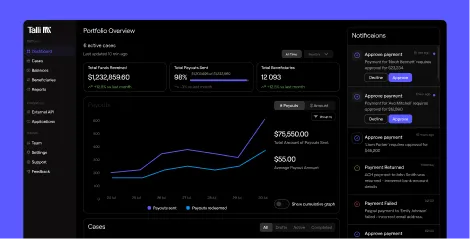
- Real-time dashboard: Live visibility into payment status, redemption rates, and fund flows with automated reconciliation reducing monthly closing from 15 hours to 4.5 hours
- Fund segregation architecture: Dedicated FBO accounts with FDIC-insured banking through Patriot Bank, N.A. maintain complete separation and audit-ready documentation
Talli achieves 95-98% redemption rates compared to 70-80% for traditional paper methods, a difference that significantly reduces escheatment liability while improving policyholder satisfaction.
For organizations processing thousands of refunds annually, Talli's combination of multi-channel payouts, automated compliance, and transparent pricing provides the infrastructure needed to eliminate paper checks while maintaining complete regulatory confidence.
Frequently Asked Questions
How much can insurance companies save by switching from paper checks to digital refunds?
Insurance carriers typically save $4-7 per payment when switching from paper checks to digital disbursements. Paper checks can cost $7–$20 when including printing, postage, reconciliation labor, and reissuance fees, while digital payments range from $0.50 for ACH to $6 for instant push-to-debit options. For carriers processing 25,000 annual refunds, this represents $100,000-$175,000 in annual savings before accounting for labor efficiency gains and reduced escheatment costs.
What payment methods do digital refund platforms support for insurance disbursements?
Modern disbursement platforms support multiple payment channels including ACH direct deposit (1-2 day settlement), push-to-debit for instant card payments, digital wallets like PayPal and Venmo, prepaid Mastercard or Visa cards for unbanked policyholders, and wire transfers for high-value international payments. This flexibility ensures all policyholders receive refunds regardless of banking status or preference.
What compliance certifications should insurance refund platforms have?
Insurance disbursement platforms should demonstrate SOC 2 Type II certification (annual third-party security audits), PCI DSS Level 1 compliance (for card payment handling), and NACHA compliance for ACH processing. Additional requirements include automated OFAC sanctions screening, escheatment tracking capabilities, and state-specific fee restriction configurations. Platforms handling health insurance data must also maintain HIPAA compliance with executed Business Associate Agreements.
Can digital platforms handle catastrophic event surges in refund volume?
Yes, cloud-based disbursement platforms provide elastic infrastructure that scales automatically during volume spikes. Leading platforms process 10,000-100,000+ payments per batch without performance degradation. For catastrophic events requiring rapid policyholder payments, digital platforms deliver funds within 24-48 hours versus weeks for paper checks, while real-time dashboards let operations teams monitor progress and resolve failed payments quickly.
How do digital refunds improve policyholder satisfaction and retention?
Digital refunds arrive 5-8 days faster than paper checks, demonstrating carrier responsiveness during a critical touchpoint. Policyholders who choose their preferred payment method (ACH, digital wallet, prepaid card) experience greater convenience and control. Higher redemption rates mean fewer frustrated calls about missing refunds, while transparent tracking reduces uncertainty. These positive experiences influence renewal decisions and create differentiation in a competitive market where 75% of consumers prefer faster payment options.